Key Takeaways
A thoughtful visit begins with local voices and clear expectations. We can support communities by choosing experiences carefully and spending with intention.
- Look for local leadership and transparent information about benefits.
- Choose experiences where residents guide access, stories, and photography.
- Ask who owns the business and how partners are compensated.
- Direct spending to local makers, shops, restaurants, and services.
- Treat each neighborhood as a lived-in place, not a backdrop.
What does social impact tourism mean for communities in Medellín?
Social impact tourism in Medellín communities means tourism that respects residents’ priorities and directs benefits fairly. We can look beyond sightseeing to ask who leads an experience and who gains from it. The details matter more than a responsible-sounding label.
How community-led tourism differs from conventional sightseeing
A community-led experience gives residents meaningful influence over its design, pace, and story. Conventional sightseeing may focus on landmarks and a visitor’s schedule, while locally led tourism makes space for everyday life and local knowledge. A useful starting point is to consider authentic local experiences as a question of relationships, not just an activity’s setting.
That distinction does not depend on whether an experience is a walk, workshop, or museum visit. We can ask whether visitors are invited to listen and learn, rather than simply collect images or move through a neighborhood quickly. A tour can be engaging without being community-led, so we should look for evidence rather than assume.
Who should have a voice in tourism decisions
Residents should have a say in how their neighborhood is presented and visited. Guides, artists, business owners, and community organizations may each have different views, so one person’s perspective should not be treated as everyone’s. We can listen for whether local people have a role in setting boundaries, choosing routes, and deciding what stories are shared.
The city’s history is complex, and residents are not required to explain it to every visitor. Before booking, we can read background from local cultural institutions, including the Museum of Memory guide, then arrive ready to listen. That preparation leaves more room for residents to define what matters to them.
What meaningful local benefits can look like
Benefits can include paid work, customer spending, and opportunities for local people to share skills on their own terms. They may also involve cultural preservation or community-defined projects, but we should not assume a benefit exists simply because a tour visits a neighborhood. Clear, specific answers help us understand what an operator can substantiate.
A simple comparison can help us make sense of the claims we hear. These examples are questions to ask, not promises that every tour will deliver each benefit.
| Possible benefit | What we can ask |
|---|---|
| Paid local work | Who is employed, and how are rates set? |
| Local purchasing | Which makers or shops receive visitor spending? |
| Community partnership | Which organizations helped shape the experience? |
| Cultural sharing | Who decides what stories are shared? |
If an operator cannot answer every question, we can ask what they do know and what they are still improving. A specific, candid response is more useful than a broad promise of impact.
What forms of community tourism can travelers find in Medellín?
Community tourism may take the form of neighborhood walks, food and craft workshops, or visits connected to local projects. Availability and formats can change, so we should verify details directly before making plans. The activity itself does not prove that residents lead it or receive a benefit.
Neighborhood walks and local history experiences
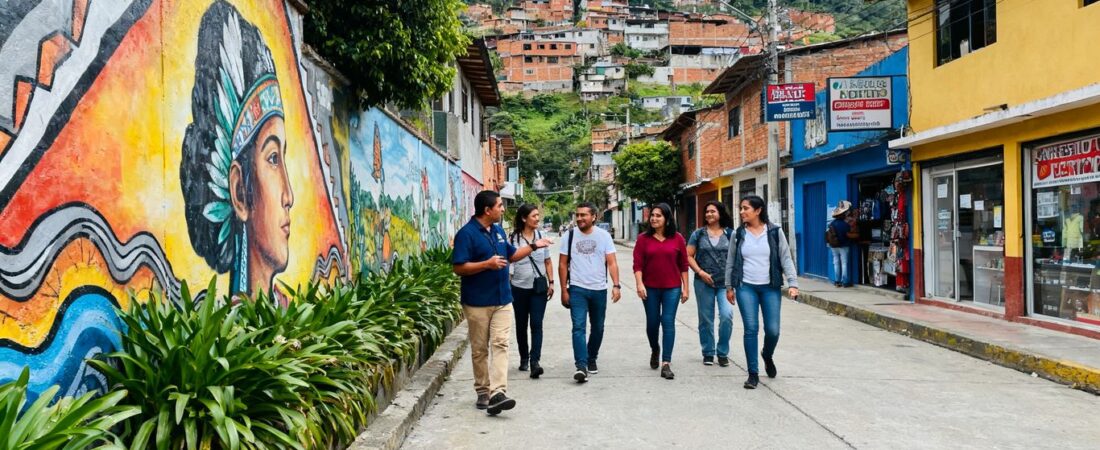
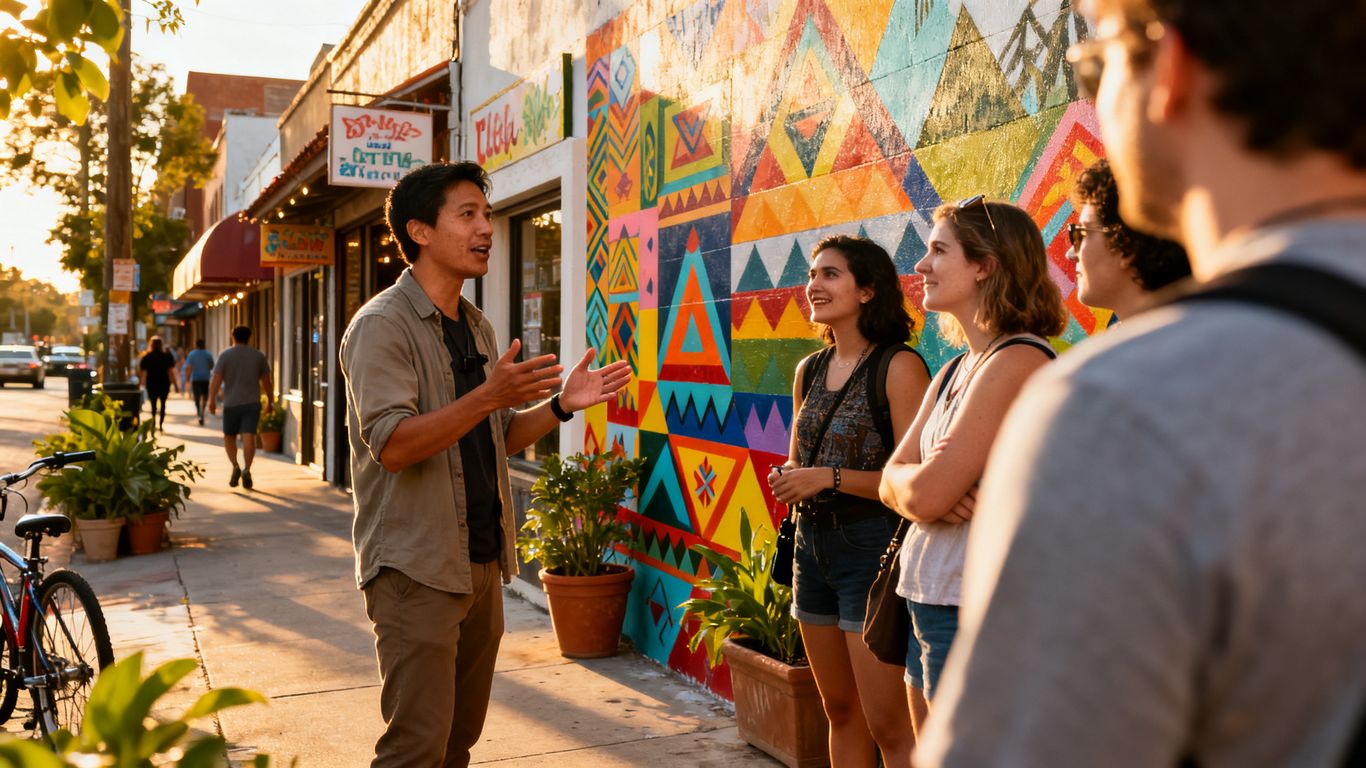
A walk can introduce local history through streets, public art, and residents’ accounts, when the people sharing those stories have chosen to do so. We can seek guides who explain how the experience was developed and invite questions without turning personal hardship into a spectacle. Some visitors pair a walk with broader Medellín activity planning, then leave enough time to explore at a respectful pace.
Comuna 13 is one place where public art and local storytelling draw visitor interest. If we visit, we should follow the guide’s route and pay attention to residents’ requests about access and photography. Our presence is not permission to enter private spaces or photograph people without consent.
Food, craft, and cultural workshops
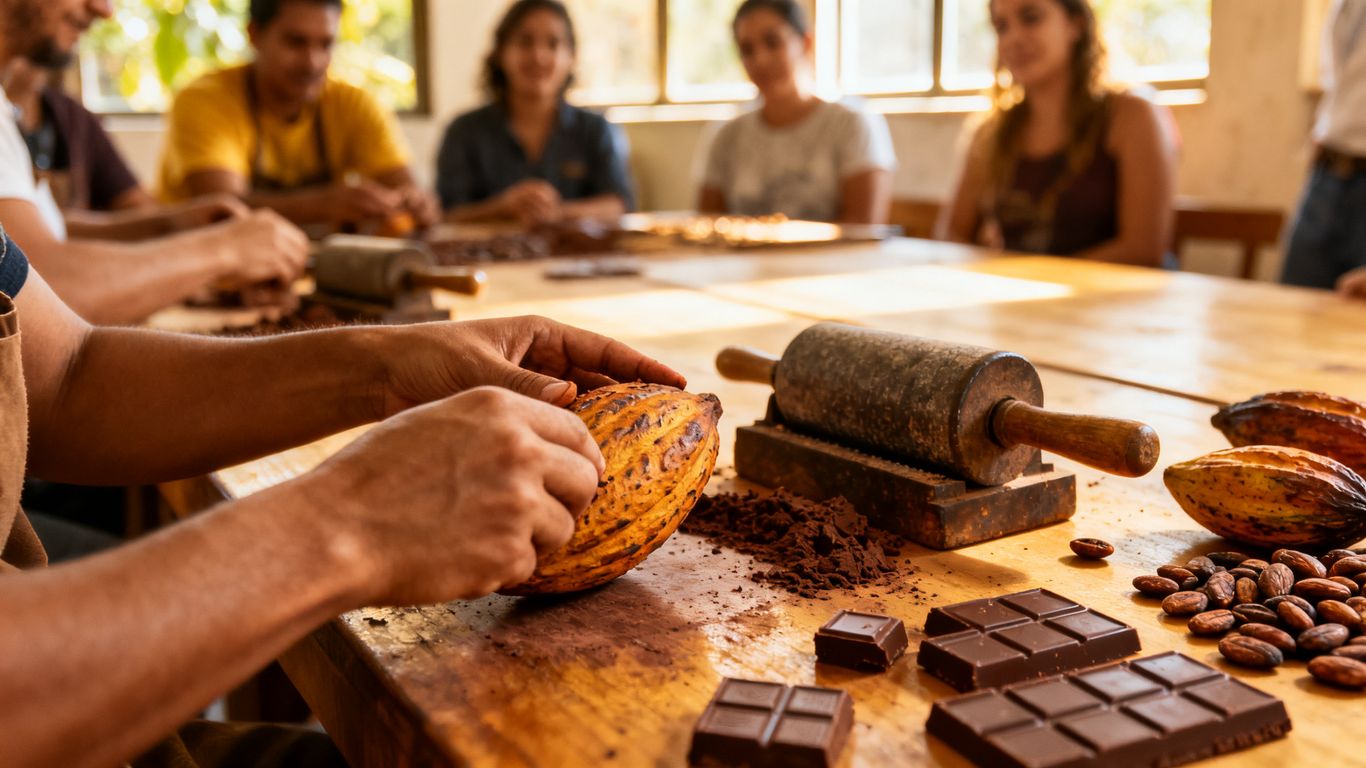
Workshops can offer a closer look at a practice through making, tasting, or conversation. We should check who facilitates the activity and whether local makers are named as partners, rather than assuming a workshop supports a community automatically. For example, the Colombian Cacao Experience is described as a hands-on bean-to-bar workshop in Laureles; that description alone does not establish its broader community impact.
An urban cacao workshop is one format travelers may encounter, but the relevant details are still the host, the activity, and how participation is arranged. We can ask whether a maker is directly involved and whether purchases or fees are explained clearly. A cultural subject can be interesting without being a substitute for transparency.
Community projects beyond guided tours
Some local initiatives may welcome visitors through markets, cultural spaces, or community events. Their schedules and visitor policies can change, so we should check with the organizers rather than arrive expecting access. A visitor-facing activity is only one part of a community’s work.
We can also look for information about sustainable tourism practices and compare it with what an operator says about local partnerships. That is a way to prepare, not proof that a particular activity benefits residents. Keep the distinction clear when describing a visit to others.
How can you tell whether an experience is locally led?
We can start by asking who owns and operates the business, who designed the activity, and who is paid. These are ordinary booking questions, not an accusation. Locally led experiences should be able to explain their arrangements in terms visitors can understand.
Check who owns and operates the business
Look for clear information about the business, its guides, and any community partners. If the website is vague, we can ask who sets the itinerary and who makes decisions when residents have concerns. Local knowledge from a guide matters, but it does not by itself establish local ownership.
We should also distinguish a local guide from a locally owned operator. Both can be valuable, but they describe different roles. A clear answer lets us decide whether the experience matches what we mean by community-led.
Ask how guides and community partners are compensated
We can ask whether guide fees are included, whether makers are paid for demonstrations, and how partner contributions are handled. An operator may not share every private financial detail, but should be able to describe its general approach. When we compare experiences, the Comuna 13 graffiti tour guide can help us consider how neighborhood storytelling is presented, while we still ask each operator about its own arrangements.
Keep questions direct and practical. We might ask whether participants buy from makers, whether guides receive a set fee, or whether a project receives a stated share. Then we can decide if the answer is clear enough for us to book.
Look for transparent information about local benefits
Useful information names the people or kinds of businesses involved and explains what visitors’ payments cover. We should be cautious about sweeping claims that cannot be checked or explained. For unrelated booking decisions, resources such as the Simple Oahu Wedding terms page illustrate why payment and cancellation details are worth reviewing, though they do not describe Medellín tourism.
It is reasonable to ask for clarification before paying. If an operator cannot answer, we can choose another experience or book with more modest expectations. Transparency is a practice to assess, not a guarantee of a particular result.
How should you choose a responsible tour or activity?
We can compare an activity’s group size, route, visitor rules, and explanation of local partnerships before booking. No single feature proves responsibility, and a polished description is not enough. We should choose an experience whose conduct and expectations feel clear.
Compare group size, itinerary, and neighborhood impact
Ask how many people join, where the route goes, and whether it enters residential or sensitive spaces. A smaller group may be easier to manage, but its size alone does not guarantee a positive impact. We can check whether the itinerary allows time for local businesses without making residents’ daily routines harder.
These practical details are worth confirming in writing. For an experience such as the Colombian Cacao Experience, the source describes a hands-on bean-to-bar workshop in Laureles; we should verify current timing and booking terms directly. A separate Miami condo buyer’s guide concerns a different kind of purchase, but it likewise illustrates why checking practical terms matters before committing.
Consider whether photography and storytelling are respectful
We should ask permission before photographing people, especially children, and respect a no without pressing for an explanation. A guide’s advice about where photography is welcome should take priority over our preferred shot. Travelers interested in camera technique can consult photo privacy guidance, then keep consent central while visiting.
A camera can change how a moment feels for the person being photographed. We can focus on public art, architecture, or details that do not expose someone’s private life. If a story is personal, let the person sharing it decide how much to tell.
Verify current details before booking
Schedules, prices, meeting points, and visitor rules can change. We should confirm these details with the operator and understand what is included before paying. A Google Workspace vs Zoho Mail comparison is unrelated to Medellín travel, but its focus on checking service details is a reminder not to infer terms from a name alone.
For an activity involving cacao, the Colombian Cacao Experience is described as a roughly three-and-a-half-hour workshop priced at 160,000 COP per person in the available source. We should still verify current information directly before booking. One recent search result is not a substitute for confirmation.
How can visitors direct more spending to local businesses?
We can direct more of our travel budget to local businesses by booking with operators directly when practical, buying from makers, and eating at neighborhood restaurants. Spending choices do not guarantee a specific social outcome, but they can make the recipient of a purchase easier to identify. We should still ask questions where impact claims are part of the pitch.
Book directly with local operators when practical
Booking directly can make it easier to ask about schedules, group size, and who runs an activity. We can compare the operator’s terms with the listing where we found it, then choose the option that provides clear information. Direct booking is not automatically the right choice if another arrangement is safer or more accessible.
For a cacao activity, the Colombian Cacao Experience is described as a hands-on bean-to-bar workshop in Laureles. We should book based on the activity and current details, not assume a wider social benefit that has not been explained. That distinction helps keep our expectations fair.
Buy goods from their makers and neighborhood shops
When we can, we should buy directly from the person who made an item or from a neighborhood shop that explains its sourcing. We can ask who made a product and whether the price reflects the work involved. Bargaining hard over a small purchase may matter more to us than it helps the maker.
A market visit works best when we treat vendors as business owners, not as part of a photo opportunity. We can ask before taking close-up pictures of a stall or its workers. Buying thoughtfully is a small, practical choice we control.
Use local restaurants and services during your visit
Eating locally and using neighborhood services can keep more of a visit’s spending close to the places we explore. We can choose independently owned businesses when that information is available, while avoiding assumptions based only on appearance. A busy restaurant or attractive shop is not proof of who owns it.
A few small decisions can make spending more intentional:
- Choose a neighborhood restaurant for a meal when it fits your plans.
- Pay makers directly when buying handmade goods.
- Ask local guides for recommendations, then decide for yourself.
- Use locally operated services when their terms and safety are clear.
These choices work best alongside respectful behavior and realistic expectations. We should not ask residents to perform culture for us just because we have spent money nearby.
How can travelers engage respectfully with Medellín communities?
We can engage respectfully by learning basic context, following residents’ guidance, and remembering that neighborhoods are homes first. Good intentions matter less than the choices we make while visiting. Listening, asking permission, and accepting boundaries are practical ways to show respect.
Learn basic context before visiting a neighborhood
A little reading can help us understand that a neighborhood has a history beyond the route in a tour description. We can visit a museum, read locally grounded material, and arrive with questions rather than assumptions. A useful source should add context, not tell us what every resident thinks.
We should also avoid treating one guide’s account as the only version of events. Communities contain different experiences and points of view. Listening without demanding a single tidy story makes a visit more respectful.
Follow residents’ guidance about access and photography
Residents and guides may set limits on where visitors should walk or take photographs. We should follow those instructions even when a different route or picture seems more convenient. Ask before photographing someone, and put the camera away when asked.
We can also avoid blocking doorways, gathering around private homes, or entering spaces that are not open to visitors. The simplest rule is to treat a residential street as a place where people have errands, work, and quiet moments. Visitors are guests there.
Avoid treating communities as attractions or poverty exhibits
We should not describe residents through hardship alone or seek images that reduce a neighborhood to poverty. People have ordinary lives, work, humor, ambitions, and disagreements, none of which belong to a visitor’s collection by default. If an experience leans on shock or spectacle, we can choose not to participate.
A respectful visit leaves room for people to decide what they share. We can support local businesses, learn from willing hosts, and leave private stories private. The goal is not to take home proof that we have seen a community, but to travel with care.
Conclusion
Social impact tourism in Medellín begins with questions about leadership, consent, and where spending goes. We can make better choices by checking details, listening to residents, and keeping our expectations grounded. A respectful visit supports local exchange without assuming that every activity delivers the same benefits.
Frequently Asked Questions
What does social impact tourism mean in Medellín?
It refers to travel that considers how tourism affects residents and local businesses. Travelers can ask who leads an experience, who benefits, and whether community priorities are respected.
How can we find community-led experiences?
Look for clear information about who owns and operates an activity and who helped shape it. Ask the operator directly when those details are missing.
Does a local tour automatically benefit the community?
No. A tour’s location does not establish who receives its revenue or has a voice in decisions. We should ask about compensation and partnerships.
What questions should we ask before booking?
Ask about group size, itinerary, guide compensation, photography rules, and what the price includes. Confirm meeting details and current terms with the operator.
Is it respectful to photograph residents?
Ask first and accept a refusal without argument. Follow a guide’s advice, especially in residential or sensitive settings.
How can travelers support neighborhood businesses?
Buy from makers and neighborhood shops, eat at local restaurants, and use local services when their details are clear. Direct purchases help us know where at least some spending goes.
What should we avoid during a community visit?
Avoid entering private spaces, photographing people without consent, and framing residents through poverty or hardship alone. Treat the neighborhood as a lived-in place, not an exhibit.