Key Takeaways
Medellín’s urban transformation grew from industrial expansion, severe inequality, violence, and informal hillside development. We can understand it through governance, transport, public space, and neighborhood-level change.
- Industrial growth attracted migration faster than infrastructure could expand.
- Violence and displacement deepened divisions between central and peripheral areas.
- New municipal strategies joined transport, education, public space, and participation.
- Metro and Metrocable connections improved access across the Aburrá Valley.
- Progress remains uneven, especially around inequality, safety, and gentrification.
Why Medellín needed urban transformation
The history of medellins urban transformation begins with rapid growth and unequal urban services. Medellín changed because industrial prosperity, migration, violence, and informal expansion placed intense pressure on the city. We can therefore read its later projects as responses to structural problems, not isolated architectural gestures. The transformation was social and institutional as much as physical.
Industrial growth and rapid population expansion
Medellín became an important industrial center through coffee, commerce, manufacturing, and regional trade. That growth created employment and attracted migrants from Antioquia and other parts of Colombia. Population expansion then spread beyond the older urban core, often faster than formal planning could respond. The city’s economic success produced both opportunity and a difficult housing challenge.
Industrial districts, transport corridors, and dense residential areas developed in close proximity. This mixture shaped the city we see today, where older factories, apartment blocks, and hillside settlements occupy the same metropolitan system. A useful urban transformation case study places this expansion within the longer history of Medellín’s industrial development and migration.
Unequal access to services and infrastructure
Growth did not distribute roads, schools, utilities, and public spaces evenly. Central neighborhoods generally received earlier investment, while peripheral communities faced longer journeys and weaker connections. Housing choices also reflected different forms of tenure, a distinction explained clearly in this guide to condos and apartments.
The urban divide was practical rather than merely symbolic. Distance affected access to employment, education, healthcare, and cultural institutions. In many hillside areas, residents had to spend substantial time and money reaching opportunities concentrated in the valley floor.
The impact of violence and displacement
Drug trafficking, armed conflict, and neighborhood-level disputes made daily movement dangerous in many parts of Medellín. Rural displacement also brought families into an already pressured housing market. Violence damaged trust in institutions and made some public spaces feel controlled, abandoned, or inaccessible.
We should not reduce the city’s history to cartel violence alone. Economic exclusion, weak infrastructure, displacement, and contested authority all shaped the crisis. The Museo Casa de la Memoria offers a useful local point of reference because it centers personal stories, violence, resistance, and peace efforts.
Peripheral hillside communities and informal development
As formal land and housing became difficult to access, communities expanded up the valley’s steep slopes. Informal development often arrived before reliable roads, drainage, public transport, and civic facilities. The geography itself made service delivery expensive and movement physically demanding.
These neighborhoods were not simply problems waiting for demolition. They were established communities with local networks, businesses, schools, and strong civic knowledge. Later projects worked more effectively when they connected existing residents to services rather than treating the hillsides as empty land.
How Medellín changed during the 1990s and 2000s
During the 1990s and 2000s, Medellín combined security efforts with a broader urban policy agenda. Municipal leaders increasingly treated education, mobility, public space, and local participation as connected responsibilities. The result was not a single project, but a sequence of decisions that changed how the city invested in neglected areas. We can see this period as the foundation of the modern transformation narrative.
The decline of cartel-related violence
Violence declined from the extreme levels associated with the early 1990s, although the process was uneven and incomplete. Changes in criminal organizations, policing, national conditions, and local interventions all influenced the city’s security environment. Reduced violence created more room for residents, businesses, schools, and public institutions to operate.
That improvement did not erase fear or eliminate armed control everywhere. It did, however, help shift public discussion toward services, culture, education, and neighborhood investment. A broader urban planning account explains why Medellín’s recovery involved collaboration between political leaders, designers, and communities.
New approaches to municipal governance
Municipal government began linking physical projects with social objectives. Instead of building infrastructure as separate technical work, planners increasingly grouped transport, education, public space, and neighborhood programs. This approach made investment more visible in places that had often experienced state absence.
The city’s governance also benefited from longer planning horizons and clearer project coordination. Public architecture became part of a wider effort to strengthen institutions and improve daily access. In that sense, the transformation was administrative as well as architectural.
Community participation in local planning
Residents brought practical knowledge about routes, safety, services, and neighborhood priorities. Participation helped officials identify where projects could produce useful connections rather than isolated buildings. It also gave communities a role in defining what improvement should mean locally.
Participation did not remove conflict or guarantee equal influence. Still, it made planning more grounded in daily experience. The most durable projects usually connected formal investment with existing community organizations and local expectations.
The emergence of social urbanism
Social urbanism described an approach in which urban design supported social inclusion. Its projects often concentrated high-quality public facilities in underserved areas, alongside transport and safer pedestrian routes. The intent was to make public investment visible and useful where residents had historically received less of it.
We can summarize the model through four linked priorities:
- Connect peripheral neighborhoods with the wider city.
- Place schools, libraries, and civic facilities near daily routes.
- Improve public spaces without separating them from social programs.
- Build projects through local planning and institutional coordination.
This framework explains why Medellín’s transformation is studied beyond Colombia. A global urban transformation overview also shows how transport, public investment, and social inclusion became connected parts of the city’s planning story.
How public transportation reshaped the city
Transportation changed Medellín by reducing the practical distance between hillside communities and valley-floor opportunities. The Metro created a dependable north-south spine, while cable systems extended access up steep terrain. Integrated routes also made daily trips more predictable for workers, students, and visitors. Mobility was therefore both a transport issue and an equality issue.
The role of the Medellín Metro
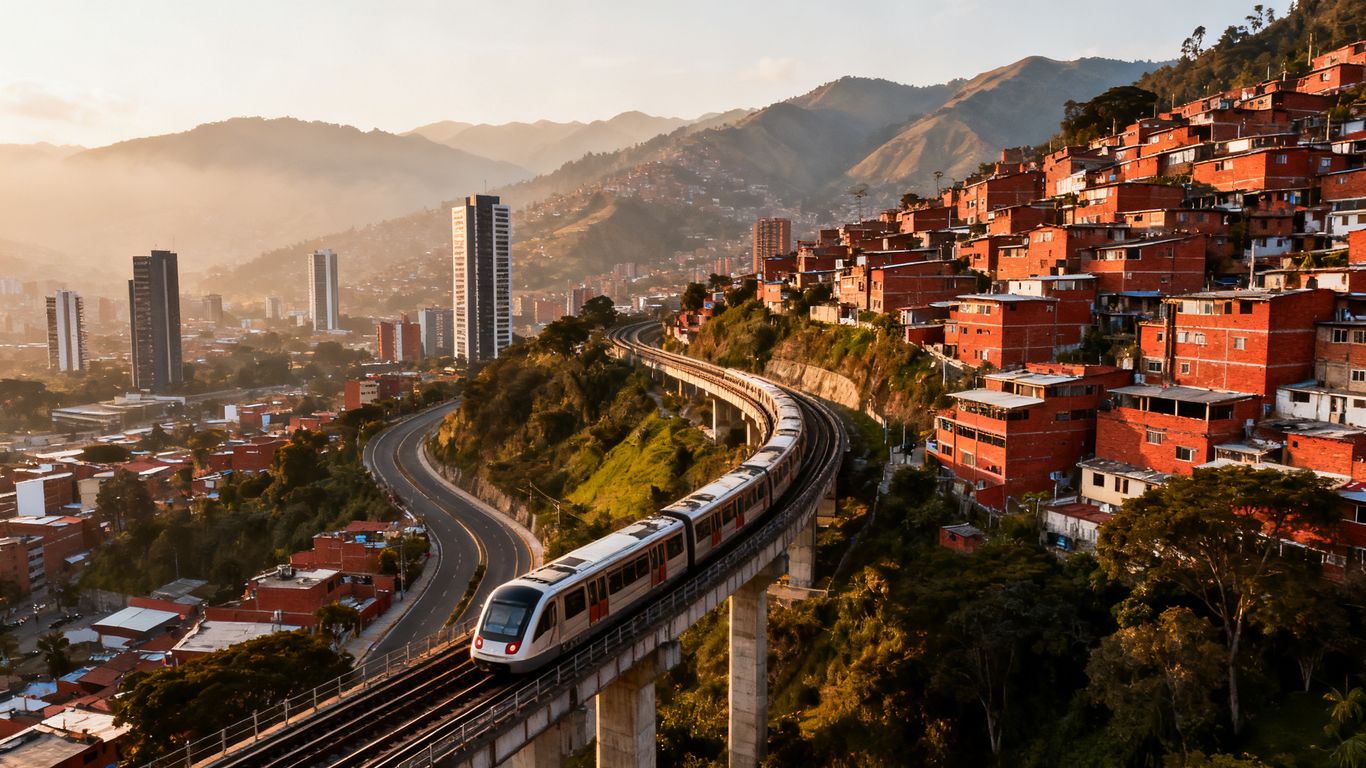
The Medellín Metro opened in 1995 and became the backbone of metropolitan public transport. Its north-south line connected major residential, commercial, and institutional areas through the valley. Stations also became reference points for further development and transfers.
The Metro’s importance extends beyond speed. A reliable system gave residents a shared civic infrastructure and helped organize movement across municipalities. Its presence also made later connections, including cable lines and buses, more useful.
Metrocable lines connecting hillside neighborhoods
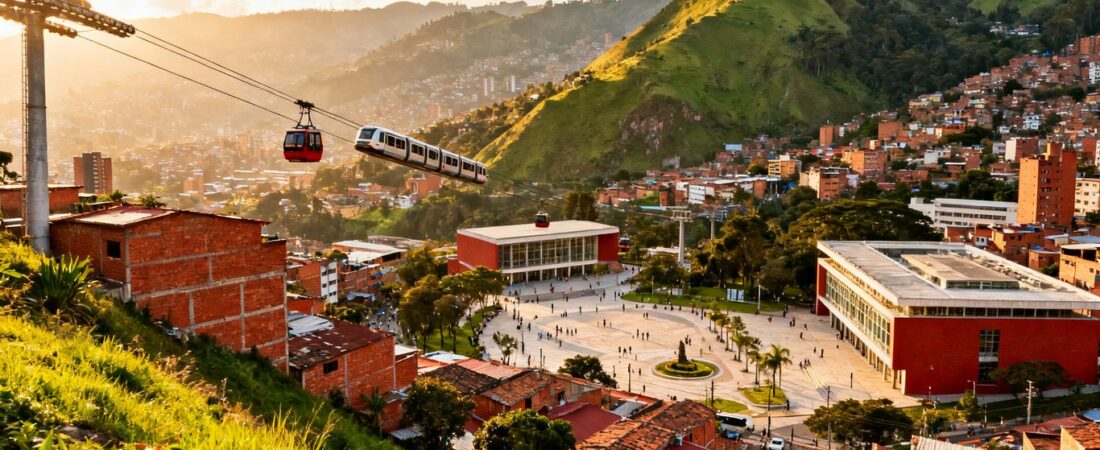
Metrocable lines connected steep hillside communities with Metro stations and the broader transport network. Before those links, some trips required long walks, multiple vehicles, and considerable time. Cable access reduced the isolation created by topography and made public investment more visible in peripheral areas.
The system also changed how outsiders viewed hillside neighborhoods. Residents could reach jobs and schools more easily, while visitors gained a clearer route into districts previously discussed mainly through crisis narratives. A Metrocable transformation account describes how transit, libraries, schools, and parks worked together in this process.
Integrated bus routes and improved mobility
Buses filled gaps that rail and cable systems could not cover. Feeder routes connected neighborhoods to stations, while metropolitan services extended movement beyond the central city. Integration mattered because one fast segment cannot solve a journey that remains difficult at either end.
Planning also had to account for fares, transfers, walking routes, and frequency. The most useful system was not simply the one with the largest infrastructure. It was the one that made an entire trip more manageable.
Transit access for workers, students, and visitors
Improved mobility expanded access to employment, universities, schools, cultural sites, and commercial areas. Workers gained more reliable routes, while students could travel farther without depending entirely on private vehicles. Visitors also encountered a city that could be explored through public transport rather than isolated attractions.
The benefits remain dependent on affordability, safety, and service quality. Transport can connect neighborhoods physically while social barriers continue elsewhere. That distinction matters when assessing the history of Medellín’s urban transformation.
How public spaces supported social change
Public space became a practical tool for rebuilding trust and everyday civic life. Libraries, schools, sports facilities, plazas, and corridors gave residents places to meet outside private homes. Their value came from location, programming, maintenance, and connection to transport. The projects worked best when architecture supported services rather than standing alone.
Library parks and educational infrastructure
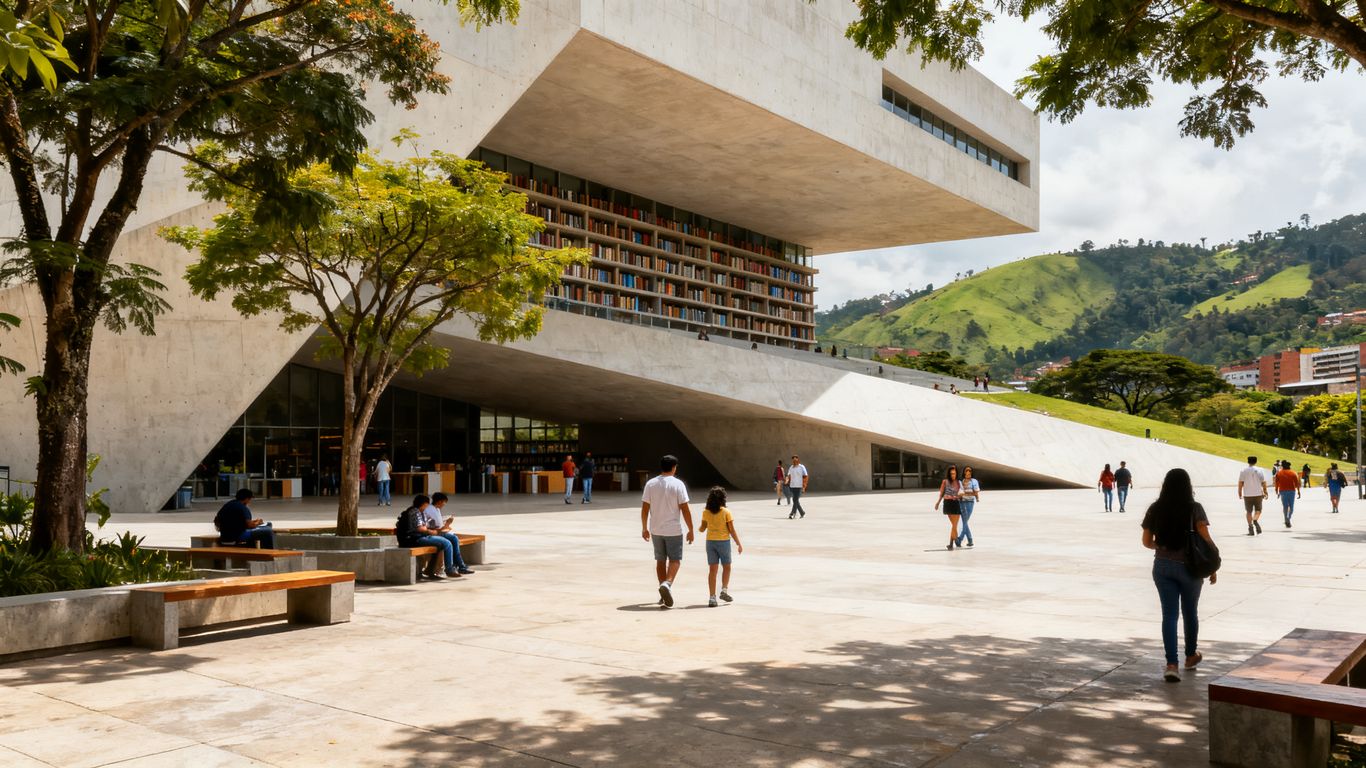
Library parks placed books, study areas, cultural programs, and civic services in neighborhoods that had often lacked major public facilities. Their design made learning visible and accessible. These buildings also offered shared indoor spaces where residents could gather safely.
Education was treated as part of urban investment rather than a separate policy field. That connection helped public facilities serve children, families, and adults at the same time. The emphasis resembles the broader logic behind integrated systems and shared visibility, although Medellín applied it to civic infrastructure rather than manufacturing operations.
Schools, sports facilities, and cultural centers
Schools and sports facilities expanded the range of daily activities available near home. Cultural centers supported workshops, exhibitions, performances, and local organizations. Together, these uses helped replace vacant or contested spaces with places of regular public activity.
Their impact depended on staffing and programming as much as construction. A new building could attract attention, but sustained use required teachers, coaches, cultural workers, and community involvement. Physical quality mattered, yet it was never sufficient by itself.
Green corridors and improved pedestrian areas
Green corridors and pedestrian improvements made walking more comfortable across parts of the city. Trees, shade, seating, crossings, and linked public areas helped turn movement into a social experience. Projects such as Parque de las Luces show how central public spaces could also become symbols of urban renewal.
These interventions were modest compared with rail infrastructure, but their cumulative effect was important. Better walking routes connected homes to stations, schools, commerce, and public facilities. They also gave residents more reasons to remain in and care for shared spaces.
The transformation of former conflict-affected spaces
Former conflict-affected areas did not change simply because new buildings appeared. Change required safer access, visible public services, local participation, and time. Art, education, commerce, and transit gradually produced different uses and memories in places once associated with fear.
We should also preserve difficult memories rather than replacing them with a polished tourism story. Cultural visits can be useful when they acknowledge residents’ experiences and support local economies. The city’s transformation is strongest when public celebration remains connected to historical honesty.
What Medellín’s neighborhoods reveal about the transformation
Neighborhoods show that Medellín’s transformation was never uniform. Each district had different histories, land patterns, incomes, and relationships with public investment. Comparing them helps us avoid treating the city as one simple success story. It also reveals how mobility, tourism, housing, and culture interact.
Comuna 13 and the shift from conflict to cultural tourism
Comuna 13 became widely known for street art, escalators, local guides, music, and community-led cultural activity. Tourism has brought income and international attention, while residents continue to shape the neighborhood’s public story. The Comuna 13 graffiti experience presents this shift through art, history, and local connection.
Tourism can support livelihoods, but it can also simplify complex histories. Visitors should follow local guidance, respect private spaces, and understand that murals do not erase the violence residents experienced. The neighborhood’s importance lies in both creative expression and civic resilience.
Santo Domingo and access through the Metrocable
Santo Domingo illustrates how cable transport altered the relationship between hillside neighborhoods and the valley. The connection improved access to stations, education, employment, and central services. It also made the neighborhood part of wider conversations about inclusive infrastructure.
The physical journey remains only one measure of change. Housing quality, income, safety, and public services still shape residents’ opportunities. Santo Domingo therefore demonstrates both the reach and the limits of transport-led transformation.
Laureles and planned urban development
Laureles reflects a different urban pattern, with more planned streets, mature trees, mixed commerce, and walkable blocks. Its public realm supports daily errands, cafés, schools, and neighborhood businesses. The district also shows how established urban form can remain attractive while adapting to new residents and visitors.
For travelers, Laureles offers useful context because urban change is not limited to hillside interventions. The neighborhood’s evolution includes housing pressure, commercial growth, and changing cultural uses. A local Medellín guide for visitors places Laureles alongside other districts rather than presenting it as a separate city.
El Poblado, growth, and the challenges of gentrification
El Poblado demonstrates how investment and popularity can create new pressures. Restaurants, hotels, nightlife, offices, and housing have expanded rapidly in parts of the district. Rising demand can improve services, but it may also increase rents and push long-term residents or local businesses elsewhere.
This pattern is not unique to Medellín. Urban and rural living carry different housing, transport, and service costs, as this cost of living comparison explains. The local question is who benefits from growth and whether public policy protects access to housing, work, and public space.
What Medellín’s transformation achieved and where it falls short
Medellín achieved meaningful improvements in mobility, public facilities, civic confidence, and international attention. Yet its transformation remains unfinished. Inequality, safety concerns, housing pressure, and uneven development continue across the metropolitan area. We should evaluate the city through both visible progress and persistent everyday problems.
Improvements in mobility, education, and public space
Metro and Metrocable connections made difficult journeys more manageable for many residents. Libraries, schools, sports facilities, and cultural centers expanded public investment in underserved communities. Improved plazas and pedestrian corridors supported everyday social activity.
The city also developed a stronger reputation for experimentation in urban policy. Visitors can observe that history through walking routes, museums, stations, and neighborhood projects. However, reputation should remain a starting point for investigation, not a substitute for evidence.
Continuing inequality between central and peripheral areas
Income and service gaps remain visible between central, formal, and peripheral areas. Travel times, housing quality, employment access, and public safety can differ sharply across short distances. New infrastructure reduces some barriers, but it cannot resolve unequal land markets or household incomes alone.
The housing question is especially difficult. Rising demand in popular districts can make central locations less accessible, while peripheral growth may reproduce the distance that earlier projects tried to reduce. Transformation must therefore include affordability, not only connectivity.
Safety concerns and uneven development
Medellín is safer than during its most violent period, but safety is not uniform by neighborhood or time of day. Local conditions can change quickly, and residents still navigate extortion, theft, territorial disputes, and fear in some areas. Urban improvements can coexist with unresolved criminal economies.
Development is also uneven in quality and maintenance. A new public facility may age differently from its surrounding streets, and tourism income may concentrate in a few corridors. These gaps explain why the city’s progress should be described carefully rather than as a completed turnaround.
Lessons other cities can learn from Medellín
Other cities can learn from Medellín’s combination of transport, public space, education, planning, and community engagement. They should not copy individual buildings without understanding the institutions and local conditions behind them. The most transferable lesson is coordination around real neighborhood needs.
Four principles stand out for urban policymakers:
- Connect mobility projects with schools, services, and public spaces.
- Invest in peripheral communities without displacing existing residents.
- Treat participation as part of planning, not a ceremonial final step.
- Measure safety, affordability, maintenance, and access after construction.
These principles also apply to smaller urban projects. Even a local service-area plan needs specific places, audiences, and sustained maintenance, as this city-based planning guide demonstrates. Medellín’s experience is useful precisely because it combines successes with unresolved questions.
Conclusion
Medellín’s urban transformation emerged through decades of industrial growth, migration, violence, planning, public investment, and community work. Metro and Metrocable connections, educational facilities, public spaces, and neighborhood participation changed how many residents experienced the city. The work continues because inequality, safety, housing pressure, and uneven development remain.
Frequently Asked Questions
When did Medellín’s urban transformation begin?
Its roots extend through the twentieth century, but the most visible coordinated changes developed during the 1990s and 2000s. Earlier industrial growth, migration, and conflict created the conditions that later programs addressed.
What was the main reason Medellín needed urban transformation?
The city faced a combination of rapid population growth, unequal services, violence, displacement, and informal hillside development. These problems reinforced one another and required more than a single transport or security project.
How did the Medellín Metro affect the city?
The Metro created a dependable north-south transport spine across the valley. It also supported transfers to buses and cable systems, making jobs, schools, and services easier to reach.
Why is the Metrocable important in Medellín’s history?
The Metrocable connected steep hillside neighborhoods with Metro stations and central opportunities. It reduced the isolation caused by topography and accompanied broader investment in public facilities.
What is social urbanism in Medellín?
Social urbanism is an approach that links urban design with social inclusion. In Medellín, it connected transport, education, public space, civic buildings, and community priorities.
Has Medellín completely overcome inequality?
No. The city has achieved significant improvements, but income, housing, safety, travel time, and service access remain uneven. Peripheral communities still face challenges that central districts may not experience.
Can other cities copy Medellín’s model?
Other cities can adapt its principles, but they cannot copy projects mechanically. Results depend on local institutions, land conditions, community participation, funding, maintenance, and long-term political commitment.