Key Takeaways
A barrio transformation tour comuna 4 medellin offers a grounded view of urban change beyond the city’s most visited routes.
- We visit working neighborhoods rather than a staged attraction.
- The story includes migration, displacement, public investment, and community action.
- Comuna 4 differs from Comuna 13 in history, visibility, and route style.
- We should expect hills, stairs, uneven pavement, and changing weather.
- Respectful behavior matters more than taking photographs at every stop.
What is a barrio transformation tour in Comuna 4 Medellín?
A barrio transformation tour comuna 4 medellin is a guided walk through communities shaped by migration, informal growth, and later public investment. We hear how residents built neighborhoods and services under difficult conditions. The direct answer is simple: expect local history, community perspectives, urban change, and ordinary daily life rather than a conventional sightseeing circuit.
The neighborhoods and communities included
Routes commonly focus on parts of Comuna 4, including areas associated with Moravia and nearby residential communities. The exact streets depend on the operator, current local conditions, and community agreements. We should confirm the route before booking because neighborhood tours can change without notice.
A useful tour introduces people and places without treating residents as scenery. It may explain how families arrived, established homes, developed livelihoods, and organized around shared needs. The strongest interpretation keeps local voices central and avoids reducing the area to a single story of hardship.
How the tour explains Medellín’s urban change
The walking experience connects physical details with public policy and social history. A guide may point out changes in housing, transport access, schools, health services, public spaces, and local commerce. We learn more when the tour explains what changed, who pushed for it, and what remains unfinished.
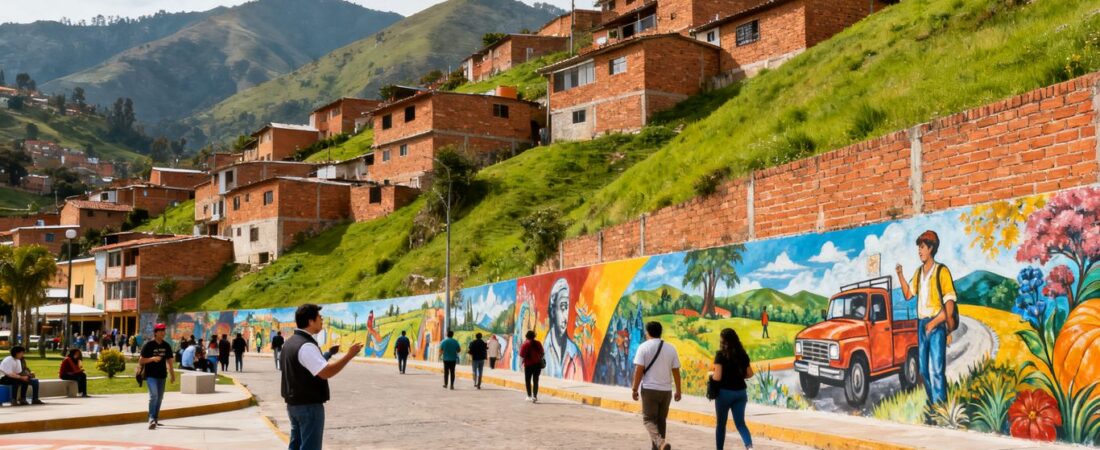
This is also why context matters. A mural, staircase, market, or community center can seem ordinary without background. With a local explanation, each place becomes evidence of how residents and institutions have negotiated Medellín’s growth.
What makes Comuna 4 different from Comuna 13
Comuna 13 is widely known for its hillside escalators, concentrated street-art routes, and strong visitor infrastructure. Comuna 4 generally offers a less standardized experience, with more attention to settlement history, community organization, and everyday neighborhood life. We should not expect the same visual rhythm or tourism facilities.
For a useful comparison, our guide to the Comuna 13 Graffiti Tour explains the better-known route’s art, local stories, snacks, and artisan stops. Neither experience is automatically more authentic. They answer different questions about Medellín.
How the tour connects Medellín’s past and present
A transformation tour works best when history is treated as a process, not a dramatic before-and-after slogan. We connect migration and displacement with housing, work, education, mobility, and local organization. The present becomes easier to understand when we see how earlier decisions shaped the streets.
We should also expect a balanced account. Progress does not erase inequality, and new public facilities do not solve every problem. The value lies in hearing how change has affected residents and why community priorities still matter.
Migration, displacement, and neighborhood growth
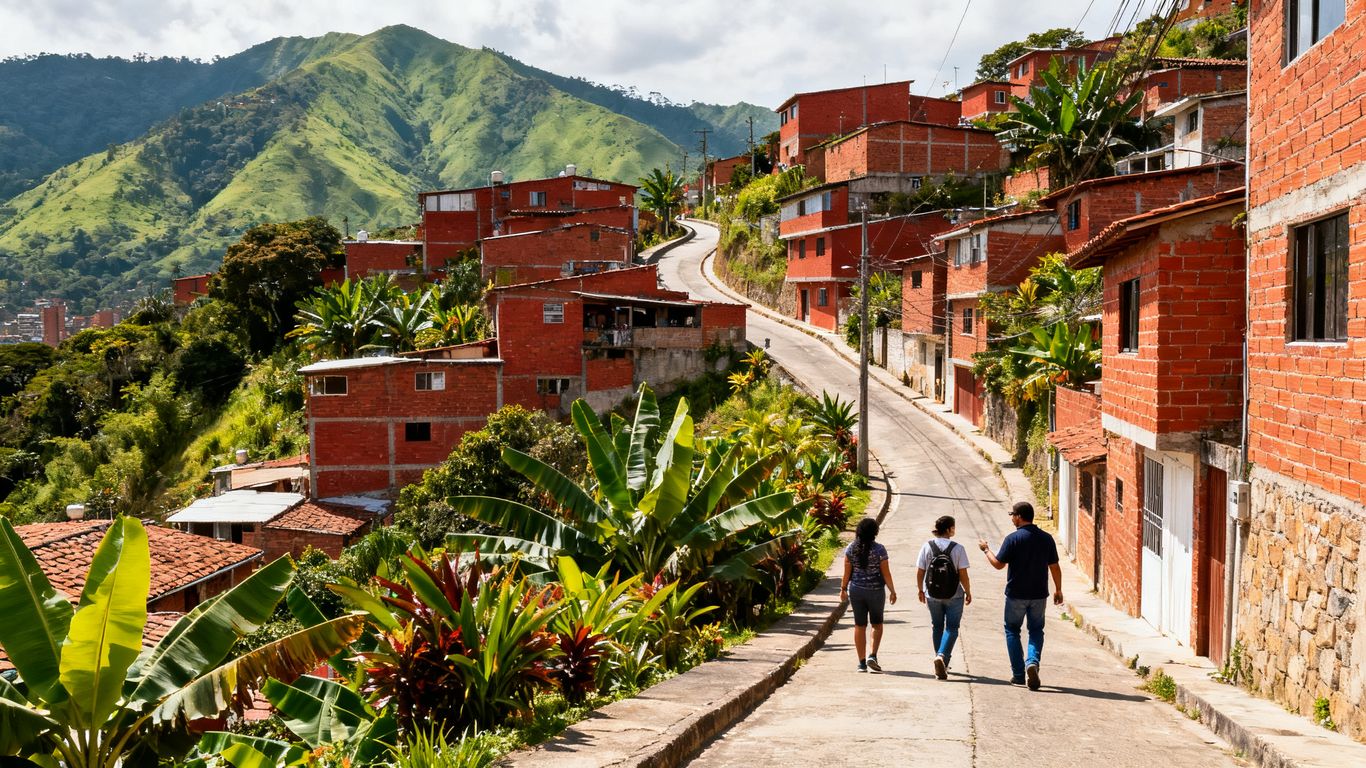
Many Medellín neighborhoods expanded as families moved from rural areas or other parts of Colombia. Some arrivals had been displaced by violence or economic pressure. They needed housing quickly, so settlement often preceded formal planning and reliable services.
A local guide can place those broad patterns beside specific streets and community memories. We should listen for how residents built homes, found work, and created networks. That history explains why neighborhood identity can be stronger than official maps suggest.
Public investment and improved access to services
Urban change also includes investment in transport, schools, libraries, sanitation, public spaces, and health access. A tour may not visit every facility, but it can show how infrastructure affects daily movement and opportunity. Better connections can change where people study, work, shop, and meet.
The table below helps us separate common themes without implying that every route covers each one.
| Theme | What we may observe | Question to ask the guide |
|---|---|---|
| Mobility | Streets, transit connections, or safer walking routes | Who benefits most from improved access? |
| Services | Schools, health facilities, or public spaces | What changed for nearby families? |
| Housing | Formal and informal construction patterns | How did residents organize land and homes? |
| Local economy | Shops, recycling, food sales, or workshops | Which businesses serve local needs? |
These themes are connected. A new road matters differently when residents can also reach services, earn income, and influence decisions about their neighborhood.
Community-led projects, art, and local entrepreneurship
Community projects give the transformation story its human scale. We may see murals, small businesses, cultural spaces, recycling initiatives, or youth programs. These efforts are not merely decoration; they can preserve memory, create income, and strengthen local participation.
We can extend the cultural day elsewhere in Medellín without confusing the experiences. A hands-on Colombian Cacao Experience in Laureles focuses on cacao roasting, grinding, and chocolate making, not barrio history. It works as a separate food-and-culture activity after a neighborhood walk.
What happens during the walking experience?
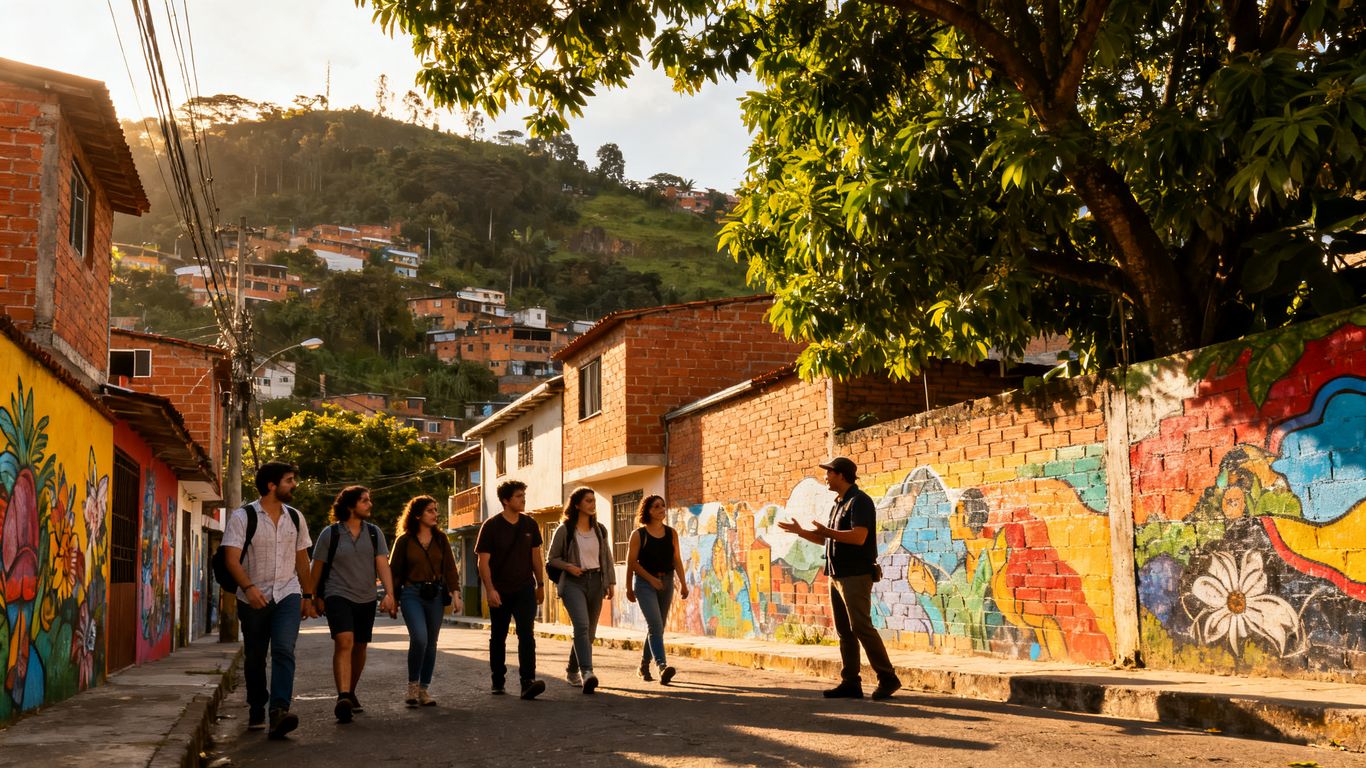
Most tours begin with an orientation, then move through several connected stops at a measured pace. We hear explanations while walking, pausing, and observing rather than sitting through a long formal presentation. The route can feel more conversational than a museum visit.
Timing and order vary by operator. We should ask whether transport, snacks, entrance fees, or community contributions are included. A clear itinerary helps us judge the physical effort and the amount of time spent inside residential areas.
Typical meeting points and route structure
Meeting points may be near a Metro station or another accessible public location. Operators usually provide exact instructions after booking, since the starting point can change. We should arrive early and avoid assuming that a familiar station exit is the correct one.
The route often has three parts: introduction and background, neighborhood walking with stops, then a closing discussion or return connection. That structure leaves room for questions. It also means the tour is more than a sequence of photo stops.
Stops involving murals, community spaces, and local businesses
Stops can include murals, community facilities, viewpoints, workshops, food businesses, or streets that illustrate local development. Not every stop is open to visitors, and respectful operators will not pressure residents to perform for a group. We should follow the guide’s instructions about where to stand and when photography is appropriate.
Small purchases can support the local economy, but they should never be treated as an obligation. Carry modest cash if the operator recommends it, and ask before photographing vendors, homes, children, or private activities.
Walking distances, hills, stairs, and rest opportunities
We should expect uneven sidewalks, inclines, stairs, heat, and occasional delays. The physical challenge may be moderate, but comfort depends on fitness, footwear, and weather. Routes are not necessarily suitable for every mobility need, so accessibility questions belong in the booking conversation.
A practical walking checklist keeps preparation simple:
- Wear closed shoes with dependable grip.
- Carry water, sun protection, and a small amount of cash.
- Bring only the phone, camera, and documents we genuinely need.
- Ask where rest stops and bathrooms are available.
These choices make the experience easier without turning the walk into an athletic event. We can also tell the guide early if we need a slower pace or a short pause.
How to prepare for a Comuna 4 barrio tour
Preparation is mostly about practical comfort and good judgment. We should check the meeting instructions, forecast, route length, and cancellation policy before leaving. A little planning helps us pay attention to the people and places rather than our sore feet.
The neighborhood is a lived-in setting, not a film set. Our clothing, camera habits, and conversation should reflect that fact. We are guests in a community where people continue their normal routines during the tour.
What to wear and bring
Light, breathable clothing works well in warm conditions, while a compact rain layer is useful during wetter periods. We should carry water, sunscreen, insect protection if advised, and a charged phone. A small bag is easier to manage than luggage on narrow streets and stairs.
Bring identification only as needed and keep valuables discreet. We should also download booking details or save the meeting instructions offline. Mobile service can vary between streets and buildings.
Weather, footwear, and physical requirements
Medellín’s weather can change during the day, and rain may make surfaces slippery. Comfortable walking shoes with secure soles are more useful than sandals or fashion footwear. We should ask about stair counts, steep sections, and rest options if anyone in the group has mobility limitations.
A tour operator should answer these questions plainly. If the route is unsuitable, choosing another activity is better than slowing the group or risking a fall. Weather may also alter the route on short notice.
Photography etiquette and respectful visitor behavior
We should ask before photographing people, homes, businesses, and community activities. Avoid close portraits of children unless a responsible adult clearly gives permission. Photographing murals and public streets is usually less intrusive, but the guide remains the best authority in each location.
The basic rule is to observe first and capture second. Do not block doorways, enter private areas, or make poverty the subject of a souvenir image. A quiet, attentive visitor usually receives a warmer welcome.
Is a Comuna 4 transformation tour safe for travelers?
A guided route can make responsible exploration easier, but no tour removes ordinary city risks. We should stay alert, follow the group, and respect local instructions. Safety depends on timing, route conditions, group behavior, and the operator’s current relationship with the community.
We should choose a daytime departure with clear meeting instructions and recent operational information. The guide should explain what to do if someone becomes separated or if the route changes. Good communication is a practical safety feature, not a luxury.
How guided tours support responsible exploration
A local guide provides context, manages introductions, and helps visitors avoid entering spaces without permission. Community-connected tours may also direct spending toward local leaders, shops, or projects. We should ask how the operator compensates guides and partners before booking.
Responsible travel means accepting that the route belongs to residents first. The experience should not stage danger or exaggerate violence. A measured account of change is more useful than sensational storytelling.
Staying with the group and following local guidance
We should remain within the group, especially at turns, crossings, transit points, and crowded areas. Keep phones and cameras secure when not in use. If the guide asks us not to walk ahead or photograph a particular location, we should comply without debate.
It also helps to agree on a meeting point and carry the guide’s contact number. We should tell the guide about allergies, medical concerns, or language needs before the walk begins. Small details prevent avoidable confusion.
Situations where travelers should use extra caution
Use extra caution with expensive jewelry, visible cash, isolated shortcuts, and late departures. We should reconsider the outing if severe rain, a transport disruption, or a sudden route change creates uncertainty. When something feels unclear, asking the guide is better than improvising.
We can also review practical city guidance before booking. Our broader Medellín activities guide covers neighborhood planning, food, nightlife, and transportation, while this article remains focused on Comuna 4. Local guidance matters most when conditions change.
How Comuna 4 compares with other Medellín neighborhood tours
Neighborhood tours vary by purpose, route, and level of visitor infrastructure. Some focus on public art, others on food, history, transport, or local commerce. We should choose based on the questions we want answered rather than the most familiar name.
This comparison is useful because Medellín’s neighborhoods are not interchangeable. A tour can be worthwhile without offering the same sights, pace, or atmosphere as another route. The right choice depends on our interests and physical comfort.
Comuna 4 versus Comuna 13
Comuna 13 usually offers a more established visitor circuit with prominent murals, escalators, viewpoints, and artisan activity. Comuna 4 tends to foreground settlement history, community development, and less standardized walking conditions. Both can include art and local voices, but their emphasis differs.
We should avoid visiting both with identical expectations. One may feel more visually immediate, while the other may require more patient listening. Asking about the current itinerary gives us a more accurate comparison than relying on labels.
Transformation tours versus traditional city sightseeing
Traditional sightseeing often organizes a day around landmarks, plazas, museums, and panoramic views. A transformation tour uses streets and resident perspectives as its main evidence. It may involve fewer famous monuments but offer more explanation of how people experience the city.
For a broader historical introduction, a downtown Medellín walking tour can cover central landmarks and urban renewal. That route complements, rather than replaces, a community-based walk. We should allow enough time between tours for transport and rest.
Choosing between community, history, food, and street-art experiences
Our choice should reflect both curiosity and available time. Community tours suit travelers who want social history and local context. Street-art routes suit those focused on visual culture, while food experiences provide a more hands-on way to explore regional ingredients.
We can use this simple guide when comparing options:
- Choose Comuna 4 for neighborhood history and community perspectives.
- Choose Comuna 13 for concentrated street art and a developed visitor route.
- Choose a downtown walk for central landmarks and civic history.
- Choose a cacao workshop for an indoor, hands-on food experience.
For a second cultural activity, the Medellín tour overview places neighborhood walks alongside food, art, and day-trip options. We should not try to pack every experience into one afternoon. A slower itinerary usually gives each place more attention.
Practical planning details for the tour
The exact duration, language, price, and group size depend on the operator and departure date. We should treat online listings as a starting point and confirm current details directly. Routes can change because neighborhoods remain active communities, not fixed attractions.
Planning also includes the journey before and after the walk. Build in time for Metro connections, ride-hailing, meals, and weather delays. We should avoid scheduling a tight airport transfer immediately afterward.
Tour duration, language, and group size
Many walking experiences last several hours, especially when they include discussion and multiple stops. Ask whether the tour is offered in English, Spanish, or both. A smaller group may make questions easier, while a larger group can affect pace and visibility.
We should confirm the maximum group size, cancellation terms, inclusions, and accessibility details. If a listing promises a fixed route, ask whether local conditions can change it. Clear answers are a sign of careful operation.
Transportation before and after the route
The Metro is often useful for reaching central meeting points, but the final walk may require a short taxi or ride-hailing connection. Follow the operator’s instructions rather than choosing a route from memory. Afterward, request transport from a well-used pickup point and keep phones discreet.
We should allow extra time during rain or peak traffic. A nearby meal or café can provide a simple buffer before the next activity. For travelers considering a different destination, planning Lyon travel is unrelated to this route and should not be used as a substitute for Medellín transport advice.
Questions to ask when comparing tour operators
Before paying, we should ask who leads the walk, where it begins, what the fee includes, and how the operator works with residents. We can also ask about photography rules, weather changes, and physical demands. These questions protect both visitors and host communities.
A few unrelated online pages may appear in broad travel searches, including immigration terminology, Netflix Peru availability, and solar financing options. They do not inform this tour decision, so we should ignore them when evaluating a Comuna 4 itinerary. The relevant comparison remains route quality, local relationships, safety communication, and transparent pricing.
Conclusion
A Comuna 4 transformation tour gives us a slower, more grounded way to understand Medellín through migration, public investment, community work, and everyday life. We should arrive prepared, follow local guidance, and choose an operator that treats residents as partners rather than scenery. With realistic expectations, the walk becomes a useful complement to Medellín’s more familiar neighborhood tours.
Frequently Asked Questions
Is Comuna 4 the same as Comuna 13?
No. Comuna 4 and Comuna 13 have different histories, routes, visitor infrastructure, and community contexts. Both may include public art and transformation stories.
How long does a Comuna 4 transformation tour take?
Many experiences take several hours, but the exact duration depends on the operator and route. Confirm timing before booking, including transport and scheduled stops.
Is the walking route physically demanding?
Expect hills, stairs, uneven pavement, and occasional weather-related difficulty. Ask about distances, rest opportunities, and accessibility before reserving.
Can we take photographs during the tour?
Usually, public murals and streets can be photographed, but people, homes, and private activities require greater care. Ask the guide before taking portraits or entering any space.
What should we bring on the walk?
Bring water, sun protection, comfortable shoes, a rain layer, and limited valuables. Keep booking information and the guide’s contact details accessible.
Is it better to visit Comuna 4 during the day?
Daytime departures are generally easier for visibility, transport, and group coordination. Confirm the operator’s current schedule and follow local advice about route conditions.
How should we choose a tour operator?
Compare the guide’s local connection, route clarity, group size, safety communication, inclusions, and cancellation terms. Choose the operator that explains community relationships and practical conditions plainly.