
Key Takeaways
We can find the most useful souvenirs by matching each market to what we want to take home.
- Mercado de San Alejo suits handmade crafts, jewelry, and traditional gifts.
- Mercado Campesino Arví is better for regional food and artisan products.
- Plaza Minorista offers local ingredients and daily commerce more than polished souvenirs.
- Centro usually provides broader choice and lower-cost shopping.
- We should compare materials, origins, prices, and transport before buying.
Which local markets in Medellin are best for souvenirs?
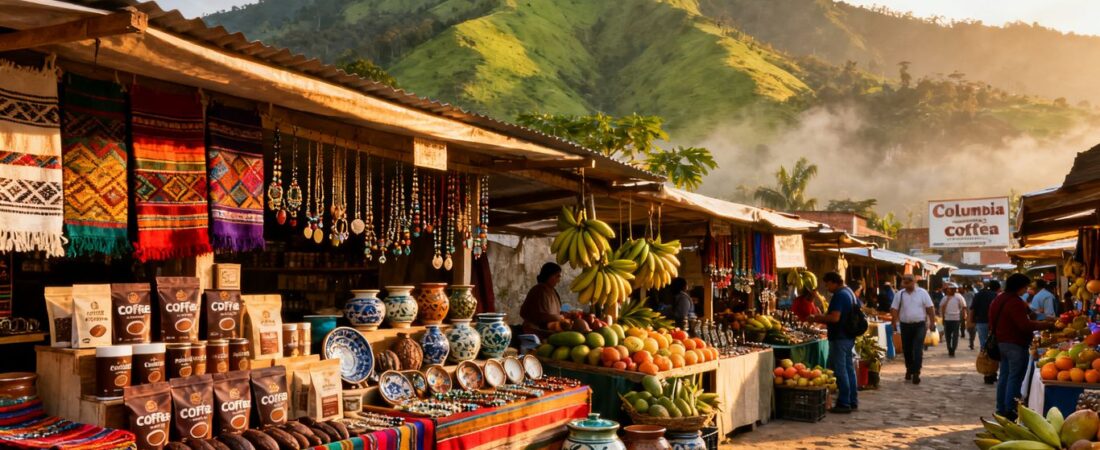
The local markets in medellin for souvenirs depend on whether we want crafts, food, or everyday Colombian products. Mercado de San Alejo is the clearest choice for traditional handmade goods. Mercado Campesino Arví and Plaza Minorista offer more regional and practical purchases.
Mercado de San Alejo for handmade crafts and traditional gifts
Mercado de San Alejo is a useful starting point for crafts, small artworks, jewelry, and traditional gifts. The market is associated with artisan selling rather than ordinary supermarket shopping. We should check current dates before visiting because this market is commonly held on a scheduled market day, not continuously.
Prices and quality vary between stalls, so a slow walk helps. Handmade ceramics, woven items, carved decorations, and small accessories are easier to pack than large pieces. For broader background on authentic crafts, we can also read this local crafts guide before deciding what fits our budget.
A practical comparison can keep the visit focused:
| Market | Best for | Shopping style |
|---|---|---|
| Mercado de San Alejo | Crafts and jewelry | Artisan stalls and browsing |
| Mercado Campesino Arví | Regional food and products | Rural producers and small vendors |
| Plaza Minorista | Ingredients and local commerce | Wholesale-style market shopping |
The table shows why San Alejo works best when the souvenir itself matters. We should not expect every item to be made in Medellín, so asking about origin remains worthwhile.
Mercado Campesino Arví for regional food and artisan products
Mercado Campesino Arví is suited to travelers who prefer edible gifts and products connected with rural Antioquia. Depending on the vendors and season, we may find preserves, panela, coffee, herbs, baked goods, and small artisan items. It feels less like a dedicated souvenir market and more like a meeting point for regional producers.
We should bring a reusable bag and check packaging before purchasing. Fresh foods may not travel well, while sealed products can be easier to carry internationally. A quick review of airline and customs rules is sensible before buying anything perishable.
Plaza Minorista for local ingredients rather than tourist souvenirs
Plaza Minorista is primarily a working market for produce, meats, grains, spices, fruit, and other household ingredients. It can be rewarding for travelers interested in daily commerce, but it is not the simplest place for polished keepsakes. We should visit for food culture and local ingredients rather than expect rows of gift shops.
The market is busy and practical. Cash, compact bags, and attention to belongings make the visit easier. This guide to La Minorista provides useful context about navigating the trading center and managing a market visit.
What types of souvenirs can you find in Medellin markets?
Medellín markets offer gifts that range from shelf-stable foods to decorative objects and inexpensive everyday items. We can find more meaningful purchases by considering how the product was made and whether it reflects Colombia or simply carries a Colombian label. Food is often the easiest option for limited luggage.
Coffee, cacao, panela, and other Colombian food products
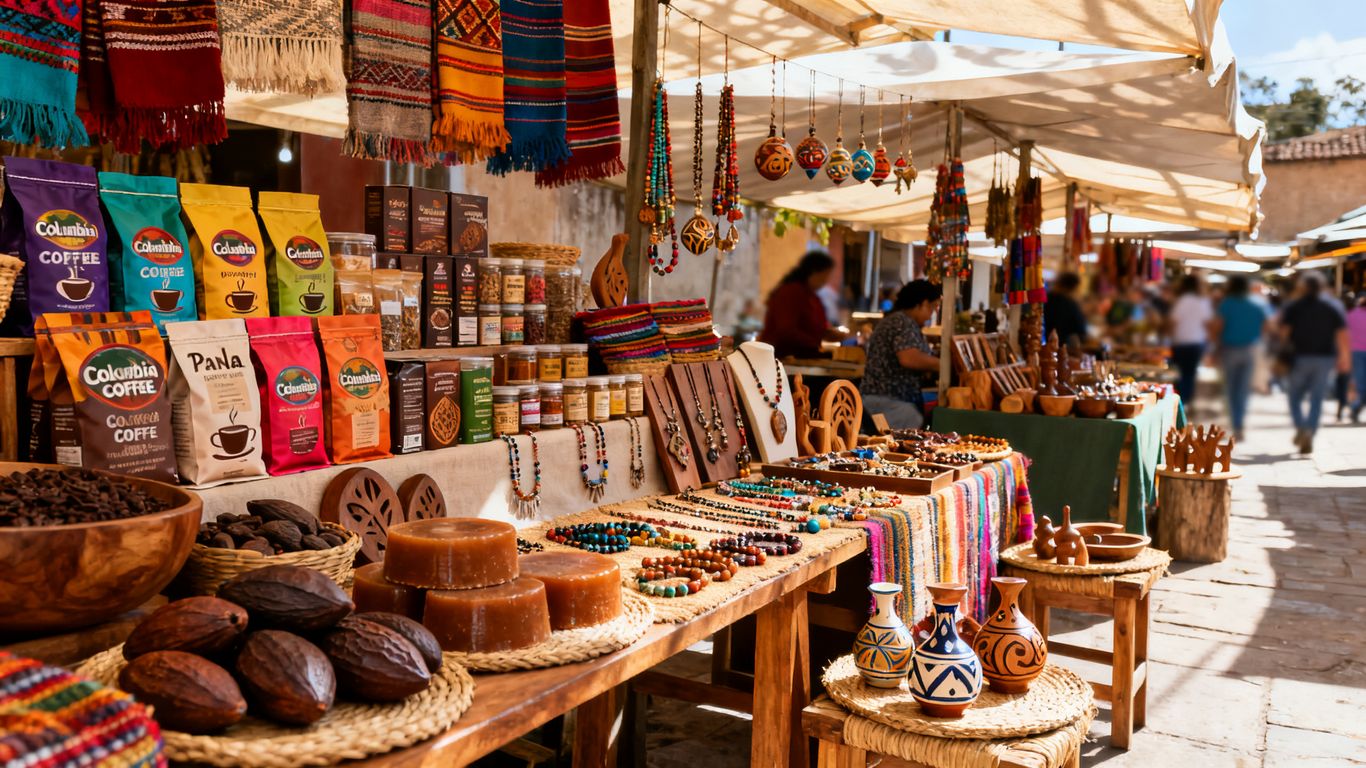
Coffee is compact, familiar, and widely available in different roast styles and formats. Panela, cacao products, sweets, preserves, and packaged fruit preparations can also work well. We should inspect roast dates, seals, ingredient lists, and customs restrictions before paying.
Loose or fresh products require more care than sealed packages. Whole-bean coffee usually travels better than freshly prepared foods, while chocolate can soften in warm conditions. We should ask vendors how the item is stored and how long it remains suitable for travel.
Handmade textiles, jewelry, and decorative crafts
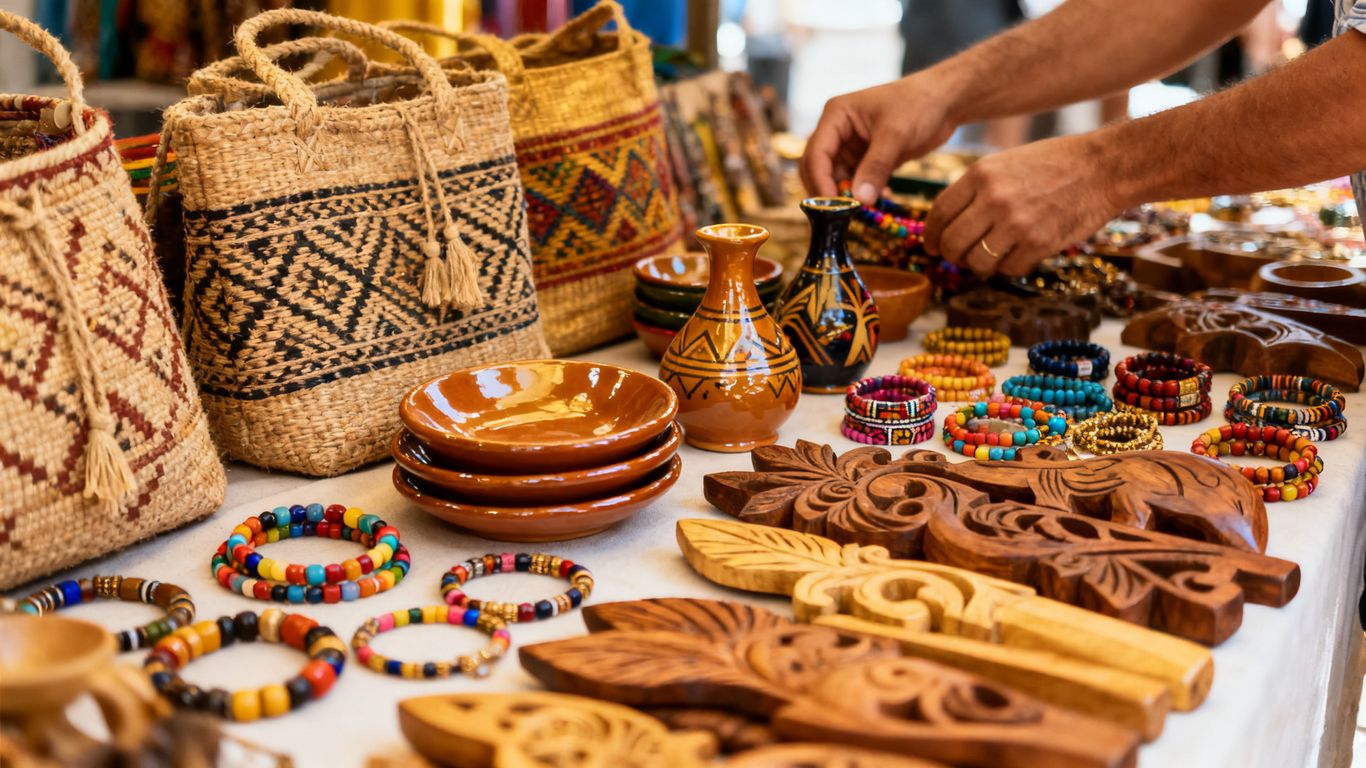
Textiles, woven bags, earrings, bracelets, ceramics, and wood decorations provide more lasting reminders of Medellín. Their value depends on material, construction, and provenance rather than size alone. A small handmade object may tell us more about local craft traditions than a generic mass-produced magnet.
We should examine stitching, clasps, glaze, and surface finish under good light. Natural variation can indicate hand production, but irregularity alone does not prove authenticity. A vendor who explains the material and maker gives us better information for comparison.
Small gifts inspired by Antioquian culture and daily life
Small gifts may include illustrations, regional sweets, kitchen items, hats, decorative figures, and locally designed accessories. These are practical choices when we want something inexpensive and easy to pack. We should distinguish an Antioquian reference from a product merely printed with a city name.
A useful test is whether the seller can explain the object’s connection to the region. If the answer is vague, we can compare it with several stalls before buying. Local context matters more than a colorful label when we want an authentic keepsake.
Where should visitors shop by neighborhood?
Each neighborhood serves a different shopping purpose, so we should choose by location and product rather than chase one universal market. Centro offers traditional commerce and broad price ranges. El Poblado, Laureles, and Comuna 13 are more convenient for curated or neighborhood-specific gifts.
Centro for traditional markets and lower-cost local shopping
Centro is the strongest area for traditional markets, produce halls, older commercial streets, and everyday local shopping. We may find better prices than in heavily tourist-oriented zones, although the experience can be busier and less polished. Mercado de San Alejo and Plaza Minorista fit naturally into a Centro-focused day, depending on their locations and schedules.
We should plan a clear route and avoid carrying visible valuables. Daytime visits are generally easier for first-time visitors, especially when we are still learning the streets. Comfortable shoes help because the most useful shops are often spread across several blocks.
El Poblado for convenient souvenir stores near tourist areas
El Poblado offers convenience, restaurants, hotels, and established shops near common visitor routes. Prices may be higher, but shopping can be easier when we have limited time or want packaged products. Provenza and Parque Lleras are useful for browsing, though we should still check whether an item is locally made or imported.
This area works well for last-minute gifts because transport and payment options are usually straightforward. We should compare at least two shops before buying a decorative item or packaged product. Convenience saves time, but it does not automatically confirm quality.
Laureles and Comuna 13 for neighborhood-specific gifts and crafts
Laureles has independent cafés, small shops, and a more residential pace than the busiest tourist areas. Comuna 13 is known for art, street culture, and neighborhood-based creative work, so gifts there may connect more directly with local visual identity. We should shop respectfully and avoid treating residential spaces as a backdrop.
The right purchase might be a print, small craft, or locally designed accessory rather than a standard market trinket. We should ask whether the artist or maker receives the sale. That simple question helps us choose thoughtfully while keeping the visit personal.
How can you choose authentic souvenirs in Medellin?
Authentic shopping requires more than finding the word “Colombia” on a package. We should ask where an item was made, what materials it uses, and how its price compares with similar products. These questions take little time and reduce the chance of buying imported merchandise presented as local craft.
Identifying locally made products versus imported merchandise
We can start by looking for specific information about the maker, workshop, community, or region. Handmade products often show small variations, but factory goods may also imitate that appearance. Labels, packaging, and a clear vendor explanation are stronger clues than appearance alone.
We should be cautious when several stalls carry identical items with identical finishing. That pattern may indicate wholesale merchandise rather than individually made work. Imported goods are not automatically poor choices, but they should be described honestly.
Comparing quality, materials, and prices before buying
We should compare similar objects across several stalls before deciding. Check weight, seams, clasps, glaze, print quality, and packaging. Price differences may reflect materials and labor, although a high price alone does not guarantee better workmanship.
A short comparison list helps when markets become crowded:
- Check the material and construction.
- Ask whether the item was made locally.
- Compare prices at two or three stalls.
- Confirm how the product should be packed or stored.
After this quick review, we can buy with clearer expectations. We also avoid rushing into a purchase because a seller presents it as the final available piece.
Asking vendors about origins, production, and responsible sourcing
A respectful question about origin often opens a useful conversation. We can ask who made the item, where the materials came from, and whether the vendor works directly with the maker. For textiles and jewelry, we can also ask about care, durability, and any cultural significance.
Responsible sourcing is not always easy to verify at a market stall. Still, transparent answers provide better guidance than vague claims. We should never pressure a vendor for personal information or photograph people without permission.
What should travelers know before visiting Medellin markets?
Market conditions change, so we should confirm opening hours, market days, and payment methods shortly before visiting. Some stalls prefer cash, while established stores may accept cards. A little planning keeps a shopping trip practical rather than rushed.
Opening hours, market days, and payment methods
We should verify schedules through a current local source, especially for markets held weekly or monthly. Arriving early can offer cooler conditions, fresher food, and more time to compare products. Later visits may still work, but popular items can sell out.
Keeping small Colombian peso notes is useful for modest purchases. We should ask about the final price before handing over money and check change immediately. For card payments, we should confirm the amount on the terminal and keep the receipt when possible.
Transport options and practical safety precautions
Metro, taxi, and app-based transport can connect visitors with the main shopping areas. We should use official stations, confirm the vehicle details, and avoid displaying phones or cash while walking. In busy markets, a zipped crossbody bag is more practical than an open tote.
We can make the visit easier by following a few basic habits:
- Carry only the money and cards needed for the outing.
- Keep phones away during crowded crossings and transactions.
- Use a trusted taxi or transport application after shopping.
- Recheck bags before leaving each stall or market section.
These precautions do not require constant anxiety. They simply reduce distraction in crowded commercial areas, where attention is more useful than expensive equipment.
Bargaining etiquette and restrictions for food or handmade goods
Some market prices allow polite negotiation, particularly when buying several items. We should bargain calmly and accept a firm price without arguing. Small independent vendors may depend directly on each sale, so respectful discussion matters.
Food purchases require extra care because customs rules differ by destination. We should keep sealed packaging and avoid carrying fresh products internationally unless the rules clearly allow them. Handmade goods made from animal materials, plants, or protected species may also face restrictions.
Are markets the only way to buy Colombian gifts?
Markets are useful, but they are not the only source of Colombian gifts. Established shops, specialty cafés, workshops, and neighborhood stores can offer clearer packaging and more consistent payment options. We should choose the format that fits our luggage, time, and interest.
When a coffee or cacao product makes a practical souvenir
Coffee and cacao products are practical when we want a compact gift with a clear connection to Colombian agriculture. We should check the roast date, origin details, ingredients, and shelf life. Sealed products are usually easier to transport than fresh market foods.
They also suit different budgets. A small packet works as a simple gift, while a higher-quality product can support a more specific interest in regional production. We should protect chocolate from heat and pack coffee where strong aromas will not affect other luggage.
Choosing a hands-on alternative such as the Colombian Cacao Experience
For travelers who want an activity rather than another object, the Colombian Cacao Experience is a hands-on bean-to-bar workshop in Laureles. It lasts approximately 3.5 hours and costs 160,000 COP per person. Guests roast raw cacao over fire, peel and grind beans on a traditional molino, join a cacao ceremony, try a chocolate exfoliation ritual, and finish with a signature cacao sour cocktail.
This option gives us a direct way to learn about cacao before taking home related products. It also suits visitors looking for an indoor cultural activity instead of standard sightseeing. We should reserve ahead when our schedule is fixed, since workshops have limited places.
Finding perfumes, packaged foods, and gifts in established shops
Established shops can be useful for packaged foods, fragrances, coffee, and gifts that need predictable hours or card payments. We should still read labels and ask whether a product is made locally or simply sold locally. That distinction helps us shop accurately without dismissing imported goods that we genuinely like.
The Colombian Cacao Experience can complement this kind of shopping by turning cacao into a cultural activity rather than only a packaged purchase. Afterward, we can choose a small food gift with more understanding of its ingredients and production. The best option depends on whether we value convenience, provenance, or the experience itself.
Conclusion
Medellín rewards souvenir shopping with patience: we can visit San Alejo for crafts, Arví for regional products, Minorista for local ingredients, and neighborhood shops for more curated gifts. By checking origins, comparing quality, and planning transport, we bring home something useful and genuinely connected to the city.
Frequently Asked Questions
Which market is best for handmade souvenirs in Medellín?
Mercado de San Alejo is the most suitable choice for handmade crafts, jewelry, and traditional gifts. We should confirm its current market schedule before visiting.
Is Plaza Minorista a tourist souvenir market?
Plaza Minorista is mainly a working market for ingredients, produce, and daily commerce. It suits travelers interested in local food culture more than polished keepsakes.
What Colombian food souvenirs travel well?
Sealed coffee, cacao products, panela, sweets, and preserves are usually more practical than fresh foods. We should check destination customs rules and packaging before buying.
Where can we shop for souvenirs in El Poblado?
El Poblado has convenient stores around tourist areas, including Provenza and Parque Lleras. Prices may be higher, so comparing products and checking their origin remains useful.
How can we tell whether a craft is locally made?
We can ask who made it, where the materials came from, and whether the vendor works directly with the maker. Similar items with identical finishing may indicate wholesale production.
Should we carry cash in Medellín markets?
Small Colombian peso notes are useful because some market vendors prefer cash. Established shops may accept cards, but we should confirm the final amount before completing payment.
Is a cacao workshop a good alternative to buying chocolate?
A hands-on cacao workshop suits travelers who want cultural learning instead of another packaged gift. It also provides context for choosing cacao products later.