Key Takeaways
Downtown Medellín brings together colonial landmarks, republican-era buildings, modern towers, and lively civic spaces. We can see these layers on foot, especially around Parque Berrío and Plaza Botero.
- The city center developed from a historic settlement into a major commercial district.
- The Palace of Culture, La Candelaria Basilica, and Vásquez and Carré buildings offer distinct historic details.
- The Coltejer Building stands out among downtown’s modern towers.
- Plaza Botero and Parque Berrío connect architecture with public life and transit.
- A daytime walking route helps us compare styles while staying aware of busy streets.
How downtown Medellín’s architecture developed
The architectural highlights of downtown medellin range from a colonial church to modern towers and civic plazas. We can read the city’s growth in its buildings, street patterns, and public spaces. A downtown city guide offers broader context for planning visits beyond the architecture route.
From colonial settlement to commercial center
Medellín’s traditional center took shape around Parque Berrío, where the settlement of Villa de Nuestra Señora de La Candelaria was established in 1675. The district grew outward from this civic and religious center as Medellín became the capital of Antioquia. Its central streets still bring churches, shops, transit, and public institutions into close contact. That mixture gives the area a lived-in quality rather than the feel of a preserved historic quarter.
The influence of industrial growth and urban expansion
As Medellín developed into an industrial center, downtown gained commercial buildings and larger civic institutions. Historic structures now sit beside busy retail streets and newer construction, reflecting the city’s changing role. The layers are especially clear when we move from older squares toward the administrative district. We can read them as layers of civic history, not as a neat sequence in which one style simply replaced another.
How modern development reshaped the city center
Modern development altered both the skyline and the ways people move through central Medellín. Metro stations, pedestrian corridors, and civic projects now intersect with older plazas and façades. The city’s development can also be followed through this downtown architecture walking tour, which connects historic buildings with urban renewal sites. Walking the area lets us notice how new routes change the experience of familiar landmarks.
Which historic buildings stand out
Historic downtown buildings range from a richly ornamented cultural landmark to a working basilica and former commercial structures. We can compare their façades and settings without needing specialist knowledge. The details become easier to spot when we pause at each site rather than treating the center as one continuous streetscape.
Rafael Uribe Uribe Palace of Culture
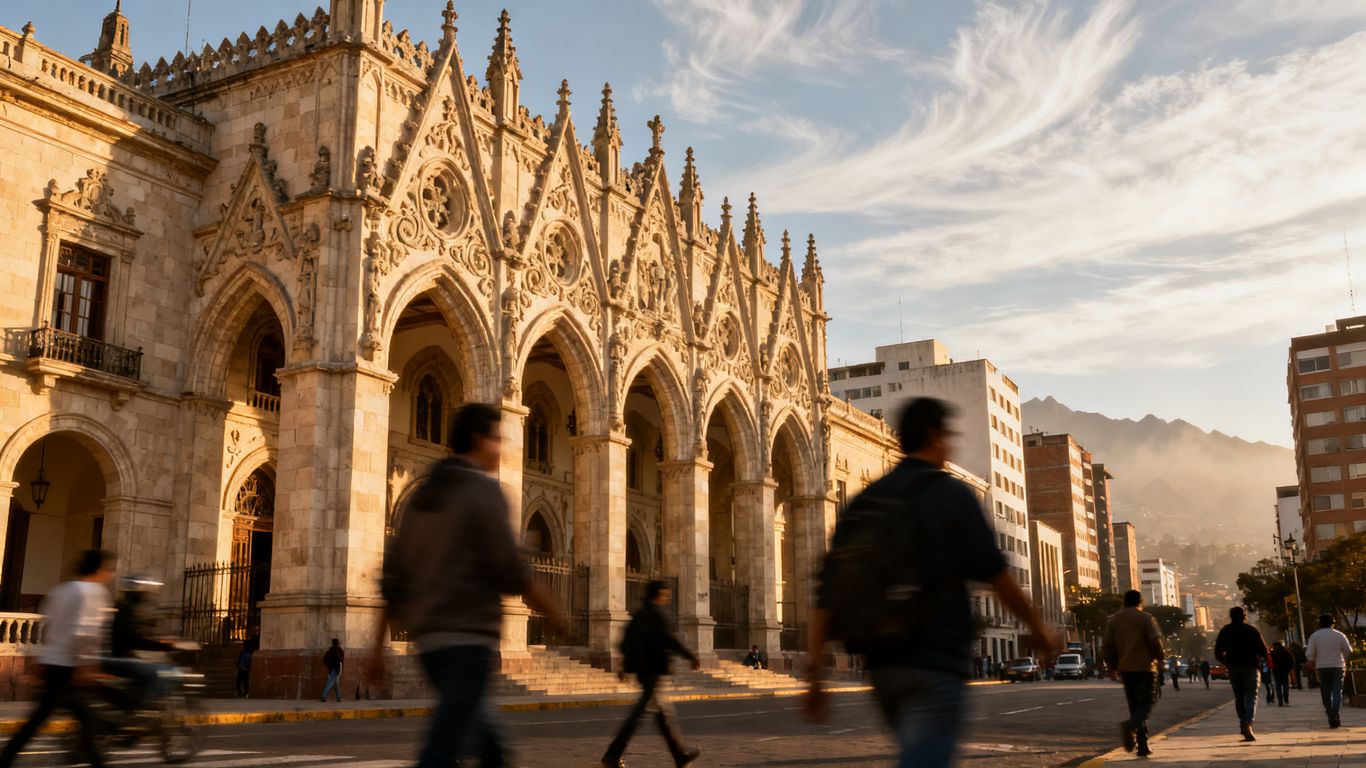
The Rafael Uribe Uribe Palace of Culture is one of the center’s most recognizable historic buildings. Designed by Belgian architect Agustín Goovaerts, it stands beside Plaza Botero and draws attention through its elaborate exterior. Its pointed forms and varied ornament make it a useful place to look for Gothic and eclectic influences. From the plaza, we can also see how the building relates to the surrounding civic and cultural institutions.
Basilica of Our Lady of Candelaria
The Basilica of Our Lady of Candelaria stands near Parque Berrío, close to the historic heart of downtown. The church dates to the colonial period, with construction beginning in 1649. Its restrained exterior offers a contrast with the more decorative Palace of Culture. We can view the basilica as both a religious landmark and a reference point for the city’s earliest central streets.
Vásquez and Carré buildings
The Vásquez and Carré buildings are historic commercial structures near Plaza Cisneros and the former railway station area. Their arcades and brickwork make them easy to distinguish from the surrounding contemporary development. The two buildings help show how commerce and transport shaped central Medellín. Their restored presence also gives the district a visible connection to its earlier urban life.
Where to see modern architecture
Modern architecture appears across the downtown skyline and in civic projects that reorganize public space. Rather than looking for one unified style, we can compare buildings by their height, materials, and relationship to the street. Several routes through the center bring older façades and newer structures into a single view.
Coltejer Building and the downtown skyline
The Coltejer Building is a prominent marker in Medellín’s downtown skyline and a recognizable expression of the city’s industrial era. Its tall, tapered profile stands apart from lower historic buildings nearby. From streets and open plazas, we can use it as a visual reference while noticing how the skyline changes across the valley. Its presence is a reminder that commercial growth left a lasting mark on the city center.
Contemporary design around major civic spaces
Civic spaces show how contemporary planning can alter the way we encounter downtown architecture. Plaza Cisneros, also known as Parque de las Luces, pairs a broad public area with slender illuminated columns. Nearby, the Palace of Culture and other civic buildings create a contrast between ornamented façades and open modern spaces. Building designers also use architectural lighting principles to consider how illumination relates to façades and paths.
Contrasts between historic façades and newer construction
The most revealing views often come from looking across a street rather than focusing on one building. A brick commercial block, a decorated historic façade, and a glassier newer structure may occupy the same short walk. The following comparison helps us notice differences in form and setting, without suggesting that every building fits one category.
| What we notice | Historic examples | Modern examples |
|---|---|---|
| Exterior detail | Ornament, arcades, and brickwork | Simpler surfaces and larger forms |
| Street presence | Lower façades close to the sidewalk | Taller volumes visible across blocks |
| Relationship to public space | Shops, churches, and established plazas | Civic projects and open pedestrian areas |
These are broad visual cues, not strict rules. We can use them to look carefully while allowing each building’s history and function to remain distinct.
How public spaces connect the city’s landmarks
Downtown’s public spaces provide practical pauses between buildings and help explain how the center functions. Plaza Botero, Parque Berrío, and the pedestrian streets around them link art, transit, commerce, and historic architecture. We can move between many of the central landmarks on foot, though the streets remain busy and require attention.
Plaza Botero and its surrounding buildings
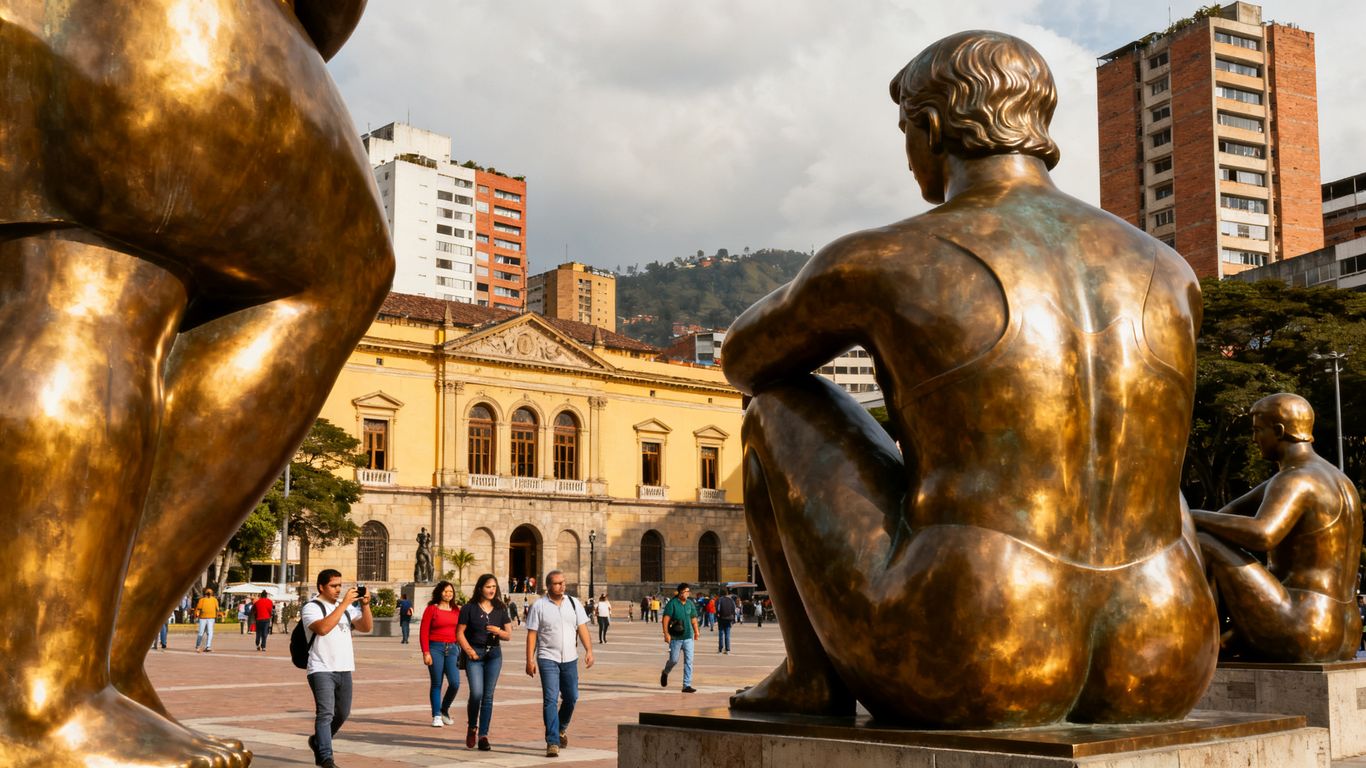
Plaza Botero places monumental sculptures in an open public setting beside the Palace of Culture and Museo de Antioquia. The works are freely accessible, and the plaza makes an easy point from which to compare art, architecture, and street activity. A guide to the Plaza Botero sculptures can help us identify what we are seeing before or after a visit. We should keep personal belongings close, as in any crowded urban square.
Parque Berrío as a historic transport and gathering point
Parque Berrío has long served as a central gathering place, and it remains closely tied to the Metro and surrounding commercial streets. The nearby Basilica of Our Lady of Candelaria makes the park a clear meeting point between older religious architecture and contemporary transit. We can pause here to orient ourselves before walking toward Plaza Botero or other central sites. It is a useful place to observe how daily movement shapes the public realm.
Streets and pedestrian routes between key sites
Pedestrian routes make it possible to connect many landmarks without constantly returning to a main road. Some visitors also draw comparisons between how they inspect residential spaces on self-guided apartment tours and how they look at light, layout, and building details here. These are different kinds of visits, but both reward slowing down and observing the surroundings. For an architecture walk, a short sequence keeps the route manageable:
- Begin near Parque Berrío and the Basilica of Our Lady of Candelaria.
- Continue toward Plaza Botero and the Palace of Culture.
- Walk on to Plaza Cisneros and the Vásquez and Carré buildings.
- Finish by looking back toward the skyline and Coltejer Building.
This route links distinct periods while keeping the stops close together. We can adjust it to suit the day’s pace and local street conditions.
What architectural styles to look for
Downtown Medellín is not defined by a single architectural style. We can spot colonial and republican details, Gothic references, eclectic decoration, and modernist forms within a relatively compact area. The most useful approach is to notice visible features first, then consider how each building fits its setting and period.
Colonial and republican details
At older sites, look for strong masonry, formal entrances, arcades, and carefully proportioned windows. The Basilica of Our Lady of Candelaria offers a colonial reference, while buildings from later periods often display more elaborate façades and decorative elements. The Vásquez and Carré buildings show how commercial architecture can combine practical street-level spaces with historic detailing. These differences help us distinguish periods without needing to assign every building a precise label.
Gothic and eclectic influences
The Palace of Culture is a useful place to notice pointed arches, towers, and decorative combinations associated with Gothic and eclectic design. Its exterior is more visually intricate than the nearby basilica, which makes the contrast easy to see. We can look for repeated motifs and shifts in shape rather than trying to identify every architectural reference. A slow circuit around the building offers more to notice than a quick photograph from one angle.
Modernist forms and changing materials
Modernist buildings often draw attention through scale, simple geometry, and materials that differ from older masonry façades. In downtown Medellín, we can compare the Coltejer Building’s skyline profile with lower historic blocks and newer civic projects. Visitors documenting their route may also find this podcast and video production guide relevant to planning recorded material, though the studio it describes is outside Colombia. The architectural observation itself needs no special equipment; a few deliberate pauses are usually enough.
How to plan a downtown architecture walk
A downtown architecture walk works best when we choose a compact route and leave time to look around. The main landmarks sit amid active commercial streets, so walking conditions can change from one block to the next. We should plan for daylight, keep valuables secure, and remain flexible if a street or plaza feels crowded.
A practical route between major landmarks
We can start at Parque Berrío, continue to the Basilica of Our Lady of Candelaria, and then walk toward Plaza Botero. From there, the Palace of Culture, Plaza Cisneros, and the Vásquez and Carré buildings form a logical continuation. This sequence moves through different architectural periods without requiring a long detour. If we want a longer visit, we can add nearby civic buildings after checking current access and opening conditions.
Transit, walking conditions, and timing
The Metro serves the central area, with stations near several major landmarks, including Parque Berrío. We should check the current transit map and service information before setting out, then use walking for the short connections between sites. Daytime visits make it easier to examine details and navigate crowded sidewalks. For commercial buildings, cultural venues, or workspaces, operational matters can be separate from architecture; a general managed IT services guide is aimed at businesses rather than visitors.
Respectful photography and street awareness
Public plazas offer good angles, but photography should not interfere with people using the space. We can avoid photographing individuals closely without permission and follow any posted rules inside churches or cultural venues. Keep phones and cameras secure, especially near busy streets and transit entrances. Even personal-care guides such as accessible shower brushes belong to a different kind of travel planning; for this walk, our attention is better spent on the buildings and surroundings.
Conclusion
Downtown Medellín’s architecture is easiest to understand as a sequence of places and periods: a historic basilica, ornate cultural buildings, commercial landmarks, modern towers, and public spaces that connect them. We can follow that sequence on foot, taking time to notice how each structure meets the street and how the city continues to change around it.
Frequently Asked Questions
What is the most recognizable historic building in downtown Medellín?
The Rafael Uribe Uribe Palace of Culture is among the center’s most recognizable historic buildings. Its ornate exterior and location beside Plaza Botero make it easy to include on a walking route.
Where is the Basilica of Our Lady of Candelaria?
The basilica stands near Parque Berrío in the historic center. Its location makes it convenient to visit alongside the park and nearby downtown landmarks.
Can we see downtown Medellín’s architecture on foot?
Yes, many central landmarks are within walking distance of one another. We should expect busy sidewalks and crossings, and plan a route that allows time for stops.
What is the Coltejer Building known for?
The Coltejer Building is a prominent tower in the downtown skyline. Its distinctive profile provides a visible contrast with lower historic buildings nearby.
What are the Vásquez and Carré buildings?
They are historic commercial buildings near Plaza Cisneros and the former railway station area. Their arcades and brickwork distinguish them from newer structures around them.
When is a good time to take an architecture walk?
Daytime is generally practical for observing façades and moving between sites. Before visiting, check current transit, venue access, and local conditions.
Which public spaces connect downtown’s architectural landmarks?
Plaza Botero and Parque Berrío are useful central points, with pedestrian routes leading toward Plaza Cisneros. Together, they connect cultural landmarks, transit, and historic streets.