Key Takeaways
Medellín’s street art is easiest to understand when we combine locations, local history, and practical respect.
- Comuna 13 offers the city’s most concentrated route of murals, music, and public art.
- Centro, Provenza, El Poblado, and Laureles show different artistic and social contexts.
- Local guides can add historical detail that walls alone cannot provide.
- Daylight, comfortable shoes, and flexible weather plans make visits easier.
- We should photograph artwork carefully while respecting residents and working artists.
Where to find Medellín’s most significant street art
A useful street art and murals guide medellin should begin with neighborhoods, not isolated walls. Comuna 13 is the clearest starting point, but Centro, Provenza, El Poblado, and Laureles offer different experiences. We can see major murals in one day, although understanding them properly takes longer.
Comuna 13’s murals, escalators, and graffiti galleries
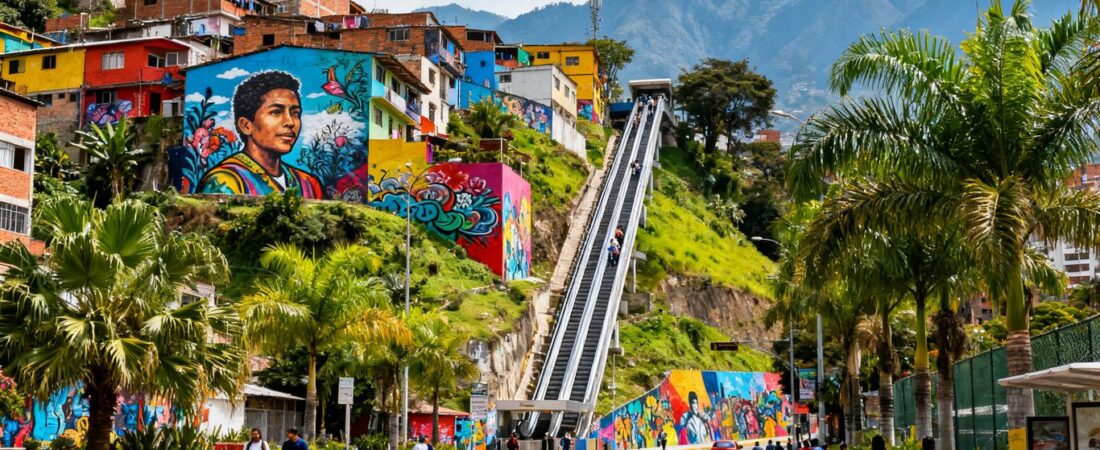
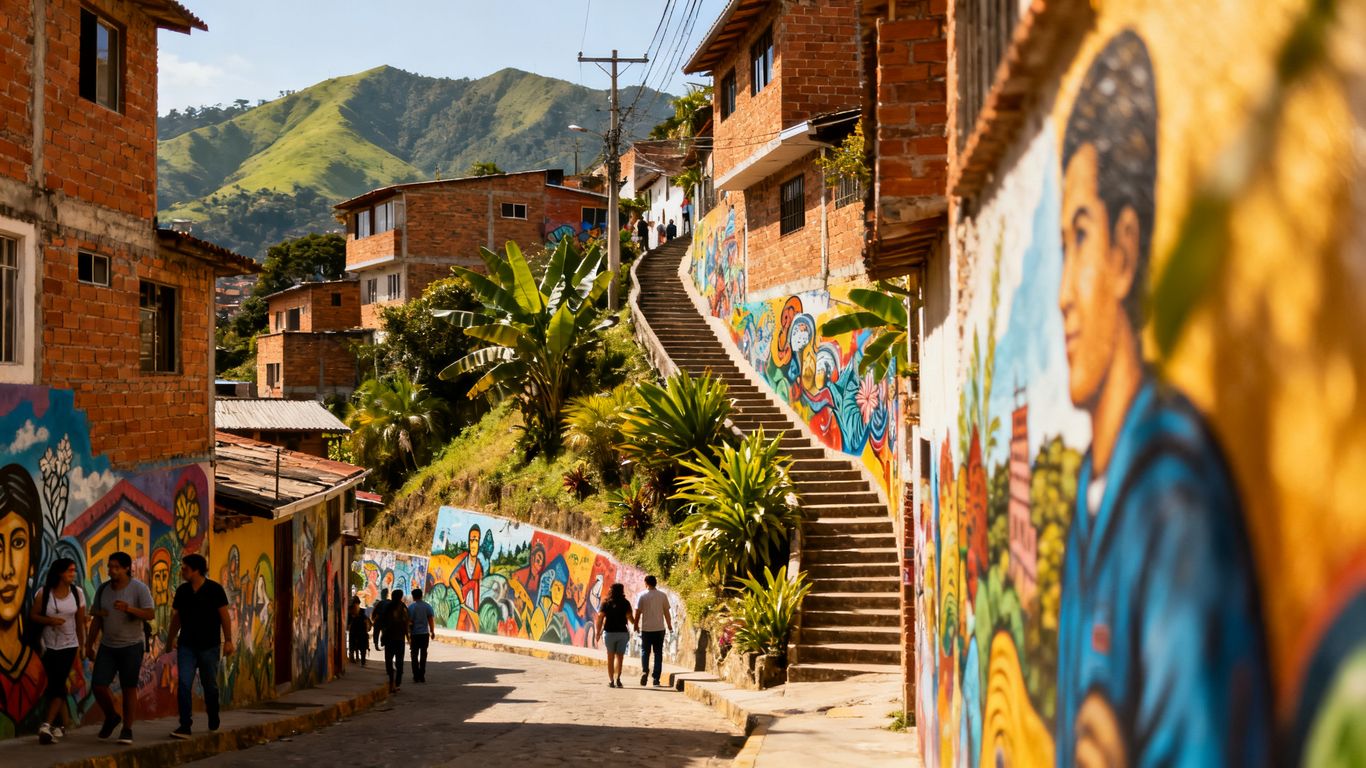
Comuna 13 remains Medellín’s most concentrated street art destination. Its steep routes include murals, graffiti galleries, music, dance, small shops, and the outdoor escalators. The Comuna 13 Graffiti Tour provides useful context about the neighborhood’s transformation and community-led art. We should allow several hours rather than treating the visit as a quick photo stop.
The best-known paths are busy during the middle of the day. We can pause in wider viewing areas, listen to artists or guides, and avoid blocking residents moving through the neighborhood. The murals change over time, so older photographs may not match what we see during a current visit.
Centro’s murals and public art installations
Centro offers a different kind of urban art experience. Around Plaza Botero, Plaza Cisneros, and La Candelaria, public sculptures and installations sit alongside commercial streets, historic buildings, and changing walls. The Plaza Botero Medellín Statues guide is useful for planning an open-air art walk near the Museo de Antioquia.
We can also combine the route with Parque de las Luces and nearby public libraries. Centro is most comfortable during daylight, when shops and public spaces are active. A local walking route helps us understand how public art fits into wider urban redevelopment rather than viewing each work as decoration alone.
Street art around Provenza and El Poblado
Provenza and El Poblado contain murals on restaurant walls, hotel facades, side streets, and commercial buildings. The work often changes quickly because construction, repainting, and new businesses alter the streetscape. This makes the area suitable for a relaxed walk between cafés, galleries, and restaurants.
A street art guide can help us compare the neighborhood’s imagery with Comuna 13’s more community-centered routes. We should check whether a wall sits on private property before entering a courtyard or photographing through a doorway. The most attractive viewpoint is not always the most appropriate one.
Lesser-known works in Laureles and nearby neighborhoods
Laureles has fewer concentrated graffiti corridors, but its broad sidewalks and mixed residential streets make slow exploration practical. We may find painted shutters, commissioned walls, small galleries, and neighborhood artwork near cafés or cultural venues. The area also works well when we want a quieter afternoon away from the busiest tourist routes.
For an indoor cultural stop nearby, the Colombian Cacao Experience offers a hands-on bean-to-bar workshop in Laureles. It lasts approximately 3.5 hours and costs 160,000 COP per person. Guests roast cacao over fire, peel and grind beans on a traditional molino, join a cacao ceremony, and finish with a chocolate exfoliation ritual and cacao sour cocktail. That is not street art, but it fits naturally into a broader culture-focused day.
How to understand the stories behind the murals
Murals in Medellín are not a single visual language. Some refer to violence and displacement, while others focus on nature, identity, memory, or neighborhood pride. We should read them alongside local explanations rather than assigning a dramatic meaning to every bright wall.
Violence, displacement, and neighborhood transformation
Many murals refer to difficult periods in Medellín’s recent history without presenting one simple version of events. In Comuna 13, artists may connect memory, displacement, youth culture, and neighborhood change. We should listen for who is speaking, whose experience is being remembered, and whether a guide identifies the artist or collective.
The Museo Casa de la Memoria offers additional historical context through personal stories and exhibitions about conflict, resistance, and peace. Visiting a museum before or after Comuna 13 can make the visual references easier to follow. Context changes the way we look, especially when a mural appears celebratory at first glance.
Indigenous, Afro-Colombian, and local cultural references
Artists may draw on Indigenous imagery, Afro-Colombian histories, regional animals, plants, music, hairstyles, clothing, and local symbols. We should avoid treating these references as interchangeable decorations. A guide, artist statement, or community explanation is more reliable than guessing from color or costume.
Nature is also common in Medellín’s public art. Birds, flowers, mountains, and tropical forms may connect the city to Antioquia’s broader landscape. We can ask open questions about these elements instead of assuming that every animal has a fixed symbolic meaning.
Political messages and community-led artwork
Some works address inequality, public space, memory, policing, migration, or access to services. Others are created through neighborhood workshops or collaborative projects. Their meaning may depend on when and why the wall was painted, so dates and local testimony matter.
We should distinguish between a political message and our own reaction to it. Photographing the work is easy; understanding its local audience is harder. A respectful guide will explain disagreement and complexity rather than turning every mural into a feel-good story.
Differences between graffiti, murals, and commissioned art
Graffiti, murals, and commissioned public art overlap, but they are not identical. Graffiti may be spontaneous, signed, or produced without formal permission. Murals are larger compositions that can be collaborative or authorized, while commissioned works usually have a client, agreed location, and defined brief.
Those categories can change over time. A wall may begin as an independent piece and later become part of a formal cultural route. We can avoid rigid labels by crediting the artist or collective when information is available and by asking local sources how they describe the work.
How to visit Comuna 13 responsibly
A responsible visit treats Comuna 13 as a working neighborhood, not an outdoor theme park. We should notice residents, businesses, artists, and children sharing the same narrow paths. The route becomes more meaningful when our spending and behavior support local life.
Choosing between a self-guided visit and a local tour
A self-guided visit gives us flexibility, but a local tour often explains the history, artwork, and geography more accurately. First-time visitors may find the steep streets and changing routes easier with someone who knows the area. Independent travelers should stay on active public paths and avoid wandering into unfamiliar side streets.
We can compare tour length, meeting point, group size, and what the fee includes. A free tour still depends on tips, and paid tours are not automatically more respectful. The right choice is the one that gives us context without turning residents into scenery.
Supporting local artists and neighborhood businesses
Buying directly from artists, galleries, snack sellers, and small shops keeps some visitor spending within the neighborhood. We should ask prices clearly, carry smaller Colombian peso notes, and avoid bargaining aggressively over handmade work. A purchase is optional, but respectful interaction should never depend on spending.
We can also support the area by choosing local food, using neighborhood services, and following photography requests. The street food guide can help us understand common snacks and practical buying habits before visiting. That preparation reduces awkwardness and keeps the focus on people rather than consumption.
Asking permission before photographing residents
Murals are public, but residents are not automatically public subjects. We should ask before photographing a person, especially children, vendors, performers, or anyone posing near a wall. A clear gesture and a polite “¿Puedo tomar una foto?” is better than silently pointing a camera.
If someone declines, we should lower the camera and move on. We should also avoid photographing private conversations or homes through open doors. These small choices make the visit less extractive and usually lead to better interactions.
Avoiding restricted areas and private property
Stairs, balconies, rooftops, and narrow alleys can look like excellent viewpoints, but they may be private or unsafe. We should follow barriers, local instructions, and signs even when another visitor ignores them. Never climb a wall or enter a building for a photograph.
The same principle applies to equipment and access planning. Advice about Complete Sports Flooring concerns stable foundations for sports facilities, not tourist routes, but it illustrates a useful broader point: surfaces and structures need proper assessment before use. We should not treat an unfamiliar staircase or roof as a viewing platform.
When to explore Medellín’s street art
Timing affects light, heat, crowds, and access. We generally get the clearest experience by visiting during daylight and leaving enough space for pauses. Weather changes quickly, so a good plan includes indoor alternatives rather than forcing a walk through heavy rain.
Best times for lighting, temperatures, and smaller crowds
Morning usually brings softer light and fewer visitors, although some shops or galleries may open later. Late afternoon can produce warm color on west-facing walls, but routes may become crowded. We should avoid rushing between locations because hills, stairs, and conversations all take time.
For Comuna 13, an earlier daytime visit often makes navigation more comfortable. In Centro, morning also allows time for museums and public spaces before the busiest period. We should carry water and wear shoes with reliable grip.
Rainy-season planning and covered stops
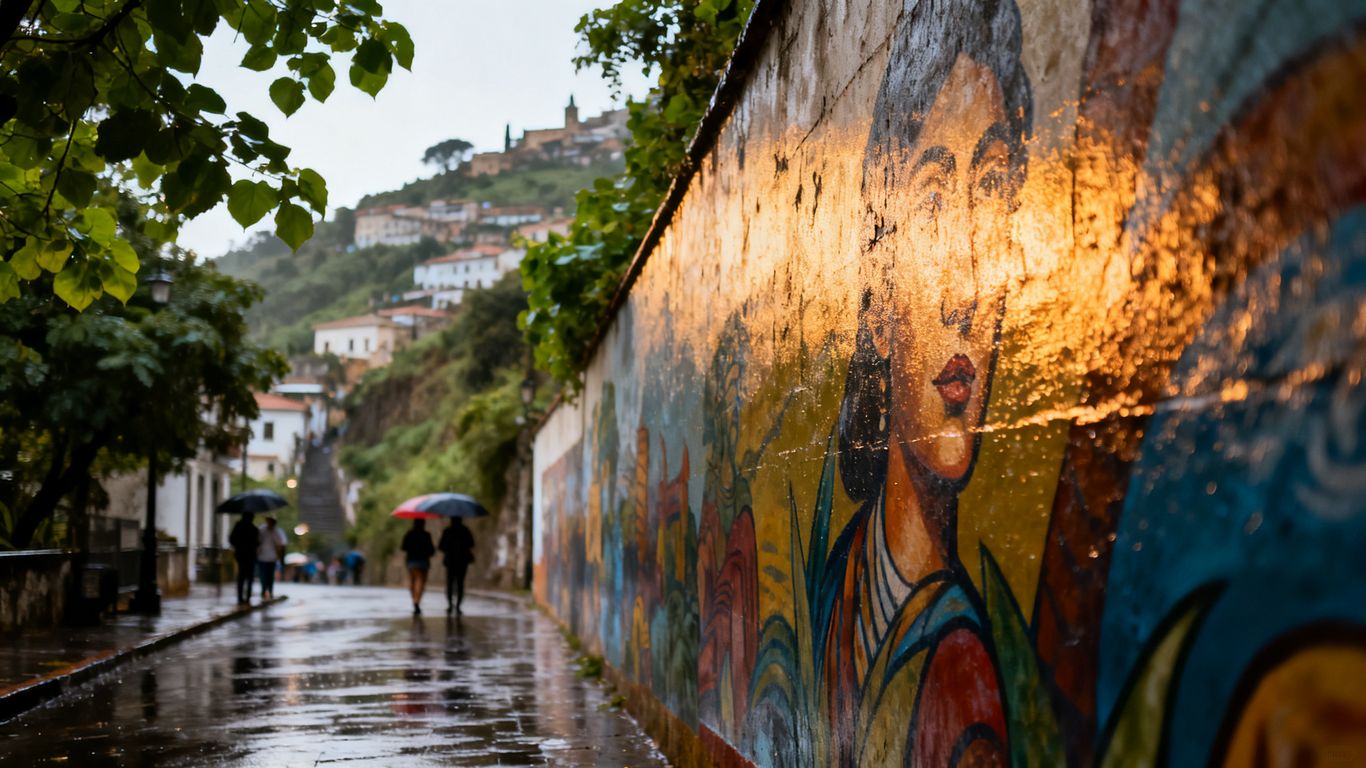
Rain can arrive quickly, especially during wetter periods, and steep surfaces become slippery. We should carry a compact rain jacket, protect camera equipment, and keep one covered stop in reserve. A café, museum, gallery, or workshop can turn a weather delay into part of the day.
The Colombian Cacao Experience is one practical indoor option in Laureles. Its approximately 3.5-hour workshop costs 160,000 COP per person and includes roasting, grinding, a cacao ceremony, exfoliation, and a cacao sour cocktail. We can book the Colombian Cacao Experience when the schedule suits us, without pretending that it replaces the outdoor art route.
Opening hours for galleries and cultural spaces
Street walls remain visible, but galleries, museums, studios, and cultural centers have their own schedules. We should verify opening hours directly before building a route around a specific indoor stop. Public holidays can change hours with little notice.
The Herrig Center for the Arts is in Bradenton, Florida, not Medellín, so it is not a stop on this route. Its example is still useful when comparing arts institutions: galleries, studios, classes, and artist spaces operate differently from open street walls. We should confirm location carefully before relying on a search result.
Planning around weekends, events, and public holidays
Weekends can bring more visitors, performances, pop-up sellers, and changing crowd patterns. Public holidays may close museums while leaving outdoor routes accessible. We should keep the day flexible and avoid promising exact access to temporary artwork.
Events can also make streets busier than usual. If we prefer quieter observation, a weekday morning may work better. If we want music and public activity, a weekend can be rewarding, provided we protect our belongings and leave room for residents.
How to plan a street art route in Medellín
The easiest route is not always the shortest route. Medellín’s hills, transfers, traffic, and weather can make a map look simpler than it feels. We should group nearby neighborhoods and allow time for pauses, food, and unexpected conversations.
Combining Comuna 13 with San Javier transport
Comuna 13 is reached through the Metro system toward San Javier, followed by a local connection or walk toward the neighborhood. We should check the current Metro map, fares, and operating conditions before leaving. From the station, local directions matter because the most visible route is not always the only access point.
A morning visit can pair well with a later stop elsewhere, but we should not schedule several distant attractions immediately afterward. Transfers, queues, and steep walking add up. Leave a buffer instead of turning the day into a race.
Walking routes through Centro and La Candelaria
Centro and La Candelaria can form a compact walking route around public art, museums, plazas, and historic streets. We should plan the sequence by opening hours, then use public spaces as natural pauses. The Museo Casa de la Memoria adds useful historical depth when its schedule fits the route.
We should stay alert while moving between major sites because busy commercial areas can become crowded quickly. A local walking tour may explain urban changes more clearly than a self-guided list of landmarks. The route should remain flexible if a street feels too congested.
Linking El Poblado murals with cafés and galleries
El Poblado works well as a slower neighborhood walk, especially around Provenza and nearby commercial streets. We can combine murals with cafés, small galleries, and restaurants, while remembering that many walls belong to private businesses. Ask before photographing interiors or staff.
The neighborhood is also a useful place to compare commissioned art with informal pieces. We should record artist names when displayed and avoid assuming that every colorful facade is a permanent mural. Construction and repainting can change the route between visits.
Allowing time for hills, stairs, and photo stops
A route that appears short on a map may require steep climbs, crowded stairs, or repeated stops. We should add at least one slower period for photographs, explanations, water, and rest. Comfortable clothing matters more than dressing for a polished social media image.
A simple route plan can include these practical checks before departure:
- Confirm the day’s weather and likely rain periods.
- Check Metro, museum, and gallery operating hours.
- Carry water, small cash, and a charged phone.
- Leave space for local food or an unplanned conversation.
This approach keeps the itinerary usable rather than merely attractive on paper. The urban mobility guide offers broader context on pedestrian safety and street design, although our route still requires local judgment at each crossing.
Practical safety and transportation advice
Street art routes involve public transport, busy sidewalks, stairs, and unfamiliar streets. We should use normal city precautions without treating neighborhoods as stereotypes. Daylight, situational awareness, and a low-profile approach solve many practical problems.
Using the Metro and MetroCable for Comuna 13
The Metro is the main public transport starting point for Comuna 13, with San Javier serving as the key station for the area. MetroCable connections and route conditions can vary, so we should check official updates before traveling. We should queue calmly and keep belongings close on platforms and vehicles.
The cable system can offer broad city views, but it is transportation first. We should avoid blocking doors, respect local passengers, and follow staff instructions. A route map downloaded before leaving is useful when mobile data is unreliable.
Taking registered taxis and ride-hailing services
For trips outside the Metro network, we should use registered taxis or established ride-hailing services. Confirm the vehicle and destination before entering, and avoid accepting unsolicited rides near busy attractions. At night, arrange pickup from a visible, staffed location.
Ride-hailing pickup points can be confusing on narrow streets. We should wait in a well-lit public area and share trip details with a companion. If a driver asks us to cancel and pay privately, using another vehicle is safer.
Protecting phones, cameras, and personal belongings
Busy viewing areas create easy opportunities for distraction theft. We should keep phones away when walking between stops, use a closed bag, and avoid displaying expensive camera equipment unnecessarily. Backing up photographs during the trip protects memories if a device is lost.
We should carry only what the route requires. A passport copy may be more practical than the original for ordinary sightseeing, while emergency contact information should remain accessible. These are simple habits, but they prevent a small problem from ending the day.
Staying aware in crowded viewing areas
Crowds often gather where a mural, performer, or viewpoint attracts attention. We should stand to one side, watch our group, and avoid stopping in stairways or doorways. Keep one person alert while another takes photographs.
If a place suddenly feels uncomfortable, leave without debating the decision. We can return with a local guide or choose a less crowded route. The aim is to see art with attention, not to prove that we can ignore our instincts.
How to photograph Medellín’s murals respectfully
Photography is part of most street art visits, but it should not dominate the neighborhood. We should frame the artwork clearly while leaving paths open and keeping residents out of unwanted images. Good photographs usually come from patience rather than standing in the middle of the street.
Finding strong viewpoints without blocking pathways
Look for wider corners, side angles, and lower viewpoints before stepping into a busy passage. We can wait for a gap instead of asking everyone to move. If a wall is beside a business entrance, take the photograph quickly and keep the doorway clear.
Wide-angle images often show the mural’s setting, which adds useful context. A close crop can work for texture and color, but it may remove the neighborhood relationship that gives the work meaning. We should take both only when doing so does not disrupt traffic.
Photographing artwork in changing daylight
Cloud cover can soften strong contrasts, while direct sun may make bright paint look flatter. We can return to the same wall at another time if the light is poor. Adjusting exposure carefully is better than using heavy filters that change the colors.
Murals may include reflective paint, metal surfaces, or uneven walls. We should check the screen for glare and detail before leaving. Photographing from several respectful angles helps when the street is too narrow for a perfect frontal image.
Understanding when flash or tripods are inappropriate
Flash can distract performers, residents, or other visitors, especially in narrow galleries and indoor cultural spaces. Tripods can block stairs and pathways, so handheld equipment is usually more considerate. We should follow any gallery rules and ask before photographing an artist at work.
A phone is often enough for documentation. Larger equipment can attract attention and slow movement through crowded areas. The strongest approach is quiet, quick, and aware of the people sharing the space.
Sharing images while crediting artists and communities
When we post a mural, we should credit the artist or collective if the name is available. Location tags should be used carefully when a wall sits on private property or in a residential area. We should not imply that a resident, business, or community endorses an image without permission.
Captions can include the neighborhood, date, and artist rather than vague claims about transformation. We should avoid identifying children or vulnerable residents without clear consent. Sharing art responsibly keeps attention on the work while reducing unwanted exposure.
Conclusion
A strong Medellín street art route combines Comuna 13 with Centro, Provenza, El Poblado, and quieter Laureles walks. We get more from the murals when we learn their context, plan around weather and transport, and treat residents as neighbors rather than scenery. The best visit is observant, flexible, and respectful.
Frequently Asked Questions
Where is the best place to see street art in Medellín?
Comuna 13 has the most concentrated route of murals, graffiti galleries, music, and public art. Centro, Provenza, El Poblado, and Laureles provide useful contrasts.
How long should we spend in Comuna 13?
We should allow several hours for transport, walking, photographs, explanations, and rests. A rushed visit can miss the neighborhood’s historical and community context.
Is a local guide necessary for Comuna 13?
A guide is not strictly necessary, but local knowledge can explain the murals and help with navigation. Self-guided visitors should remain on active public routes and follow local instructions.
What should we bring for a Medellín street art walk?
We should bring water, comfortable shoes, a rain jacket, small cash, and a charged phone. Camera equipment should remain compact and easy to secure.
Can we photograph people beside the murals?
We should ask permission before photographing residents, vendors, performers, or children. If someone declines, we should respect the answer and photograph the artwork without them.
What is the best time to visit Medellín’s murals?
Daylight hours are generally most practical, with morning often offering softer light and smaller crowds. We should check weather, opening hours, and event schedules before leaving.
How can we support local communities during a street art visit?
We can buy from local artists and businesses, pay fairly, follow photography requests, and avoid blocking paths. Listening to local explanations is also a meaningful form of respect.