Key Takeaways
The Museo de Antioquia offers a focused way to see Fernando Botero’s art in Medellín. We can pair the indoor collection with Plaza Botero and nearby downtown landmarks.
- The museum contains paintings, drawings, and sculptures by Fernando Botero.
- Plaza Botero adds a free outdoor group of monumental bronze sculptures.
- We should confirm hours, admission, and exhibition details before visiting.
- Parque Berrío Metro station provides a practical route to the museum.
- Allow two to three hours for the museum and surrounding public art.
What can you see in the Fernando Botero art collection at Museo de Antioquia?
The fernando botero art collection museo de antioquia is one of Medellín’s clearest introductions to the artist. Inside, we find paintings, drawings, and sculptures connected to Botero’s long exploration of volume, color, and everyday subjects. The collection is especially useful when we want context, rather than only outdoor photo opportunities. We can see selected works at our own pace, then continue across the plaza.
Key paintings and sculptures to look for
We should begin with the works that make Botero’s visual language easy to recognize. Look for figures with enlarged bodies, calm expressions, carefully arranged interiors, and subjects drawn from Colombian life, religion, history, and art history. The museum’s own online material also highlights major sculptures such as “Mano,” “Esfinge,” and “Hombre Caminante,” while the adjacent plaza places monumental bronzes in public space.
Rather than rushing toward a single famous image, we can compare a painting with a nearby sculpture. Paint behaves differently from bronze, yet both can make volume feel deliberate and expressive. The Museo de Antioquia collection guide is useful for checking featured works and current museum content before we go.
How Botero’s distinctive style developed
Botero’s style did not simply make people larger for comic effect. His approach uses expanded volume across bodies, animals, objects, and settings. The resulting proportions can create humor, dignity, tension, or quiet strangeness, depending on the subject.
We can also notice the influence of older European painting, Latin American traditions, and Colombian visual culture. His reinterpretations of familiar subjects become less about realistic anatomy and more about presence, surface, and visual balance. That makes slow looking more rewarding than trying to decode every figure immediately.
Works donated by Fernando Botero
Fernando Botero’s donations helped give Medellín a permanent public connection to his work. The museum presents his art alongside broader Colombian and international holdings, so the donation matters as part of an institution rather than a standalone gallery.
The collection also reflects Botero’s interest in making art available to Colombian audiences. Some works are direct examples of his signature style, while others help us understand the references, subjects, and artistic conversations surrounding it. We should check the labels because the exact display can change with conservation and exhibition planning.
How much time to allow for the collection
We should allow at least 60 to 90 minutes for the Botero-focused rooms. Two hours feels more comfortable if we read labels, revisit favorite works, and include other museum galleries. Adding Plaza Botero usually makes the complete stop closer to two or three hours.
A short visit still works, but it changes what we can absorb. We can use the following simple rhythm when planning the stop:
- Spend the first 20 minutes getting oriented and identifying the main galleries.
- Reserve 40 to 60 minutes for close viewing of paintings and sculptures.
- Leave time for the museum’s other collections and temporary displays.
- Finish outdoors with Plaza Botero and its surrounding sculptures.
This sequence keeps the indoor collection from becoming an exhausting checklist. It also leaves room for photographs and a short break before continuing downtown.
Where is the Botero collection inside Museo de Antioquia?
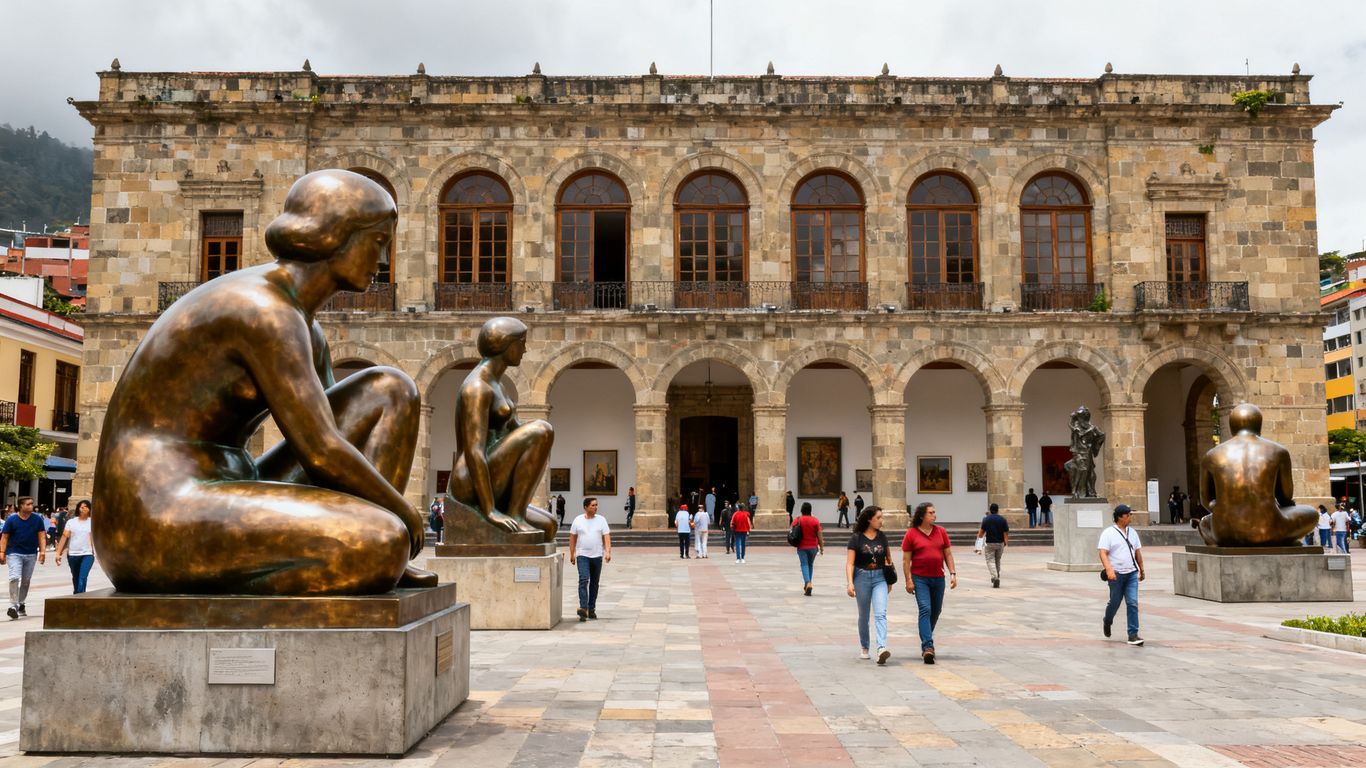
The Museo de Antioquia stands in central Medellín, facing Plaza Botero. The Botero collection is inside the museum, while many of the artist’s large bronze sculptures occupy the public square outside. This arrangement makes the visit unusually easy to understand geographically. We can move between indoor galleries and outdoor works without needing another taxi or long walk.
Gallery layout and exhibition areas
The museum occupies a historic building with several exhibition areas rather than one isolated Botero room. The interior route may change as galleries are adjusted, so we should follow the current signs and ask staff where the Botero works begin. The collection is best treated as part of a larger museum visit.
We can first locate the permanent displays, then note any closed rooms or temporary installations. This approach prevents confusion when a familiar work appears in a different gallery from an earlier visit. It also gives us time to see Colombian art beyond Botero’s name.
The relationship between the museum and Plaza Botero
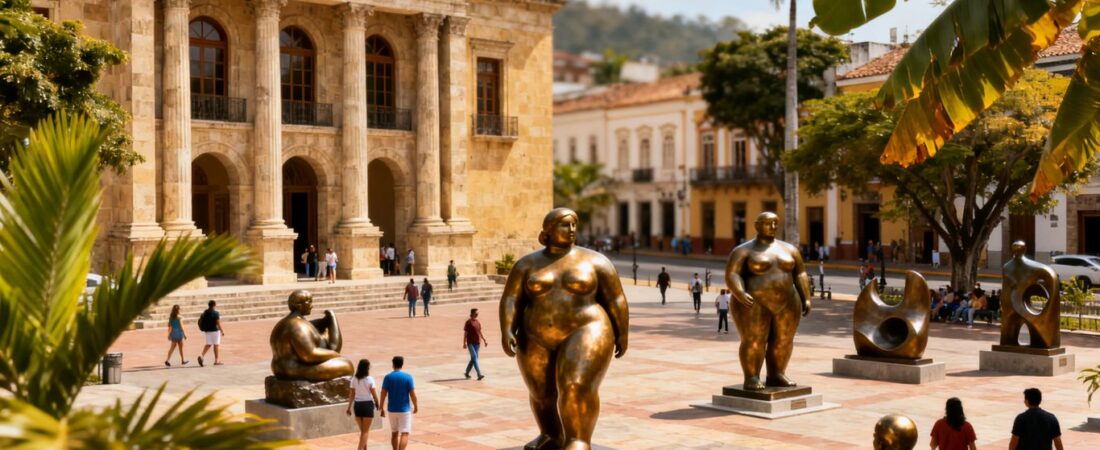
Plaza Botero functions as an outdoor extension of the museum experience. Its monumental bronzes are immediately visible after leaving the building, and their scale changes how we read the smaller indoor works. The square is free to enter, while museum admission and access arrangements belong to the indoor institution.
For a concise outdoor orientation, we can use this Plaza Botero visitor guide. It explains the public sculptures and helps us connect the plaza’s layout with the museum entrance. We should still follow local conditions and staff advice while moving through the area.
Nearby public sculptures by Botero
The plaza includes recognizable bronze forms such as “Mano,” “Perro,” “Gato,” “Caballo,” and “Mujer con Espejo.” Their surfaces are made for close public viewing, and visitors commonly photograph themselves beside them. We can walk around each sculpture to see how the volumes change from different angles.
The outdoor works also show Botero’s interest in ordinary subjects. Animals, people, and objects become monumental without losing their basic identity. That contrast is one reason the square feels accessible even to visitors who do not usually visit museums.
Accessibility and visitor navigation
We should ask the museum about current accessible entrances, lifts, seating, and restroom routes before starting the visit. Historic buildings can have uneven floors, narrow transitions, or temporary closures. Staff can also explain the simplest route between the entrance, galleries, and exits.
Inside, we should keep bags controlled and avoid touching artworks or architectural surfaces. Outside, we should stay aware of belongings and use well-trafficked routes. Clear navigation is easier when we treat the museum and plaza as two connected but different visitor environments.
How should you plan a visit to Museo de Antioquia?
We should plan the Museo de Antioquia visit around current information, not an old itinerary. Hours, admission, gallery access, and temporary exhibitions can change. The museum sits near major downtown transport connections, so it fits well into a morning or afternoon route. Checking official details shortly before departure saves an unnecessary trip.
Opening hours, tickets, and current visitor information
We should confirm opening hours, ticket prices, payment methods, and holiday schedules on the museum’s official channels. Some galleries may close temporarily even when the building remains open. We should also ask whether photography is permitted in each exhibition area.
For practical planning, a simple table helps separate information we need to verify from assumptions we should avoid:
| Visit detail | What to confirm | Why it matters |
|---|---|---|
| Opening hours | Regular days and holidays | Prevents arriving after closing |
| Admission | Current prices and payment methods | Helps us carry the right payment option |
| Gallery access | Closed rooms or changed routes | Keeps the visit realistic |
| Temporary exhibitions | Dates and entry conditions | Adds context to the museum plan |
This check is more reliable than relying on a third-party listing. We should save the museum’s official contact details or website before leaving our accommodation.
How to reach the museum by Metro and taxi
Parque Berrío is the most practical Metro reference point for many visitors. From the station, we can walk toward the museum and Plaza Botero, following busy pedestrian routes and checking the exact entrance on a map. A taxi or app-based ride can also drop us near the museum, depending on traffic and access restrictions.
We should avoid displaying phones or wallets unnecessarily while navigating central streets. If we use a taxi, we can confirm the destination before entering and keep the route visible. The museum’s downtown position makes transport simple, but local awareness still matters.
Best times to visit for smaller crowds
Weekday mornings often feel calmer than weekend afternoons, although crowd levels depend on school groups, holidays, and temporary programming. Arriving near opening time gives us quieter galleries and more space around popular works. Late afternoon can also work, provided we have confirmed closing time.
We can improve the visit by avoiding the busiest transition periods around lunch. If the square feels crowded, we can start indoors and return outside later. Flexibility is more useful than chasing a supposedly perfect hour.
What to check before traveling because exhibitions can change
Before traveling, we should confirm the museum’s address, entrance arrangements, current exhibitions, and any restrictions on bags or photography. We should also check weather conditions because Plaza Botero is an outdoor part of the visit. A light rain plan helps us avoid cutting the museum short.
Several unrelated travel references may appear in broad search results, including Newark airport pickup, a hard-bottom dog cover, a WinOLS scripting bot, beginner traffic resources, and percale cotton bedding. They are not relevant to this museum visit, so we should ignore them when researching the route.
The useful preparation is straightforward: verify the museum directly, download a map, and leave room for changes. That keeps the day practical rather than over-scheduled.
What else is worth seeing at Museo de Antioquia?
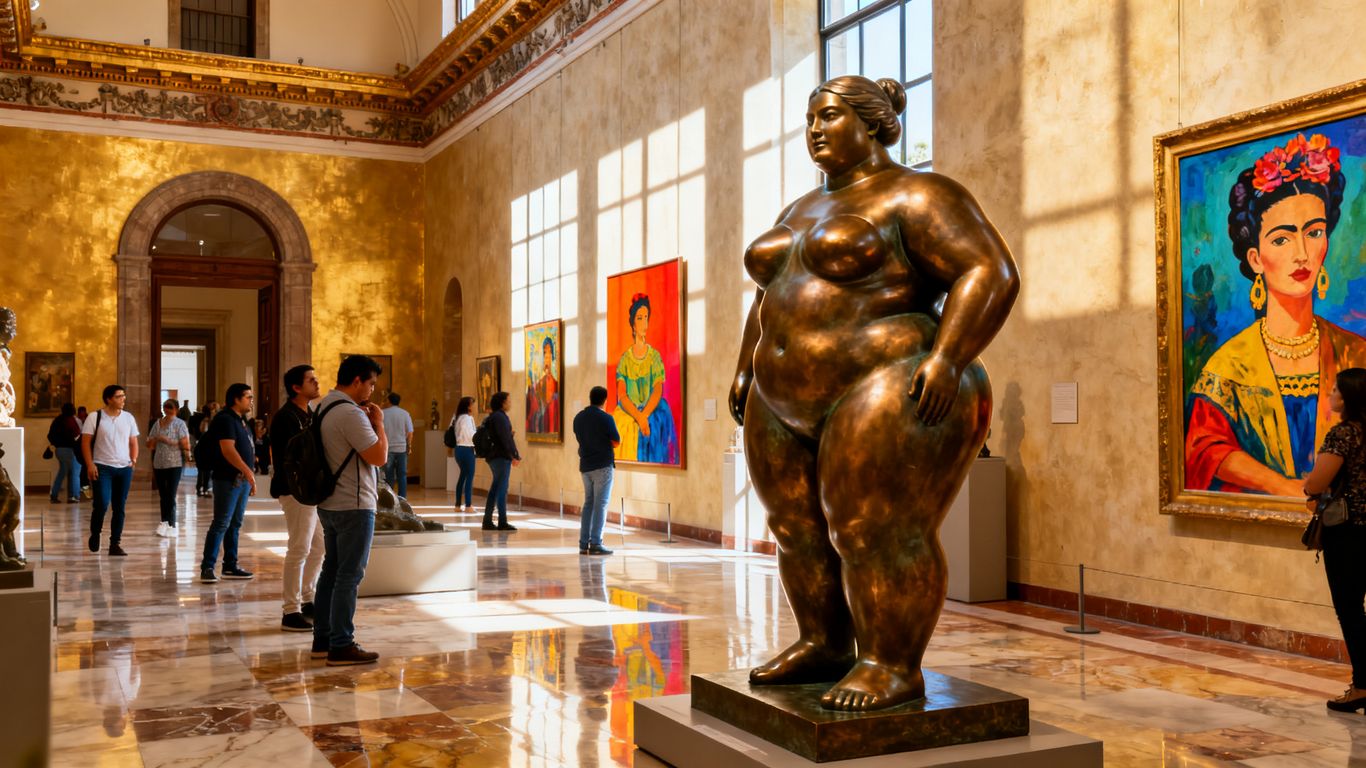
The museum is broader than its Botero rooms. Its collections connect Antioquia’s history, Colombian art, colonial material, and international references. We should give ourselves enough time to follow those connections instead of treating the building as a single-artist attraction. The wider visit often explains why Botero’s donation carries such cultural weight.
Pre-Columbian and colonial collections
Pre-Columbian and colonial holdings provide historical context for the region and its institutions. Objects, religious art, documents, and decorative pieces can shift our attention from modern celebrity to longer cultural timelines. Labels are especially valuable here because materials and functions may not be immediately obvious.
We should move slowly through these rooms and compare the display methods with the Botero galleries. Different periods demand different kinds of looking. The contrast also makes the museum feel like a record of Antioquia’s changing ideas about art and heritage.
Modern and contemporary Colombian art
Modern and contemporary Colombian works broaden the story beyond one internationally known artist. We may encounter different approaches to politics, identity, materials, urban life, and regional experience. These galleries can be less familiar, so we should allow time for artists whose names we do not already recognize.
This section is a good reason to avoid spending the entire ticketed visit only on the most photographed works. A museum visit becomes richer when we notice relationships across generations. We can return to Botero afterward with a more varied visual frame.
International works donated by Botero
Botero’s international donation is also significant because it gives Colombian audiences access to artistic references from outside the country. The Sophia Vari International Collection includes works connected to European avant-gardes and Caribbean heritage, including Wifredo Lam’s “Liberation (the red mouth).”
These works help explain Botero’s interest in placing Colombian art within a wider international conversation. We should read the curatorial text carefully because the donation involves questions about access, artistic education, and cultural power. It is not merely a decorative bonus beside the main collection.
Temporary exhibitions and cultural programming
Temporary exhibitions can change the character of a visit. Talks, workshops, screenings, and other programs may add local voices or focus on artists outside the permanent collection. We should check the museum calendar before going, especially if we want a guided activity or a particular exhibition.
A changing program also explains why two visits may feel different. We can take a quick photograph of the exhibition title for personal reference, where permitted, and record which galleries we want to revisit. Current programming belongs in the plan, but it should never be assumed from an old guide.
How does Museo de Antioquia fit into a Medellín itinerary?
The museum works best as a central Medellín stop rather than a distant day trip. We can combine it with Plaza Botero, Parque Berrío, and other downtown destinations, while keeping the route compact. The area rewards attention, but we should avoid wandering without a clear plan after dark. A local itinerary should balance cultural interest with practical movement.
Combining the museum with Plaza Botero
We can visit the indoor galleries first, then step into Plaza Botero while the sculptures are fresh in mind. This order makes the contrast between intimate paintings and monumental bronze especially clear. We should allow extra time for photos, but keep bags close and avoid blocking other visitors.
The plaza can also be visited separately if our museum time is limited. Pairing both stops gives us the fullest Botero experience without requiring additional transport. We can then continue toward Parque Berrío or return to our accommodation.
Exploring nearby La Candelaria safely
La Candelaria contains important central streets, historic buildings, shops, and transport links. We should keep valuables discreet, walk with purpose, and use established routes during daylight. If we stop for food or coffee, we can choose places with visible activity and secure our belongings.
Local advice matters more than a fixed promise that every block feels the same. We should follow current conditions, especially during quieter hours. If we feel uncertain, a registered taxi or ride service is preferable to wandering with a phone held openly.
Planning a visit around Parque Berrío and the Metro
Parque Berrío and its Metro station make the museum easy to connect with other central stops. We can arrive by Metro, visit the museum and plaza, then continue by Metro or taxi. Checking the return route before entering the galleries reduces phone use on the street afterward.
A separate cultural activity in Laureles can suit the following day. The Colombian Cacao Experience offers a hands-on bean-to-bar workshop, including roasting, grinding, and traditional preparation. Its indoor format and approximately three-and-a-half-hour duration make it a different kind of cultural stop from a museum visit.
Comparing the museum with other art spaces in Medellín
The Museo de Antioquia is strongest when we want Botero, Antioquia’s collections, and a central historic setting together. Other Medellín art spaces may focus more narrowly on modern art, science, memory, gardens, or architecture. We should choose based on the kind of attention we want that day.
The museum also compares well with open-air viewing because it provides labels, conservation, and historical framing. We can see public art freely outside, then pay for deeper context indoors. That combination gives us both accessibility and interpretation without repeating the same experience.
What should visitors know before viewing Botero’s art?
Botero’s work is easy to recognize but not always easy to interpret. The enlarged figures invite quick jokes, yet the paintings and sculptures reward longer observation. We should resist treating every rounded form as a simple punchline. Proportion carries meaning throughout the collection, even when the subject appears playful.
Common interpretations of Botero’s voluminous figures
Viewers often describe Botero’s figures as humorous, sensual, monumental, or satirical. Those readings can coexist, but none explains every work. Volume may give a person dignity, make an object strange, or draw attention to a social and historical subject.
We should begin with what is visible before deciding what a figure means. Notice posture, facial expression, setting, color, and the relationship between the subject and surrounding objects. This keeps interpretation grounded in the work rather than in a single popular description.
Why size and proportion matter in his work
Botero changes proportion across the entire image, not only in the human body. Animals, furniture, instruments, fruit, and architectural details may all appear unusually full or compact. The consistency makes the style feel constructed rather than accidental.
We can compare repeated subjects across paintings and sculpture to see how scale changes their presence. A small canvas may still feel monumental because of its forms and composition. Outside, the bronzes reverse the experience by making familiar subjects physically large.
Photography, guided tours, and museum etiquette
We should follow posted photography rules, keep flash off unless explicitly allowed, and avoid touching frames, plinths, or sculpture surfaces. Guided tours can add useful historical and technical context, but availability changes by date. We should ask the museum directly about languages, schedules, and reservations.
Inside crowded galleries, quiet voices and short stops in front of narrow passages help everyone. We can take notes after moving away from the artwork. Outside, photographs are generally easier, but we should still respect other visitors and public space.
Questions to consider while viewing the collection
A few focused questions can make the visit more engaging without turning it into an exam. We might ask why Botero chose a particular subject, how the background controls our attention, and whether the figure feels comic, solemn, or both. We can also compare an indoor work with a bronze sculpture outside.
Useful prompts include:
- What changes when the same kind of subject becomes monumental?
- Which details remain realistic despite the altered proportions?
- How do color, surface, and pose affect the mood?
- Does the work invite laughter, discomfort, admiration, or several responses?
These questions keep our attention on the artwork’s formal choices. They also leave room for personal reactions without claiming that one interpretation is final.
Conclusion
The Museo de Antioquia gives us a compact, substantial way to understand Fernando Botero’s art in Medellín. We can combine its indoor collection with Plaza Botero, check current visitor information, and leave time for the museum’s broader Colombian and international holdings. A measured visit, rather than a rushed photo stop, reveals why this collection matters.
Frequently Asked Questions
Is the Botero collection inside Museo de Antioquia?
Yes. The museum displays paintings, drawings, and sculptures by Fernando Botero, while additional monumental bronzes stand outside in Plaza Botero.
How long should we spend at Museo de Antioquia?
We should allow 60 to 90 minutes for a focused Botero visit. Two to three hours works better when we include other galleries and the outdoor plaza.
Is Plaza Botero separate from the museum?
Yes. Plaza Botero is a public outdoor space facing the museum. Visitors can see its sculptures without following the same admission arrangements as the indoor galleries.
Which Metro station is closest to Museo de Antioquia?
Parque Berrío is the usual Metro reference point for the museum and plaza. We should confirm the walking route and local conditions before leaving the station.
Can we take photographs inside the museum?
Photography rules vary by gallery and exhibition. We should follow posted instructions, ask staff when uncertain, and avoid flash unless it is specifically permitted.
Is the museum suitable for visitors interested in Colombian art beyond Botero?
Yes. The museum includes Colombian historical, colonial, modern, and contemporary material, along with international works connected to Botero’s donations.
Should we visit the museum or Plaza Botero first?
Visiting the indoor galleries first gives useful context for the outdoor sculptures. If time is limited, we can see Plaza Botero separately and return to the museum later.