
Key Takeaways
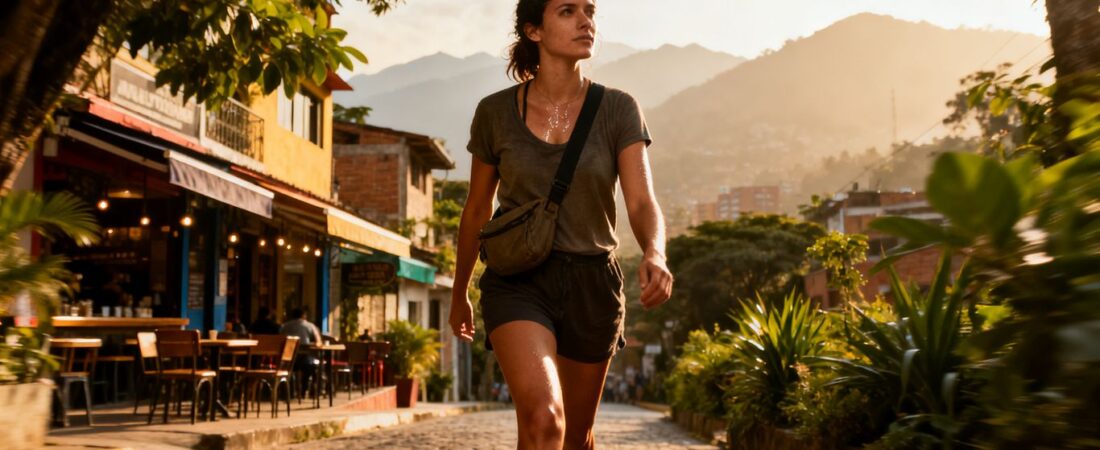
Medellín can work well for solo women who plan around neighborhoods, daylight, and reliable transport.
- Choose a practical base such as Laureles, El Poblado, or Envigado.
- Keep phones and valuables discreet, especially near busy streets and nightlife areas.
- Use the Metro during suitable hours and arrange dependable rides after dark.
- Join small-group activities when meeting people or visiting unfamiliar areas.
- Carry backup payment, mobile data, identification copies, and basic Spanish phrases.
Is visiting Medellín as a solo female traveler safe?
Visiting Medellín as a solo female traveler can be safe and practical with consistent urban precautions. We should treat it like a large city, not a resort with risk-free movement. Neighborhood, time of day, transport choices, and social situations all affect the experience. A calm routine usually works better than constant worry.
How safety varies by neighborhood and time of day
Medellín changes noticeably from one neighborhood to another. Laureles and El Poblado have many hotels, restaurants, and visitor services, while some central or hillside areas require more local planning. Busy daytime streets may feel straightforward, but the same route can feel very different after shops close.
We should plan sightseeing for daylight when possible, particularly in unfamiliar areas. Comuna 13 is best visited with a guide or a clearly planned route rather than improvised wandering. In El Poblado, Provenza, and Parque Lleras, crowds can create opportunities for petty theft even when police and businesses are nearby.
A useful local principle is no dar papaya, meaning we should not make ourselves an easy target. That means keeping phones away from the road edge, avoiding visible jewelry, and not displaying large amounts of cash.
Common risks, including phone theft and dating scams
Phone snatching is one of the most practical risks for visitors. We should avoid holding a phone loosely beside the street or using it while walking without checking our surroundings. Take photographs from inside a business, away from traffic, or with a trusted companion watching the area.
Dating-app encounters also require care. A new acquaintance may seem friendly while encouraging a visitor to change venues, share accommodation details, or accept an unattended drink. We should meet in a public place, tell someone where we are going, and keep control of our phone, payment cards, and beverages.
The risks are not reasons to avoid conversation. They are reasons to keep first meetings public and information limited. We should not share our hotel name, room number, full itinerary, or travel dates with someone we have just met.
How to assess situations without becoming overly cautious
Good judgment is more useful than trying to predict every possible danger. We can ask whether a street is well lit, whether other people are walking there, and whether businesses remain open. If a route feels uncomfortable, changing it is a practical decision, not a failure.
We should also notice how local staff respond to questions. Hotel receptionists, café workers, and tour guides can usually suggest a better entrance, route, or transport option. A short check before leaving often prevents unnecessary confusion later.
Small decisions reduce exposure without taking the enjoyment out of travel. We can still explore independently, eat at local restaurants, and use public spaces while keeping a simple safety routine.
When to seek help from staff, police, or local contacts
We should ask for help early if someone follows us, pressures us, or refuses to respect a clear boundary. Entering a hotel, pharmacy, café, or staffed attraction is usually better than continuing alone. Tell staff directly that we need assistance and show our location on the phone if language becomes difficult.
For serious incidents, contact local emergency services and our travel insurer. We should report theft promptly, especially if a passport, payment card, or phone is missing. A trusted local contact, accommodation host, or tour operator can also help explain the next practical step.
Travelers wanting more context can compare our approach with this solo travel guide, while remembering that conditions and personal circumstances differ.
Which Medellín neighborhoods are practical for solo women?
Laureles, El Poblado, and Envigado are practical starting points for many solo women. They differ in pace, price, nightlife, and access to attractions. We should choose based on the kind of evenings we expect, not only on a map. Staying near useful services often makes a larger difference than saving a little on rent.
Laureles for walkability, dining, and a quieter base
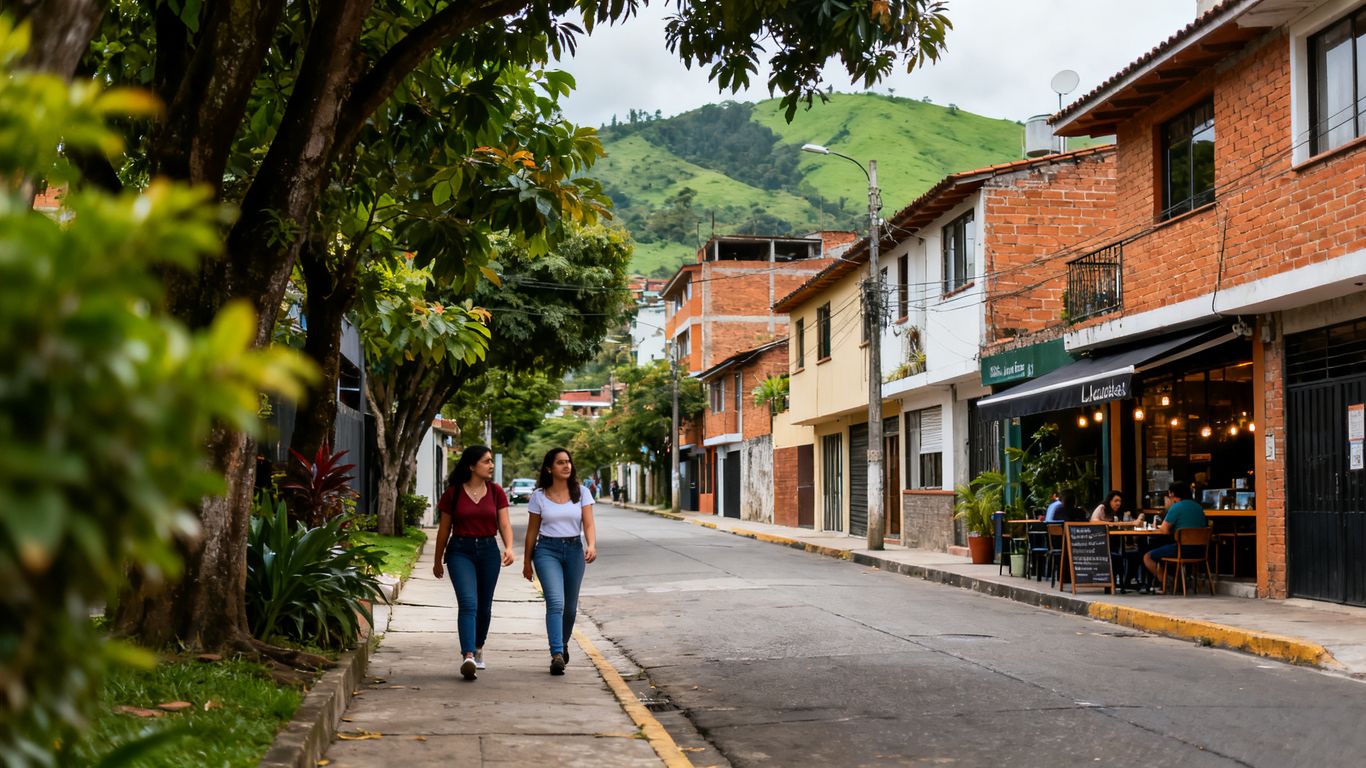
Laureles is a useful base for travelers who prefer cafés, restaurants, and relatively easy walking. The streets around La 70 and Avenida Nutibara offer plenty of places to eat, although busy nightlife areas still deserve normal precautions. Its flatter layout can feel simpler for short independent outings.
The neighborhood also suits a slower cultural schedule. The Colombian Cacao Experience takes place in Laureles and lasts approximately 3.5 hours, with a hands-on bean-to-bar workshop. Guests roast raw cacao over fire, peel and grind beans on a traditional molino, join a cacao ceremony, and finish with a chocolate exfoliation ritual and signature cacao sour cocktail.
The workshop costs 160,000 COP per person. It is also listed as the number-one Classes & Workshops experience in Medellín on TripAdvisor with a 5.0 rating, according to the provided local information. For a solo visitor, a scheduled activity can offer structure without requiring a full-day group itinerary.
El Poblado for nightlife, hotels, and visitor services
El Poblado has a dense concentration of hotels, restaurants, cafés, bars, and travel services. Provenza and Parque Lleras are convenient for visitors, but convenience does not remove the need to watch drinks, phones, and personal space. We should avoid quiet side streets late at night when a short ride is available.
El Poblado works well for travelers who want easy access to nightlife or first-time visitor services. It can also be louder and more expensive than Laureles. Before booking, check the exact street rather than relying only on the neighborhood name.
Our Parque Lleras safety guide explains the practical difference between busy nightlife zones and quieter alternatives. That distinction matters when we decide whether to walk, dine, or arrange a ride.
Envigado for a residential atmosphere and local restaurants
Envigado offers a more residential feel, with local restaurants, cafés, and public spaces that attract residents as well as visitors. It can suit solo travelers who want evenings that feel less centered on clubs. We should still confirm the route between accommodation and the nearest Metro station.
The neighborhood is not a guarantee of safety, and its larger size means addresses matter. A place close to restaurants and transport is usually easier than a cheaper apartment on a quiet slope. During the first evening, we can test the walk in daylight and save the route offline.
Comuna 13 and other areas that require more planning
Comuna 13 is a significant cultural visit, but it is better approached with a scheduled tour, clear meeting point, and daylight timing. The escalators and art areas can become crowded, and the surrounding hillside geography is not ideal for casual route changes. We should follow local guidance and avoid photographing people without permission.
Other parts of the city may be perfectly ordinary for residents but less intuitive for a first-time visitor. We should not assume that a short distance on a map means a simple walk. Ask accommodation staff which entrance to use, which streets to avoid at night, and whether a taxi is preferable.
How should solo female travelers get around Medellín?
Medellín has an integrated public transport network, taxis, and app-based ride options. We should match the method to distance, time, weather, and how familiar we are with the route. Public transport can be efficient during busy hours, while a prearranged ride may be more comfortable late at night. Keeping a backup option prevents small delays from becoming stressful.
Using the Metro, Metrocable, and integrated transit system
The Metro is useful for connecting major parts of the valley, and the Metrocable extends access toward hillside areas. We should check the current operating information, keep belongings close in crowded stations, and avoid standing near open train doors with a phone in hand. Stations can be busy, especially during commuting periods.
The system is most practical when we know the station name and direction before entering. We should keep a small amount of cash or a transport card available, rather than stopping in a crowded entrance to search through a wallet. A route screenshot can help if mobile data fails underground.
Choosing between taxis, ride-hailing apps, and hotel transfers
For airport journeys, late evenings, or luggage-heavy trips, a hotel transfer or app-based ride can reduce uncertainty. We should verify the vehicle and driver details before entering, share the trip status with a contact, and avoid accepting rides from unsolicited drivers outside busy terminals.
Traditional taxis remain common, but travelers should use official pickup points and ask accommodation staff for local guidance. The best option depends on the exact journey and current conditions. We should not debate a fare or route alone in a stressful roadside situation; asking staff to help is more sensible.
Planning routes before leaving Wi-Fi or mobile coverage
A few minutes of preparation can make an independent day much easier. Download maps, save the accommodation address in Spanish, and note the nearest major station or landmark. We should also keep the phone away after checking directions, rather than navigating continuously on the street.
The following small routine works well before leaving accommodation:
- Screenshot the route, address, and meeting point.
- Save one trusted contact and the local accommodation number.
- Check the estimated ride time and payment method.
- Carry a backup battery for longer sightseeing days.
After these steps, we can explore with less screen time and more awareness. If the route changes, we should enter a café or shop before checking the map again.
Managing transportation after dark
After dark, we should prefer a direct ride over a long walk through unfamiliar streets. If we leave a restaurant or bar, arrange transport before stepping outside and confirm the pickup location. Avoid waiting alone beside a busy road while looking down at a phone.
Public transport may still be appropriate at an earlier evening hour, depending on the route and our comfort. Late-night plans are easier when accommodation is near active streets, not isolated from restaurants and services. We should also avoid telling drivers or new acquaintances that we are traveling alone.
Where should solo female travelers stay in Medellín?
The best accommodation is usually the one that combines a suitable neighborhood with clear access and responsive staff. We should compare the building, entrance, street, and nearby businesses, not only the room photographs. A central location may cost more, but it can reduce complicated journeys. Reviews are useful when they mention noise, security, and late arrivals specifically.
Comparing hotels, hostels, and private apartments
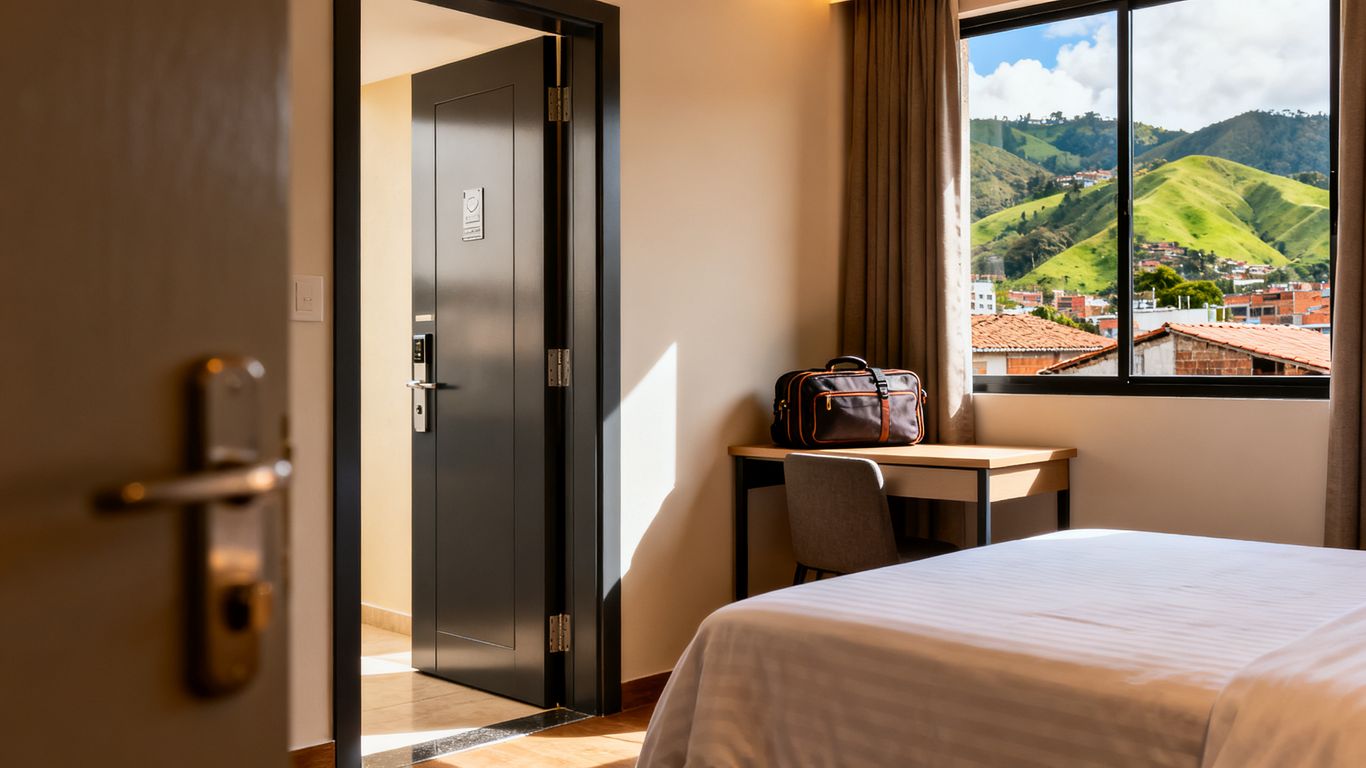
Hotels can simplify late check-in, luggage storage, and transport arrangements. Hostels make meeting people easier, but we should choose a property with lockers, controlled access, and quiet hours. Private apartments offer more space, although support may be slower if the host lives elsewhere.
For a first visit, we may prefer a staffed property for the first few nights. That gives us a local point of contact while we learn the city. If we later move to an apartment, we can make that decision with more information about the neighborhood.
Evaluating security features before booking accommodation
Look for controlled building entry, a functioning front desk or host response system, secure windows, and a clear check-in process. We should read recent reviews for reports of unauthorized access, broken locks, or confusing entrances. A stylish room is not enough if the building opens directly onto a deserted street.
We should also ask whether the property has an elevator, reception coverage, and a safe place for passports. If an apartment uses a digital lock, request backup instructions before arrival. Never send sensitive documents through an unverified contact or public messaging group.
Choosing a location near restaurants and public transportation
A location near everyday services makes solo travel less tiring. We should be able to reach breakfast, a pharmacy, and a main road without a long isolated walk. Proximity to the Metro can help, but the safest route may still involve a short taxi or app ride at night.
Laureles is often practical for walkable dining and a quieter evening routine. El Poblado suits visitors prioritizing hotels, nightlife, and tourist services. Envigado can work for a residential atmosphere, provided we check the exact address and transport connections.
Questions to ask hosts about entrances, staff, and late arrivals
Before booking, we should ask practical questions in writing. This avoids confusion after a long flight and creates a record of the answers. It also shows whether the host responds clearly and promptly.
Ask whether reception is staffed, how late check-in works, and whether the entrance is visible from a busy street. Confirm the building address, elevator access, luggage storage, and the safest arrival method. We should also ask for a Spanish address format that can be shown to a driver.
What should solo women do in Medellín?
Solo travelers can build a good day around one planned activity and one flexible stop. Museums, markets, public art, neighborhood walks, and food experiences offer different levels of social contact. We should avoid filling every hour, because weather and transport can change plans. A balanced itinerary leaves room to rest and reassess.
Joining small-group tours to meet people safely
Small-group tours provide a structured way to meet other travelers without arranging private meetings with strangers. We should select operators with clear meeting points, published schedules, and recent reviews. Daytime walking tours are usually easier for a first introduction to the city.
A cultural workshop can offer conversation without forcing constant sightseeing. The Colombian Cacao Experience in Laureles is an indoor activity lasting about 3.5 hours and costs 160,000 COP per person. Its process includes roasting, peeling, grinding, a cacao ceremony, exfoliation, and a signature cacao sour cocktail, making it a practical rainy-day option.
Exploring museums, markets, and neighborhood walking routes
Museums and public attractions allow us to move at our own pace while staying around staff and other visitors. Markets require more attention to phones and wallets, especially where aisles are crowded. We should ask before photographing vendors, products, or customers.
A free walking tour can help orient us to central landmarks, but we should confirm the meeting point and finish location. Afterward, we can return by a known route rather than extending the walk into an unfamiliar area. A planned stop at a café gives us time to check transport and weather.
Choosing cultural workshops and indoor activities during rain
Rain can arrive quickly, so indoor plans are useful even during a short visit. We should keep one museum, café, workshop, or cooking activity as a backup. Comfortable shoes remain helpful because sheltered routes may still involve uneven sidewalks and short walks.
The Colombian Cacao Experience is specifically suited to this kind of weather plan. It is a hands-on bean-to-bar workshop in Laureles, and the published price is 160,000 COP per person. We should reserve ahead when possible, then pair it with nearby food or café time rather than crossing the city in heavy rain.
Balancing popular attractions with independent exploration
Popular places are easier to navigate when we understand their basic logistics first. We can visit a major attraction with a group, then spend a quieter afternoon in a neighborhood café or museum. This combination offers social contact without making the whole trip dependent on strangers.
Comuna 13, the Metro and Metrocable, Laureles, and El Poblado each provide different perspectives. We should avoid treating one attraction as a complete picture of Medellín. Local restaurants, markets, and ordinary residential streets often provide useful context, provided we visit with appropriate planning.
How can solo female travelers handle nightlife and social situations?
Nightlife can be enjoyable, but it requires more planning than daytime sightseeing. We should decide how we will return before entering a bar, club, or rooftop venue. Staying with a trusted person helps, but we should still control our own transport and belongings. A friendly atmosphere does not remove the need for boundaries.
Setting boundaries in bars, clubs, and shared accommodations
We can say no without giving a long explanation. If someone continues after a clear refusal, move toward staff, friends, or a busier area. In shared accommodation, keep valuables secured and avoid giving strangers details about our room or daily plans.
We should choose a seat with a clear exit and keep a bag closed and within reach. If a venue feels too crowded or aggressive, leaving early is sensible. There is no obligation to stay because we paid an entrance fee or accepted an invitation.
Meeting other travelers without revealing too much personal information
Hostel common areas, group classes, and daytime tours are easier places to meet people than isolated invitations. We should share interests without sharing our exact accommodation, room number, flight details, or full itinerary. Social media connections can wait until we have spent more time together.
A useful approach is to meet in public twice before accepting a change of plans. Tell a contact who we are meeting and set a check-in time. If someone objects to these simple precautions, that reaction gives us useful information.
Recognizing drink-spiking and unwanted attention risks
We should keep drinks in sight and decline beverages that arrive unexpectedly. If a drink tastes unusual or we suddenly feel unwell, alert staff and a trusted person immediately. Do not leave the venue alone or accept help from someone who has just approached us.
Unwanted attention can include persistent touching, blocking a path, following, or pressuring us to leave with someone. Move toward staff and use direct language. Our nightlife safety guide offers additional context on venues, timing, dress, and transport planning.
Arranging a reliable route back to accommodation
Before going out, save the accommodation address, arrange mobile data, and check whether staff can call a trusted vehicle. We should order the ride from inside the venue and confirm the vehicle details before leaving. Avoid changing destinations for someone we have just met.
A short direct ride is usually preferable to several late-night connections. If the driver cannot find the entrance, stay inside a staffed business while explaining the location. We should message a contact when we leave and again when we arrive.
What practical information should women know before arriving?
Preparation reduces small problems that can feel larger when we are alone. We should arrange mobile access, carry more than one payment method, and save important details offline. Medellín’s mild climate still includes sun, rain, hills, and changing temperatures. A compact day bag is more useful than heavy luggage.
Cash, cards, SIM cards, and mobile data
Carry some Colombian pesos for small purchases, transport, markets, and places that may not accept foreign cards. Use ATMs inside banks or established shopping centers when possible. We should keep cards separated and avoid carrying every payment method in one wallet.
A local SIM or travel eSIM can help with maps, ride apps, and emergency contact. We should confirm that the phone is unlocked before arrival. Keep a written accommodation address in case the battery, signal, or app fails.
Spanish phrases for transport, directions, and emergencies
Basic Spanish makes routine interactions easier, especially outside visitor-heavy areas. We can practice short phrases rather than trying to speak perfectly. A translation app helps, but a calm greeting and clear address often solve simple transport questions.
Useful phrases include:
- “¿Dónde está la estación?” for asking where the station is.
- “Necesito un taxi seguro” when requesting a safe taxi.
- “¿Puede repetir, por favor?” when we need someone to repeat information.
- “Necesito ayuda” when we need assistance.
Pronouncing the accommodation name and address clearly is often more useful than memorizing long conversations. We should also learn the name of the nearest major avenue or Metro station.
What to pack for Medellín’s climate and changing weather
Pack light layers, comfortable walking shoes, sun protection, and a compact rain jacket or umbrella. The city’s elevation and valley geography can produce warm afternoons, cooler evenings, and sudden showers. Shoes with reliable grip are useful on slopes and wet sidewalks.
A discreet crossbody bag or zipped daypack is practical for transport and walking. We should avoid expensive jewelry and carry only what the day requires. A small power bank, photocopy of identification, and basic medication can also prevent avoidable interruptions.
Emergency numbers, travel insurance, and important documents
Save local emergency contacts, accommodation details, insurer information, and embassy details before departure. Travel insurance should cover medical treatment, theft, and trip interruption according to the policy terms. We should store digital copies securely and carry a separate paper copy of essential information.
If a passport is lost, contact the relevant consulate and insurer promptly. If cards disappear, freeze them through the bank’s app or emergency line. Keeping a written list of card numbers and cancellation contacts makes that process faster.
Conclusion
Medellín is practical for solo women who choose their base carefully, plan transport, and keep ordinary city precautions in place. Laureles offers a calmer walkable rhythm, El Poblado provides visitor services and nightlife, and Envigado adds a residential option. We can enjoy the city independently while using guides, staff, and small groups when a situation calls for more structure.
Written by the editorial team at Things To Do Medellin, featuring local insights and verified recommendations from the city’s top-rated cultural artisans.
Frequently Asked Questions
Is Medellín safe for a woman traveling alone?
It can be, provided we use sensible precautions and adjust plans by neighborhood and time of day. We should keep valuables discreet, use reliable transport, and seek help early when a situation feels wrong.
Which Medellín neighborhood is best for a first solo visit?
Laureles, El Poblado, and Envigado are practical choices with different atmospheres. We should choose based on nightlife preferences, walking comfort, transport access, and the exact accommodation street.
Is it safe to use Medellín’s Metro alone?
The Metro can be useful for planned daytime journeys, especially when we know the station and direction. Keep belongings close, avoid displaying phones in crowded areas, and use another option when a late route feels uncomfortable.
Should solo travelers use taxis or ride-hailing apps in Medellín?
Both may be suitable when arranged through official or trusted channels. We should verify the vehicle, share trip details, and ask accommodation staff for help when pickup logistics are unclear.
Can women visit Comuna 13 without a tour?
A visit is possible, but first-time travelers may find a scheduled daytime tour easier. A guide can clarify routes, meeting points, local etiquette, and which areas require more planning.
What should solo women do at night in Medellín?
Choose a venue carefully, keep drinks in sight, and arrange the return route before going out. We should use a direct ride, share our trip status, and avoid revealing accommodation details to new acquaintances.
How much Spanish do solo travelers need in Medellín?
Basic phrases for directions, transport, payment, and emergencies are useful. Translation tools help, but saving addresses offline and speaking calmly often matters more than fluency.