
Key Takeaways
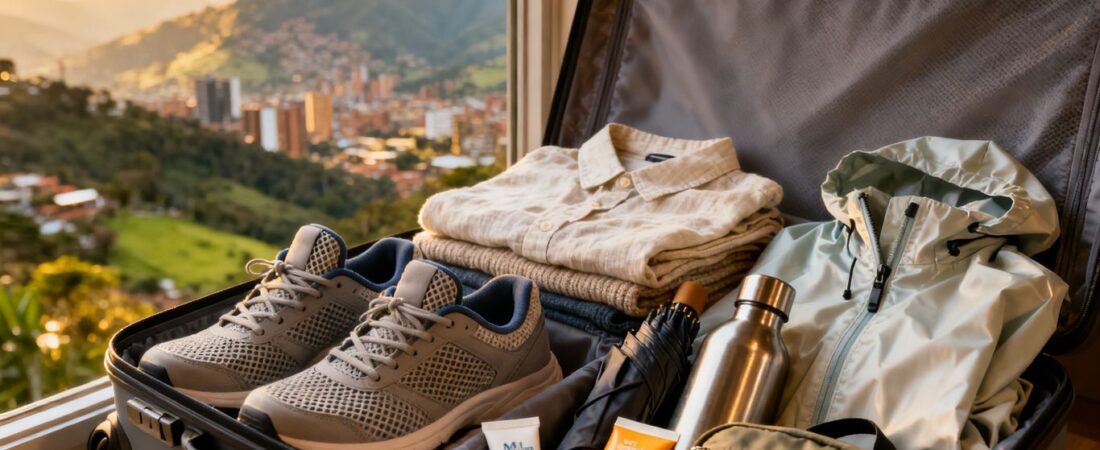
We can pack comfortably for Medellín without carrying a large suitcase. Light layers, reliable walking shoes, and compact rain protection cover most city plans.
- Choose breathable clothes that layer easily.
- Carry a light rain jacket or compact umbrella.
- Wear supportive shoes for hills, stairs, and long walks.
- Protect electronics and documents from sudden showers.
- Adjust the list for Guatapé, mountains, farms, and evening plans.
What should you pack for Medellin’s year-round climate?
The best packing list for medellin colombia weather uses light layers, comfortable shoes, and rain protection. Medellín usually feels mild, but sunshine, cloud cover, and showers can change quickly. We should pack for small daily shifts rather than dramatic seasonal extremes. A compact day bag keeps the useful pieces close without weighing us down.
How temperatures change between day and night
Medellín’s elevation creates a mild climate, but mornings and evenings can feel cooler than sunny afternoons. We may leave our accommodation in a T-shirt and want a thin layer later. Neighborhood elevation and cloud cover also affect how warm a walk feels. Checking the forecast each morning helps us decide what belongs in the day bag.
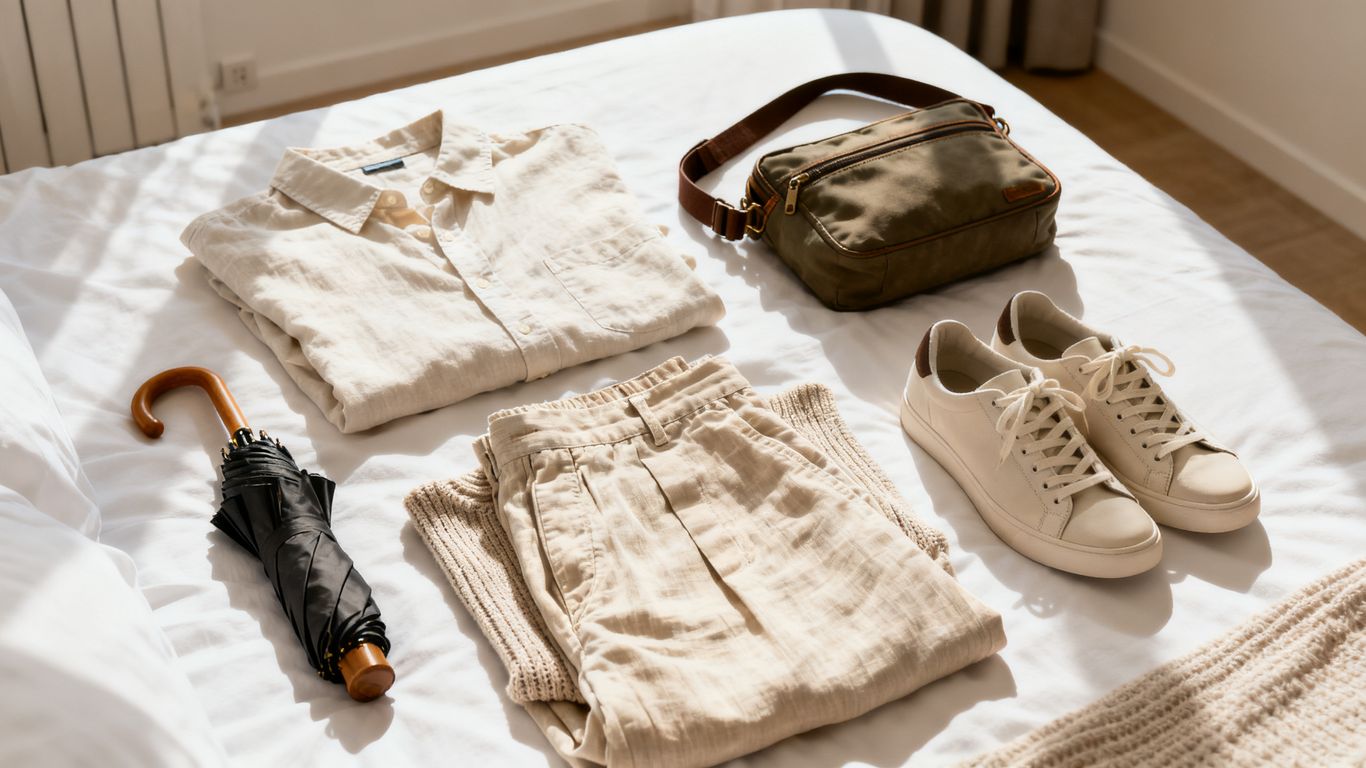
A long-sleeved shirt, thin sweater, or lightweight overshirt usually provides enough warmth. Heavy winter coats are rarely useful for a typical city visit. If we plan a mountain excursion, however, the temperature can drop more noticeably as we gain elevation. The key is flexible coverage, not bulky insulation.
Why light layers work better than heavy clothing
Light layers let us respond to sun, shade, air conditioning, and rain during the same outing. We can remove a shirt for a warm afternoon, then add it for a cooler Metro ride. Breathable cotton, linen blends, and quick-drying travel fabrics are practical choices. We should avoid packing one thick item that works only in one condition.
For a short trip, we can usually rotate a small group of basics. Three or four tops, two pairs of trousers or shorts, underwear, and one warmer layer provide useful flexibility. Neutral colors make those pieces easier to combine. A smaller versatile wardrobe also leaves room for purchases and keeps luggage easier to manage on stairs.
How to prepare for rain in different neighborhoods
Rain can arrive quickly in Laureles, El Poblado, the city center, or hillside neighborhoods. It may be brief, but wet pavement can make walking slower and uncomfortable. We should keep a thin rain jacket or compact umbrella accessible rather than buried in luggage. A cap can help with light rain, although it does not replace waterproof coverage.
Our neighborhood plans also influence the timing of rain protection. A long walk through Comuna 13 needs a day bag with a dry place for phones. Restaurant visits around Provenza may require less gear if we travel by car. For broader planning, our Medellín activities guide can help us group neighborhoods and avoid carrying excursion equipment all day.
Which clothes are suitable for sightseeing in Medellin?
Sightseeing clothes should stay comfortable for walking, public transit, stairs, and changing weather. We do not need formal travel outfits for most daytime attractions. Lightweight trousers, jeans, skirts, shorts, and breathable tops all work when paired with practical shoes. We should also choose clothes that dry reasonably quickly after a shower.
Local plans often combine outdoor sightseeing with cafés, museums, markets, or restaurants. That makes a clean overshirt or simple blouse useful for changing the look. We should avoid carrying valuables visibly and keep bags closed in crowded places. A simple outfit is easier to manage and usually fits the city’s informal daytime style.
Comfortable outfits for walking and public transit
For a full day, we can start with a breathable top, comfortable trousers or shorts, and a light outer layer. Public transit may involve standing, stairs, or short walks between stations and attractions. A crossbody bag or small backpack keeps both hands free. Socks that manage moisture are helpful when the day includes several kilometers on foot.
A basic sightseeing outfit can include:
- One breathable T-shirt or shirt.
- Lightweight trousers, jeans, or longer shorts.
- A thin overshirt or sweater.
- A compact rain layer in the day bag.
After packing these pieces, we can adapt the outfit to the day’s route. A museum-heavy itinerary may need less rain gear than a hillside walking tour. We should still keep one layer available because indoor spaces and evening transport can feel cooler.
Clothing considerations for Laureles, El Poblado, and Comuna 13
Laureles is convenient for relaxed daytime clothing, especially when we combine cafés, parks, and local businesses. El Poblado can feel more polished around Provenza and Parque Lleras, although smart casual clothing remains sufficient. Comuna 13 involves steep paths, stairs, and outdoor viewing areas, so comfort matters more than fashion there.
We should avoid wearing expensive jewelry or displaying large amounts of cash in any neighborhood. A secure bag, low-profile clothing, and a phone kept away while walking are sensible habits. We can carry a light scarf or shirt for sun and dust. The same flexible outfit can work across the city if the shoes are supportive.
What to wear for restaurants, nightlife, and cultural venues
Many restaurants accept neat casual clothing, while rooftop bars and nightlife venues may look better with a clean shirt, trousers, or a simple dress. We can pack one evening outfit instead of several formal options. Comfortable shoes remain useful because getting between venues may involve uneven sidewalks and hills.
Cultural venues usually do not require special dress, but modest, tidy clothing is a safe choice. A thin layer helps in air-conditioned restaurants and cinemas. If we want more neighborhood-specific evening ideas, a practical Medellín nightlife guide can help us plan clothing around venue type rather than packing for every possibility.
What shoes should you bring to Medellin?
We should prioritize shoes that support long walks, uneven pavement, stairs, and occasional wet surfaces. Medellín sightseeing often involves more walking than a map suggests. One reliable pair can cover most city days, while a second pair helps with rain, evenings, or outdoor excursions. New shoes are a poor experiment on the first travel day.
Shoes should also fit the activities we have already planned. A polished sneaker may suit restaurants and museums, while a grippier shoe works better on steep streets. Sandals can be useful in warm weather, but they offer less protection on wet or uneven routes. We should test every pair before packing it.
Choosing shoes for steep streets and long walks
Supportive sneakers with a secure heel and a treaded sole are usually the safest general choice. We should look for cushioning without excessive weight. Hills and stairs place more pressure on feet than flat sidewalks do, especially during a long day in Comuna 13 or around hillside viewpoints.
Our shoes should also dry reasonably quickly if caught in rain. Thick fabric may stay damp overnight, which creates discomfort on the following morning. Low-profile footwear is easier to store and less conspicuous in crowded transit. Comfort matters more than bringing a separate shoe for every outfit.
When sandals, sneakers, or hiking shoes make sense
Sandals can work for relaxed indoor plans, hotel time, and short walks in dry conditions. Sneakers are the most versatile option for city sightseeing, public transit, and restaurants. Hiking shoes make sense for planned mountain trails or rougher outdoor routes, not simply because Medellín has hills.
We can match footwear to the day rather than the destination name alone. A Guatapé boat outing differs from a climb near El Peñol, and a coffee farm may include muddy paths. If the itinerary is mostly urban, specialized hiking shoes may take up space without adding value. Socks and blister protection deserve attention too.
How many pairs of shoes are practical for a short trip
For a trip of about a week, two pairs are usually enough. We can wear the heavier, more supportive pair during travel and pack a lighter backup. The second pair should serve a clear purpose, such as drying after rain or looking neat for evening plans.
Three pairs may be reasonable for a longer itinerary with serious hiking, but they are rarely necessary for a city-focused visit. We should rotate shoes when possible so each pair can air out. Insoles, blister plasters, and a small shoe bag often help more than another pair of footwear.
What should you pack for Medellin’s rain and humidity?
Rain and humidity affect what stays comfortable, dry, and usable during a Medellín trip. We should prepare for showers without turning the suitcase into an outdoor expedition. A compact waterproof layer, a protected day bag, and quick-drying clothes cover most city needs. Wet-weather packing works best when we separate damp items from dry ones.
Rain also changes transport and walking times. A short journey may take longer when sidewalks become slippery or visibility drops. We can build a little flexibility into outdoor plans and keep important electronics sealed. The aim is simple: stay dry enough to continue the day without carrying excessive gear.
Compact rain jackets, umbrellas, and water-resistant bags
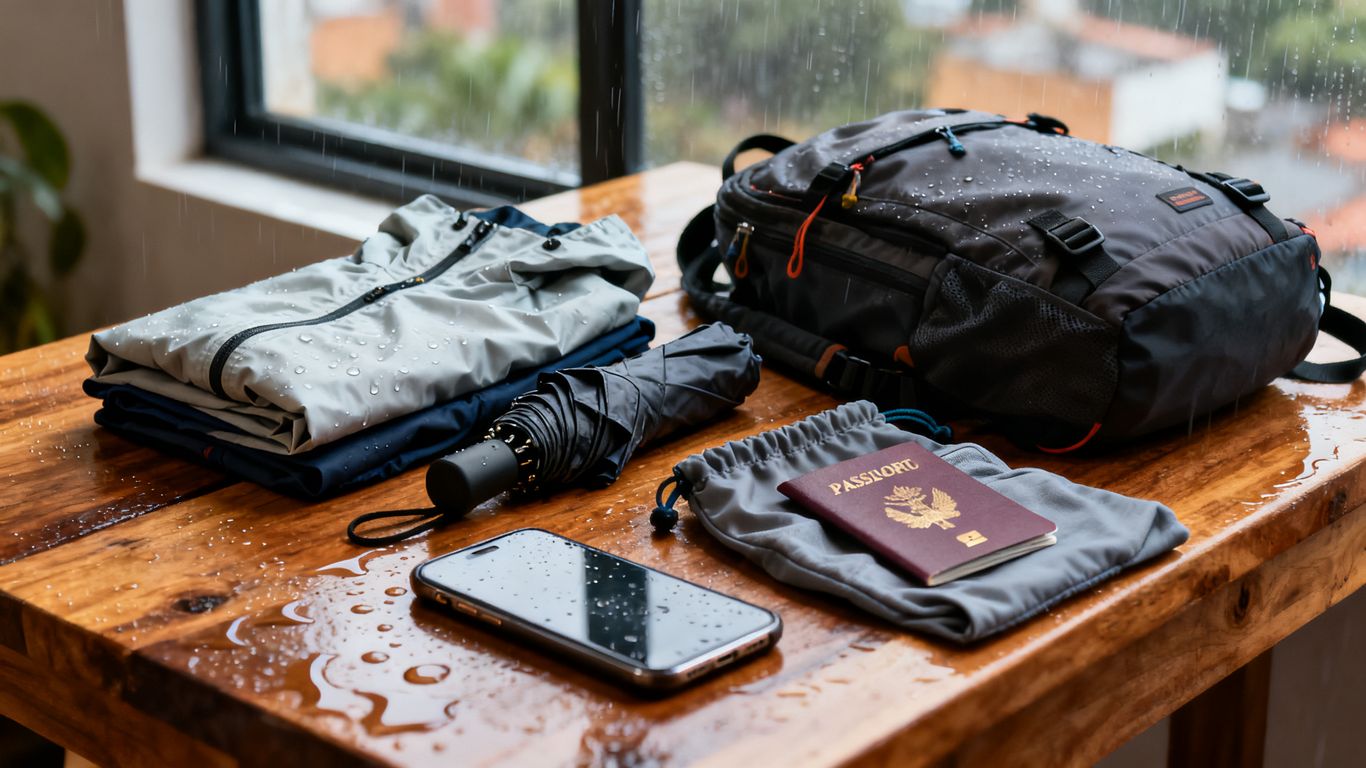
A lightweight rain jacket is easy to carry and leaves both hands free. A compact umbrella offers useful coverage during slower walks, especially on open streets. We do not need both for every outing, but one dependable option should remain in the day bag. A water-resistant backpack cover adds protection when rain becomes heavier.
The best choice depends on how we move around. Walkers may prefer a jacket, while travelers spending more time under cover may find an umbrella sufficient. A dry pouch inside the bag protects passports, chargers, and phones even when the outer material is only water resistant. We should avoid relying on a thin plastic shopping bag for essential items.
Protecting electronics, documents, and footwear
Zip-top pouches or small dry bags can separate wet clothing from cameras, chargers, and documents. We should keep digital copies of important travel records while carrying only necessary originals. Phones should be stored before rain begins, not after the first drops reach the screen.
Footwear needs a similar plan. Newspaper or absorbent cloth can help remove moisture, but shoes should dry in a ventilated room rather than against intense heat. We can pack lightweight sandals for indoor use if our main shoes become soaked. Never seal damp footwear in luggage for long periods.
Managing laundry and drying clothes during wet weather
Quick-drying clothes make repeated showers easier to manage. We can wash small items in the evening and hang them where air circulates. A lightweight laundry bag keeps used clothing separate from clean pieces. Packing fewer heavy cotton garments reduces drying problems.
We should not assume every accommodation has a dryer. A small amount of detergent, a travel clothesline, or a few clips can be useful. If something remains damp, we can use local laundry services rather than packing extra clothing. This approach keeps the bag lighter and prevents mildew smells.
What travel essentials belong in a Medellin packing list?
The remaining essentials support comfort, communication, and everyday logistics. We should pack based on our medication needs, charging requirements, and planned time outdoors. Most items are small, but forgetting one can create an unnecessary errand. A final check the night before departure prevents rushed decisions.
We also need to distinguish between essentials and items easily bought locally. Toiletries, snacks, and basic stationery are widely available. Prescription medication, preferred skincare, and specialized equipment deserve priority. A short checklist is more useful than filling every pocket in the suitcase.
Sun protection for changing elevations and bright days
Bright conditions can feel stronger at elevation, even when the air remains cool. Sunglasses, sunscreen, and a hat are sensible for walking, day trips, and open viewpoints. We should apply sunscreen before leaving and reapply during long outdoor days. Long sleeves can provide another comfortable layer of coverage.
A small sunscreen bottle belongs in the day bag, subject to airline liquid limits. Lip balm with sun protection is useful in dry, bright conditions. We should not skip protection simply because clouds cover the mountains. Reflected light from pale pavement and open viewpoints can still feel intense.
Reusable water bottles, medication, and personal care items
A reusable water bottle helps us stay hydrated during walks and day trips. We should follow local guidance about refill points and use sealed or trusted water sources. Personal medication belongs in carry-on luggage, ideally in its original packaging. A basic personal-care kit can include insect repellent, tissues, hand sanitizer, and any preferred hygiene products.
We can keep the daily kit compact by decanting permitted liquids into small containers. Extra prescription supplies should be planned before departure. Travelers with specific medical needs should bring relevant documentation and check entry requirements. These preparations are ordinary, but they prevent avoidable interruptions.
Adapters, power banks, and connectivity essentials
Colombia uses standard North American-style power sockets in many accommodations, but we should check our device requirements before leaving. A small adapter may be useful for travelers arriving from other regions. Chargers, a power bank, and a short cable cover most daily connectivity needs.
We should download accommodation details, maps, and reservations before exploring. An eSIM or local SIM can help when mobile data is needed, depending on phone compatibility. Keep the power bank accessible during long day trips. A charged phone is useful for transport, translation, and contacting accommodation.
How should you adapt your packing list for planned activities?
Our final packing choices should follow the itinerary, not a generic list for all of Colombia. A city break needs different equipment from a mountain day or coffee farm visit. We should check travel times, trail surfaces, and expected weather before adding specialized items. The broader Medellín tours and activities guide is useful when comparing these plans.
A practical method is to assign each day a main activity and one backup. Then we pack only items that support those plans. This avoids carrying hiking equipment through museums or extra evening clothes on a rural excursion. It also leaves room for weather changes.
Packing for day trips to Guatapé and nearby mountains
Guatapé and nearby mountain areas can involve early departures, open viewpoints, stairs, and changing conditions. We should carry a light layer, rain protection, sunscreen, water, and supportive shoes. A small backpack is more convenient than a suitcase for transfers and boat or village stops.
For a planned climb or trail, add clothing that dries quickly and has secure pockets. We should not assume city sneakers will provide enough grip on every surface. A hat and sunglasses help in exposed areas. Bring only the hiking equipment the confirmed route actually requires.
What to bring for coffee farms and outdoor excursions
Coffee farm visits may include uneven paths, soil, vegetation, and rain. Closed shoes with a grippy sole are more practical than open sandals. Long trousers can protect against brush and insects, while a breathable shirt keeps the outfit comfortable. A small towel or spare socks can help after wet sections.
We should keep cameras and phones in protective pouches. Insect repellent belongs in the day bag when the excursion takes place near dense vegetation. A reusable bottle and a small snack are useful if transport between stops is lengthy. Check whether the operator supplies any required safety equipment before packing duplicates.
Clothing and essentials for indoor cultural workshops and evening plans
Indoor workshops need comfortable clothing that can tolerate hands-on activity. We should choose washable layers and closed shoes when the session involves food preparation or traditional tools. For a rainy afternoon, the Colombian Cacao Experience in Laureles offers a hands-on bean-to-bar workshop lasting approximately 3.5 hours and costing 160,000 COP per person.
The session includes roasting raw cacao over fire, peeling and grinding beans on a traditional molino, a cacao ceremony, a chocolate exfoliation ritual, and a signature cacao sour cocktail. We can wear clothes that allow movement and bring a rain layer for the journey there. It is a practical indoor plan when weather disrupts outdoor sightseeing.
We can then use the same clean, simple outfit for an evening meal. The Colombian Cacao Experience also fits travelers seeking a cultural activity rather than another outdoor attraction. Its documented format makes it easier to plan clothing around one indoor block instead of packing a separate outfit for every event.
Conclusion
We can keep a Medellín trip comfortable with breathable layers, supportive shoes, compact rain protection, and a few carefully chosen essentials. Once we match the bag to our actual activities, the city’s changing weather becomes manageable rather than inconvenient.
Frequently Asked Questions
What is the best packing list for Medellin Colombia weather?
We should pack breathable tops, light trousers, one warmer layer, supportive walking shoes, sunscreen, and compact rain protection. This combination handles mild days, cooler evenings, and sudden showers.
Does Medellín require warm clothing?
Most city visits do not require heavy winter clothing. A thin sweater, overshirt, or lightweight jacket is usually more practical than a thick coat.
Should we pack an umbrella for Medellín?
A compact umbrella is useful, especially for slower neighborhood walks. Travelers who prefer both hands free may choose a lightweight rain jacket instead.
What shoes are best for Medellín sightseeing?
Supportive sneakers with a secure fit and grippy sole suit most urban routes. Hiking shoes are useful only when the itinerary includes trails or rough outdoor surfaces.
What should we wear in Comuna 13?
We should wear comfortable clothes and supportive shoes for stairs, slopes, and walking. A small secure bag and low-profile accessories are also sensible.
How should we pack for a day trip to Guatapé?
We should carry a small backpack with a light layer, rain protection, sunscreen, water, and comfortable shoes. Add more specialized gear only if the confirmed activity requires it.
How many outfits should we pack for a one-week trip?
A compact rotation of several breathable tops, two or three bottoms, one warmer layer, and one evening option is usually enough. Laundry planning lets us avoid carrying a complete outfit for every day.
Written by the editorial team at Things To Do Medellin, featuring local insights and verified recommendations from the city’s top-rated cultural artisans.