
Key Takeaways
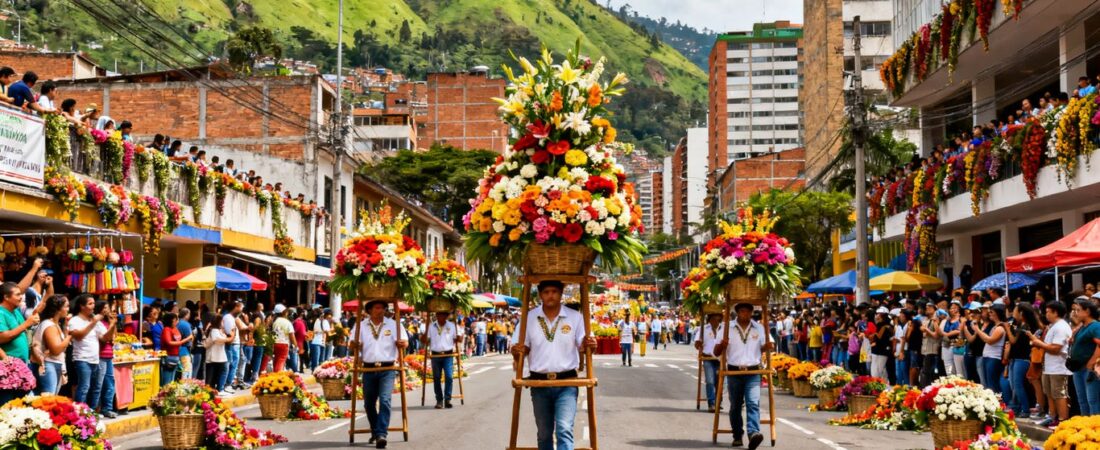
Feria de las Flores is Medellín’s annual celebration of flowers, silletero traditions, music, and local culture.
- The festival grew from events first held in 1957.
- The Desfile de Silleteros is the central public tradition.
- Most activities take place across several neighborhoods and venues.
- August weather is usually mild, with periods of rain.
- We should book accommodation and plan transport well ahead.
What is the Medellín Flower Festival Feria de las Flores?
The medellin flower festival feria de las flores is Medellín’s annual celebration of flowers and Antioquian culture. It usually takes place in August and includes parades, concerts, exhibitions, and neighborhood events. The festival’s defining tradition is the public celebration of silleteros, local flower growers who carry elaborate arrangements on their backs.
The festival’s history and cultural significance
The first flower festival took place in Medellín in 1957 and lasted five days. The event later developed into the Feria de las Flores, with a broader program extending beyond flowers. Today, it connects the city with Antioquia’s agricultural history, family traditions, music, and public celebrations.
The festival is not one single show in one location. It is a citywide program, and the official calendar changes each year. We should therefore check current municipal listings before building a detailed itinerary. A useful overview of the festival’s origins and major activities appears in this Feria de las Flores background guide.
Why silleteros are central to the celebration
Silleteros are flower growers associated especially with Santa Elena, a rural district in the hills east of Medellín. They carry silletas, large circular or structured displays made from flowers. The designs can include natural scenes, messages, symbols, and carefully arranged color patterns.
The parade gives these growers a central cultural role rather than treating flowers as simple decoration. Families often pass down cultivation knowledge and parade traditions over generations. We should view each silleta as skilled agricultural and artistic work, not merely as a colorful prop for photographs.
When the festival usually takes place
Feria de las Flores is held annually in August, generally during the first part of the month. Its schedule often lasts about a week or more, although the exact length depends on the official program. Dates, venues, entry rules, and parade arrangements can change from one edition to the next.
The 2026 program listed in available festival coverage runs from July 31 through August 9, with the main silleteros parade scheduled for August 9. We should confirm those dates through current official information before booking nonrefundable plans.
Which events take place during Feria de las Flores?
Feria de las Flores combines traditional flower events with music, food, exhibitions, and public entertainment. The Desfile de Silleteros attracts the strongest attention, but it is only one part of the program. We can build a fuller visit by mixing one major event with smaller cultural activities.
The Desfile de Silleteros flower parade
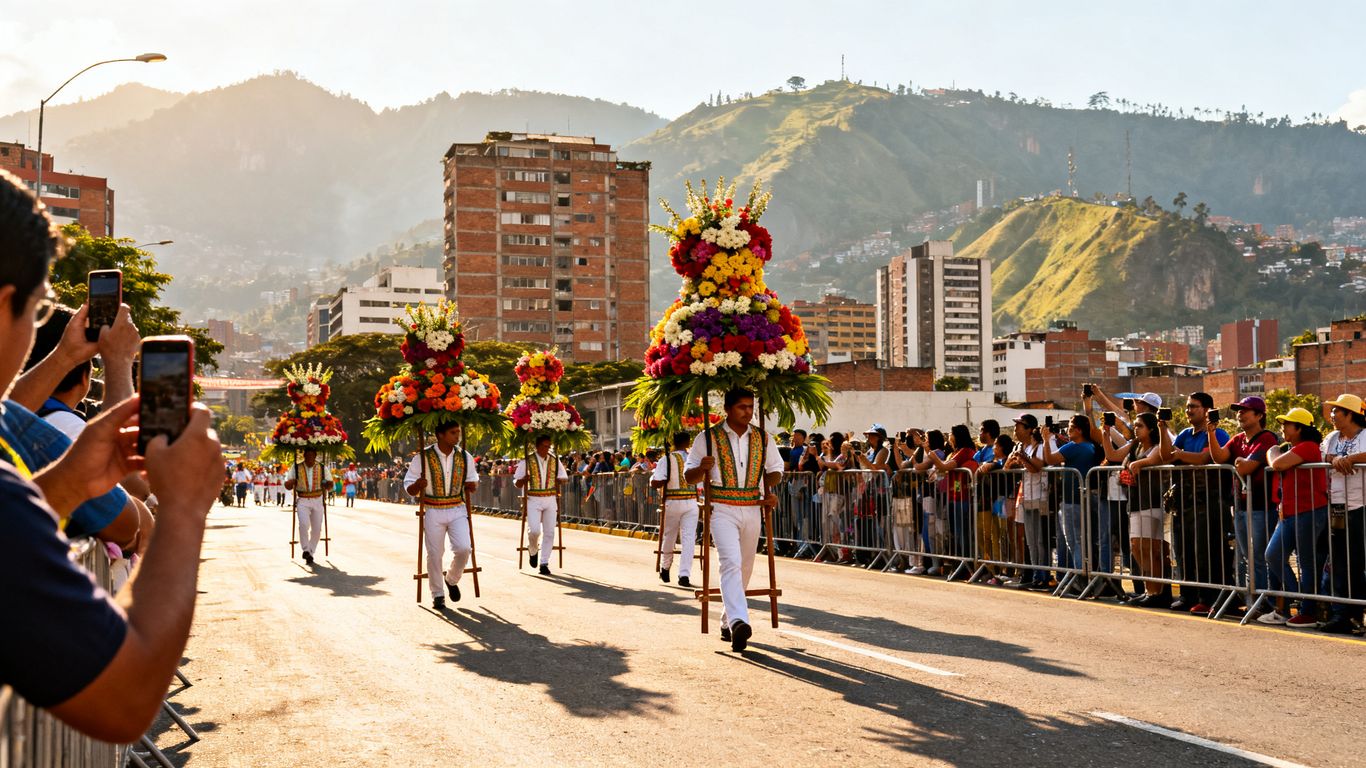
The Desfile de Silleteros is the festival’s signature event. Silleteros walk along a designated route carrying large floral displays while spectators watch from public areas or ticketed stands. The parade usually draws very large crowds, so the viewing experience depends heavily on arrival time and location.
The displays vary in scale and design. Some are dense arrangements of fresh flowers, while others follow artistic or symbolic themes. We should allow extra time for security checks, street closures, and the slower movement of crowds around the route.
Concerts, exhibitions, and cultural performances
The festival calendar usually includes concerts, musical platforms, traditional performances, and cultural presentations. Some events are designed for large audiences, while others take place in theaters, plazas, parks, or neighborhood venues. Programs can also include trova, an improvised singing tradition associated with Antioquia.
Other festival editions have included classic car parades, horse-related events, food activities, and family programming. Not every event is flower-focused, which explains why the fair feels more like a broad city festival than a single horticultural exhibition.
Flower displays, orchid shows, and public installations
Flower displays provide quieter alternatives to the main parade. Depending on the year, we may find orchid exhibitions, indoor floral arrangements, artisan displays, and temporary installations in public spaces. These events are useful when we want to study the flowers closely instead of watching a moving procession.
The Jardín Botánico visitor guide is also useful for planning a botanical stop. The garden is accessible through Universidad station and includes plant collections and an orchid display at the Orquideorama. We should verify festival-specific opening hours because special programming may affect normal access.
Neighborhood events and smaller local gatherings
Many activities happen outside the biggest central venues. Neighborhoods may host concerts, family days, cultural performances, food stalls, and community gatherings. These smaller events can feel easier to navigate and often show how residents participate beyond the headline parade.
Before choosing one, we should check the location, start time, language, payment rules, and transport options. A modest local event may be more enjoyable than trying to cross the city between several crowded venues on the same afternoon.
When should you visit Medellín for the flower festival?
We should visit during the official festival dates if the parade and public programming are priorities. August offers the clearest access to the full calendar, but it also brings higher demand for rooms and transport. A practical visit usually combines advance planning with some flexibility.
How festival dates vary each year
The festival does not use one fixed date every year. Its August schedule shifts, and individual events may occur on different days within the main celebration. We should use the municipal program or official festival channels when confirming dates, rather than relying only on old travel articles.
For 2026, available listings identify July 31 to August 9 as the festival period. Future editions may follow a similar pattern, but that should not be treated as guaranteed. The 2026 festival schedule can help us compare announced activities with current official updates.
The busiest days and main parade schedule
The main silleteros parade is usually the busiest event. The streets around the route become crowded well before the procession begins, and public transport may be affected. We should treat parade day as a single major activity rather than adding several distant appointments afterward.
Concert evenings and weekend programming can also increase demand in central areas. If we prefer a calmer pace, we can attend a flower exhibition or neighborhood event on another day, then reserve the parade for a focused morning or afternoon plan.
How far ahead to book accommodation
We should book accommodation several weeks or months ahead, especially if traveling for the parade weekend. Central neighborhoods, Laureles, El Poblado, and areas with direct Metro access can fill quickly. Flexible cancellation terms are useful when the official program has not yet been finalized.
A good booking choice is not necessarily the closest property to the parade. Reliable transport, a quiet sleeping environment, and a straightforward route back after evening events may matter more than saving a few walking minutes.
What weather to expect in August
Medellín usually has mild temperatures in August, but rain remains possible. We should carry a compact rain jacket, comfortable shoes, and protection for phones or cameras. Wet streets can slow walking routes and make outdoor viewing less comfortable.
Rain is also a reason to keep one indoor activity available. The Colombian Cacao Experience in Laureles is a roughly 3.5-hour bean-to-bar workshop priced at 160,000 COP per person. It includes roasting cacao over fire, grinding beans on a traditional molino, a cacao ceremony, a chocolate exfoliation ritual, and a cacao sour cocktail.
The Colombian Cacao Experience works best as a separate cultural activity, not as part of the festival program. We can schedule it on a rainy afternoon or after a demanding parade day. Its indoor format gives us a practical backup when August weather changes quickly.
Where are the main Feria de las Flores events?
Feria de las Flores has no single permanent festival ground. Events spread across Medellín, with routes, stages, exhibitions, and community activities changing by edition. We should confirm every venue on the current calendar before estimating travel time.
Popular parade routes and viewing areas
The silleteros parade follows a designated city route that may change in detail over time. Public viewing areas usually line the streets, while organized stands may provide reserved seating. We should arrive early, identify an exit route, and avoid blocking residents’ access to homes or businesses.
A map screenshot saved offline can help when mobile service becomes slow. We should also agree on a meeting point before entering the crowd, since finding one person in a moving festival audience is surprisingly difficult.
Event zones around central Medellín
Central Medellín hosts many public celebrations, cultural venues, plazas, and transport connections. Areas around major civic spaces may become busy during concerts and public performances. We should visit during daylight when exploring unfamiliar streets, then use a direct route to the next planned venue.
Some central attractions remain open during the festival, but their hours and surroundings may change. We should check access conditions before combining them with a parade or concert. The Parque de las Luces guide provides useful context for one central public space near Metro connections.
Flower exhibitions and botanical spaces
Botanical and exhibition spaces offer a slower way to experience the festival. We can examine orchids, arrangements, and cultivation traditions without standing beside a busy road. These venues suit visitors who prefer shade, seating, or a shorter visit.
The Jardín Botánico is near Universidad station, which makes it easier to combine with other northern attractions. We should confirm whether a special flower exhibition requires registration, timed entry, or a separate ticket during the festival period.
Local neighborhoods with festival programming
Laureles, El Poblado, central districts, and other neighborhoods may host separate activities. The exact mix changes each year, so we should read the program by neighborhood rather than assuming every event is centrally located. This approach can reduce unnecessary crossings and make the trip feel less rushed.
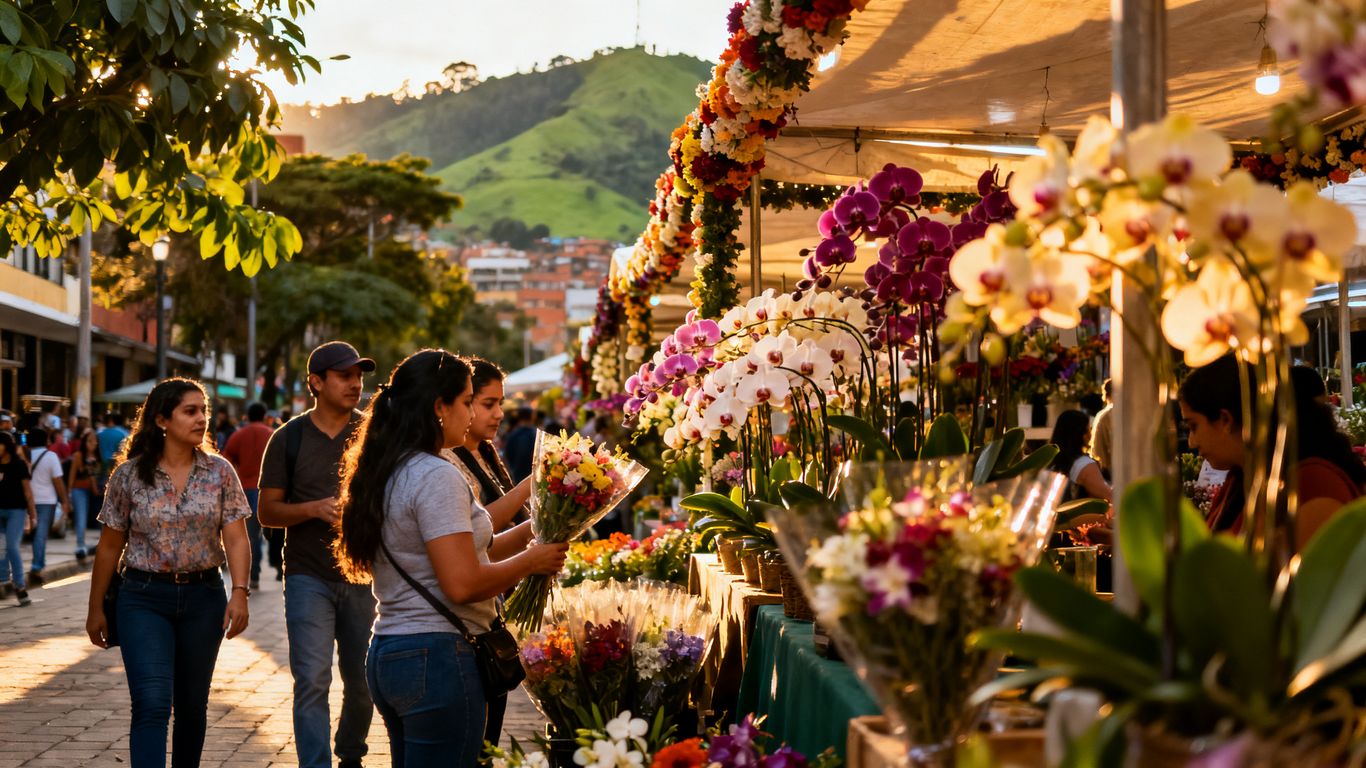
Local markets can add cultural context, provided we visit respectfully and protect personal belongings. For a market-focused detour, our guide to Placita de Flórez market covers flowers, produce, vendor etiquette, and practical navigation.
How should you plan transportation during the festival?
Transportation requires more planning during Feria de las Flores because roads, sidewalks, and stations can become unusually busy. The Metro is often the most predictable option for longer journeys, while walking works well for short connections. We should build time buffers into every parade-day plan.
Using the Medellín Metro and Metroplús
The Medellín Metro and Metroplús connect several major parts of the city. We should identify the nearest station before leaving accommodation and check the operating information for the festival date. A rechargeable travel card and a small backup amount of cash can make station transfers easier.
Metroplús routes may be affected by road closures or event security. We should not assume that a normal route will operate exactly as usual. Checking the city’s transport updates on the day is more reliable than following an old itinerary.
Road closures and parade-day traffic
Parade routes can close before the procession begins. Taxis and ride-hailing vehicles may need to stop several blocks away, and traffic can move slowly around crowded districts. We should set the drop-off point outside the closure zone, then walk the final distance.
Drivers may also face temporary diversions near concerts and public stages. Allowing extra time is sensible, especially when traveling to an airport, a timed ticket, or a restaurant reservation. We should avoid scheduling a cross-city trip immediately after the parade.
Walking between major venues
Walking is often the simplest way to move between nearby activities. It avoids short-trip traffic delays and gives us a better sense of temporary street programming. We should use well-trafficked routes, keep phones out of sight when unnecessary, and stay aware at intersections.
A practical walking plan should include water, comfortable footwear, and a meeting point. We can also download maps before leaving accommodation. Small preparations matter when streets are crowded and familiar landmarks become difficult to see.
Choosing accommodation near reliable transport
Accommodation near a Metro station can simplify festival travel. Laureles and El Poblado offer many restaurants and services, while central areas may place us closer to some events. The best choice depends on the program we intend to attend most often.
We should compare the walking route to the station, late-night transport options, and the neighborhood’s noise level. A room beside a concert stage may sound convenient until the music continues past bedtime. Festival proximity is useful, but sleep is also part of the itinerary.
What should visitors know about tickets, costs, and access?
Feria de las Flores includes both free public activities and ticketed events. Prices, seating, registration, and capacity vary by event and year. We should read the current listing carefully because “free” may still mean limited access or early arrival.
Free events versus ticketed activities
Public street events and some outdoor programming may be free. Reserved parade seating, concerts, special exhibitions, and private activities can require tickets or registration. We should use official sales channels where possible and avoid buying from informal sellers near crowded venues.
The distinction between free entry and guaranteed viewing matters. A free event may have open access but no reserved place to sit. If the parade is the main reason for our trip, a paid viewing option may be worth comparing with an early public arrival.
Typical expenses during the festival
Our budget should cover accommodation, meals, local transport, event tickets, and occasional purchases from vendors. Prices vary widely by neighborhood and event type. Carrying some Colombian pesos is useful for small food stalls and independent sellers, while cards may work at larger venues.
A simple planning table keeps the major categories visible:
| Expense category | What to plan for | Useful approach |
|---|---|---|
| Accommodation | Higher demand during parade dates | Reserve early and check cancellation terms |
| Transport | Metro, buses, taxis, or ride-hailing | Add time for closures and crowded stations |
| Food and drinks | Restaurants, stalls, and event vendors | Carry cash for smaller purchases |
| Tickets | Reserved seats or special exhibitions | Confirm official prices and entry rules |
| Personal purchases | Flowers, crafts, and souvenirs | Compare prices and support local sellers |
This table is a starting framework, not a fixed festival budget. We should check current prices before traveling and leave room for weather-related transport or indoor plans. A little flexibility prevents small costs from becoming stressful.
Arriving early for popular public events
Early arrival is one of the simplest ways to improve a free event experience. We can locate the viewing area, use restrooms, buy water, and choose a position before the largest crowds arrive. For the main parade, arriving only minutes before the start usually means accepting a poor view.
We should follow barriers and instructions from event staff. Standing in a road, blocking an entrance, or leaning into the route creates problems for performers and other spectators. Patience is practical here, not merely polite.
Accessibility considerations for parades and venues
Crowded routes can be difficult for wheelchair users, visitors with limited mobility, and families with young children. We should contact the venue or event organizer in advance about accessible entrances, seating, restrooms, and transport connections.
For outdoor events, surfaces, slopes, shade, and crowd density may affect comfort. A quieter exhibition or scheduled venue can offer a better experience than a packed street. We should never assume that a public event has the same accessibility arrangements as a permanent venue.
How can visitors experience Feria de las Flores respectfully?
Respectful participation begins with understanding that Feria de las Flores is a living local tradition. Residents, growers, performers, vendors, and families all share the public spaces. We should observe first, ask before intervening, and treat the festival as a cultural event rather than a backdrop.
Understanding the meaning of a silletero display
A silleta reflects time, technique, cultivation, and family identity. The arrangement may carry a message or artistic idea that is not obvious from a quick photograph. We should watch the parade with attention and avoid reducing the display to a novelty.
When a silletero pauses, we can ask permission before taking a close portrait. A short conversation, when the moment allows, is often more respectful than silently placing a camera in someone’s face. The central idea is simple: the person carrying the work deserves as much attention as the flowers.
Supporting local artisans and vendors
Buying from local vendors can support the people who make the festival feel connected to daily life. We should ask prices clearly, pay the agreed amount, and avoid handling delicate goods without permission. Small purchases are welcome, but bargaining should remain reasonable and good-natured.
We can also support growers, artisans, and neighborhood businesses by choosing locally made products. Flowers, food, crafts, and cultural activities each offer different ways to contribute. If we visit markets, reading a practical guide beforehand can help us avoid confusion and behave appropriately.
Photography etiquette during cultural events
Photography is common, but consent still matters. We should ask before photographing close-up portraits, children, vendors, or private family moments. During the parade, staying behind barriers protects both the performers and our own equipment.
We should avoid flash when it distracts performers or affects an exhibition. Posting a photograph publicly also deserves some thought, especially when identifiable people appear. A good image is never worth interrupting a procession or blocking another visitor’s view.
Staying safe in crowded festival areas
Crowds require ordinary precautions rather than alarm. We should carry only what we need, keep bags closed, and use secure pockets for phones and documents. We should also agree on a meeting point before entering a dense viewing area.
Useful habits include:
- Carrying a charged phone and a small amount of cash.
- Keeping passports secured at accommodation when possible.
- Using official taxis or reputable ride-hailing services.
- Staying with companions after evening events.
These steps make movement easier without distracting from the festival. We should follow local instructions, leave if an area feels too congested, and ask event staff for help when necessary.
Conclusion
Feria de las Flores is best understood as a citywide cultural celebration rooted in flowers, agricultural knowledge, and silletero traditions. We can enjoy it more fully by checking current dates, choosing events across several neighborhoods, planning transport, and respecting the people who make the festival possible.
Frequently Asked Questions
What is Feria de las Flores in Medellín?
Feria de las Flores is Medellín’s annual flower festival, held mainly in August. It celebrates flowers, silleteros, Antioquian traditions, music, exhibitions, and public culture.
When is the Medellín Flower Festival held?
The festival is generally held in August, but the exact dates change each year. We should confirm the current official program before booking travel.
What is the Desfile de Silleteros?
The Desfile de Silleteros is a parade where flower growers carry large, carefully arranged displays called silletas. It is the festival’s most recognized traditional event.
Is Feria de las Flores free?
Some public events are free, while concerts, reserved parade seating, and special exhibitions may charge admission. Entry rules and prices depend on the specific event and year.
Where should visitors stay for Feria de las Flores?
Laureles, El Poblado, and areas near Metro stations can be practical choices. We should prioritize reliable transport and a manageable route to the events we most want to attend.
What should we pack for the flower festival?
We should bring comfortable walking shoes, a light rain jacket, sunscreen, and a secure small bag. A charged phone and some Colombian pesos are also useful.
How can visitors photograph silleteros respectfully?
We should ask permission for close portraits and remain behind parade barriers. We should avoid blocking the route, touching displays, or interrupting participants while they are working.
Written by the editorial team at Things To Do Medellin, featuring local insights and verified recommendations from the city’s top-rated cultural artisans.