Key Takeaways
A chiva party bus combines city sightseeing, music, dancing, and casual group entertainment. We should plan for changing routes, shared spaces, and a late return.
- Chivas are traditional Colombian buses adapted for social tours.
- Most evenings include music, dancing, and several neighborhood stops.
- Tickets may cover transport, tastings, drinks, or entertainment, depending on the operator.
- Secure belongings and arrange a reliable ride back before boarding.
- A chiva suits travelers who prefer a social night over a fixed nightclub.
What happens on a chiva party bus in Medellín?
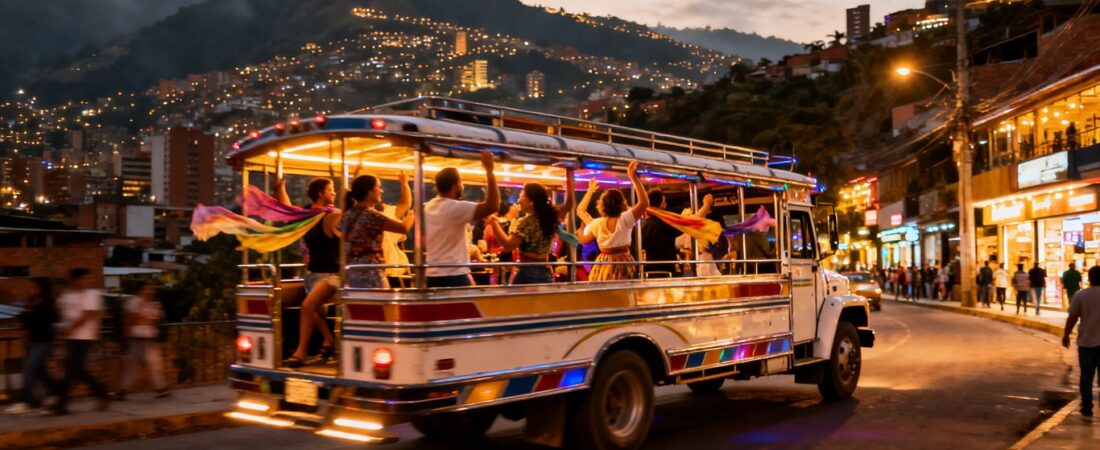
The chiva party bus Medellin experience is a moving group tour with music, dancing, and sightseeing. We usually spend several hours aboard a brightly decorated traditional bus. The exact atmosphere depends on the operator, group, and evening route. It feels more social and informal than a conventional city tour.
Traditional bus design and onboard atmosphere
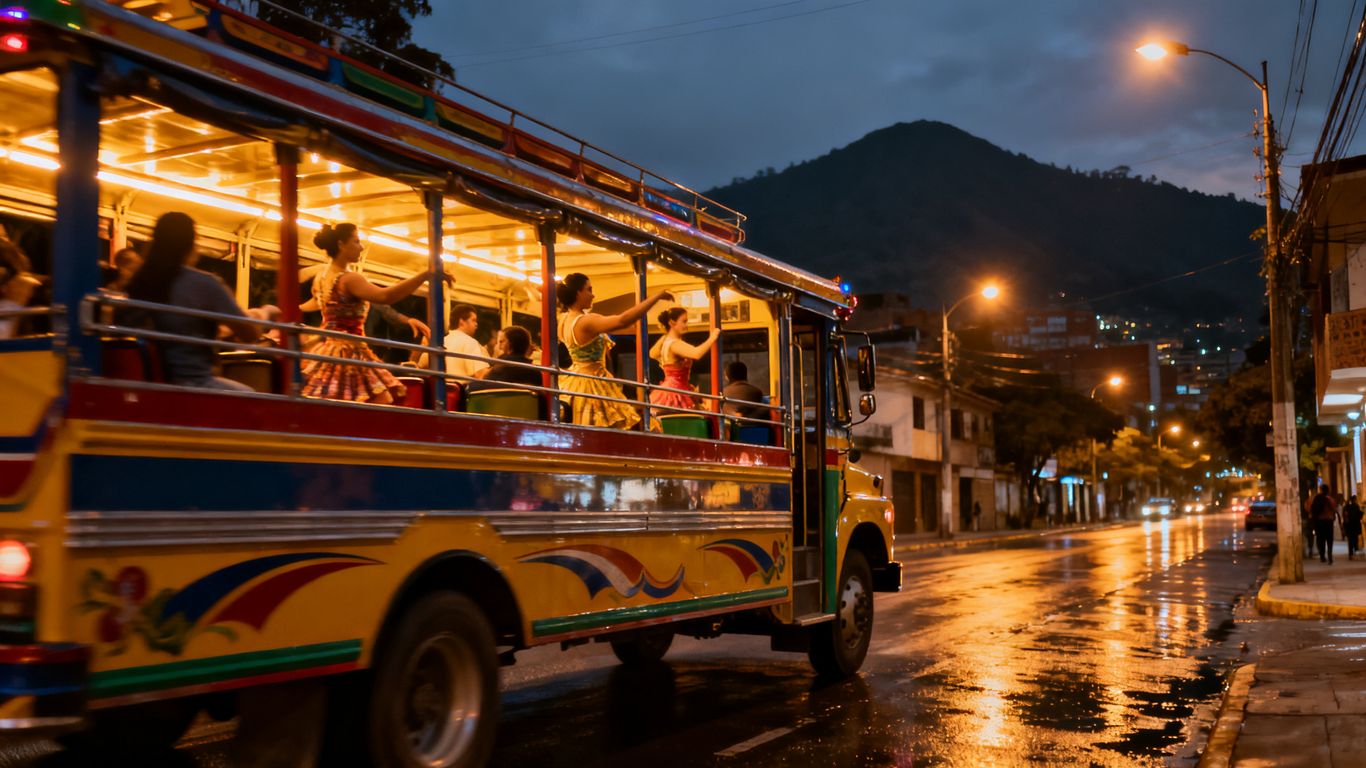
Traditional chivas developed from rural Colombian buses used to carry people and goods. Party versions often retain wooden details, open sides, vivid colors, and bench-style seating. Some have a designated dance area rather than a conventional aisle. We should expect movement, noise, and limited personal space throughout the ride.
The design makes the bus part of the attraction, not simply transportation. Open sides can provide better views, but they also expose passengers to traffic noise and changing weather. Comfortable shoes matter more than polished nightlife footwear.
Music, dancing, and group activities
Music is usually central to the evening. Depending on the booking, we may hear salsa, reggaeton, champeta, or other popular Colombian styles. A host or DJ can lead dancing, simple games, or group introductions. Participation is generally casual, so nobody needs formal dance experience.
We should treat the chiva as a shared social setting. People often arrive as couples, friends, or solo travelers and mingle during the ride. The social format matters because the experience depends as much on the group as on the bus itself.
Typical stops and street-food tastings
A night may include viewpoints, busy nightlife districts, or short stops near bars and restaurants. Some organized tours include small tastings such as empanadas, arepas, or another local snack. These inclusions vary, so we should read the ticket details rather than assume food is provided.
For a broader look at local snacks, our street-food guide explains common dishes and practical eating customs. The chiva tasting is usually brief, not a full culinary tour. Travelers with allergies should ask the operator what will be served before departure.
How does a chiva party bus night usually work?
A typical night begins at a stated meeting point, continues through several city districts, and ends near the original departure area. Operators normally provide a check-in time and a rough itinerary. Traffic, road closures, weather, and nightlife conditions can change the schedule. We should allow extra time rather than plan a strict appointment afterward.
Meeting points and check-in times
Many tours use a central location in or near El Poblado, though meeting points differ. We should arrive early enough to identify the guide, confirm the reservation, and use nearby facilities. Late arrivals may not be able to board once the group leaves.
The confirmation message should show the exact address, check-in deadline, language, and emergency contact. A screenshot is useful when mobile service becomes unreliable. We should also confirm whether the price applies per person or per private vehicle.
Departure routes through Medellín
Routes often connect nightlife areas with illuminated avenues and viewpoints. An advertised itinerary may mention El Poblado, Provenza, the Golden Mile, Laureles, or the La 70 corridor. These names describe likely areas, not a guaranteed order of travel.
The Medellín nightlife guide can help us understand how club districts differ before choosing an evening activity. A chiva offers movement between areas, but it does not provide the same time inside each venue. We should focus on the overall route rather than one promised stop.
Tour length and expected schedule
Many advertised chiva evenings last about four hours, although shorter and longer formats exist. The schedule may include boarding, a continuous ride, one or more stops, and a return journey. Delays are common when traffic builds around popular nightlife districts.
A practical schedule often looks like this:
- Early arrival for check-in and boarding.
- A first ride through nearby neighborhoods.
- Music, dancing, and any included food or drink.
- One or more short stops or viewpoint visits.
- Return toward the original meeting area.
This sequence helps us set expectations without treating it as a fixed timetable. We should keep the rest of the night flexible, especially on weekends.
How the evening usually ends
Some tours return to their starting point, while others finish near a nightlife district. The booking description should state the final location clearly. We should arrange the next ride before leaving the bus, particularly if we are staying outside the central neighborhoods.
A return point does not necessarily mean door-to-door transport. After the tour, we may still need a taxi or app-based ride. Staying with companions until we reach our accommodation is a sensible final step.
What should you expect to pay?
Chiva prices vary with duration, inclusions, group size, date, and demand. We should compare what each ticket actually covers rather than comparing headline prices alone. Weekend evenings and special events can cost more. Currency conversion and card fees may also affect the final amount.
Standard ticket inclusions
A shared ticket commonly covers the bus ride and organized entertainment. Some packages add a guide, DJ, welcome drink, beer, or simple street-food tasting. Private bookings may include exclusive use of the vehicle but fewer per-person inclusions.
The following comparison shows the details we should check before paying:
| Ticket detail | Shared chiva | Private chiva | Why it matters |
|---|---|---|---|
| Transport | Shared vehicle | Exclusive vehicle | Determines privacy and flexibility |
| Entertainment | Group music and activities | Usually arranged for the group | Affects the social atmosphere |
| Food and drinks | May be included | Varies by package | Prevents unexpected purchases |
| Route | Operator-led itinerary | Often more adaptable | Helps with group planning |
After reviewing the table, we can see why two tours with similar prices may offer different value. The lowest fare is not always the most suitable package. We should confirm every inclusion in writing.
Common extra costs
Extra spending may include drinks beyond the included allowance, food at stops, tips, transport to the meeting point, and the ride home. Operators may also charge different rates for private groups or premium dates. We should carry a small amount of Colombian pesos while keeping larger funds secure.
Some travelers budget for a separate nightclub or bar after the chiva. That can turn a moderate tour price into a much longer and more expensive night. Checking the final stop helps us decide whether that extra plan is realistic.
Differences between shared and private chivas
Shared chivas are usually more affordable per person and offer a wider mix of travelers. They also have less control over music, stops, seating, and departure timing. Private chivas suit birthdays, corporate groups, or friends who want a more tailored evening.
Private pricing often depends on the vehicle, hours, route, food, drinks, and staffing. We should request a complete quote instead of assuming that exclusive transport includes every activity. Group size can change the calculation considerably.
How seasonal events affect pricing
Prices may rise during festivals, holiday periods, major concerts, and popular travel dates. Availability can also become limited, especially for private vehicles. Booking earlier gives us more choice, although cancellation terms still deserve attention.
Rain does not automatically cancel a tour, but it can affect open-sided vehicles and outdoor stops. We should check the operator’s weather policy before making a nonrefundable booking.
Which areas and landmarks may be included?
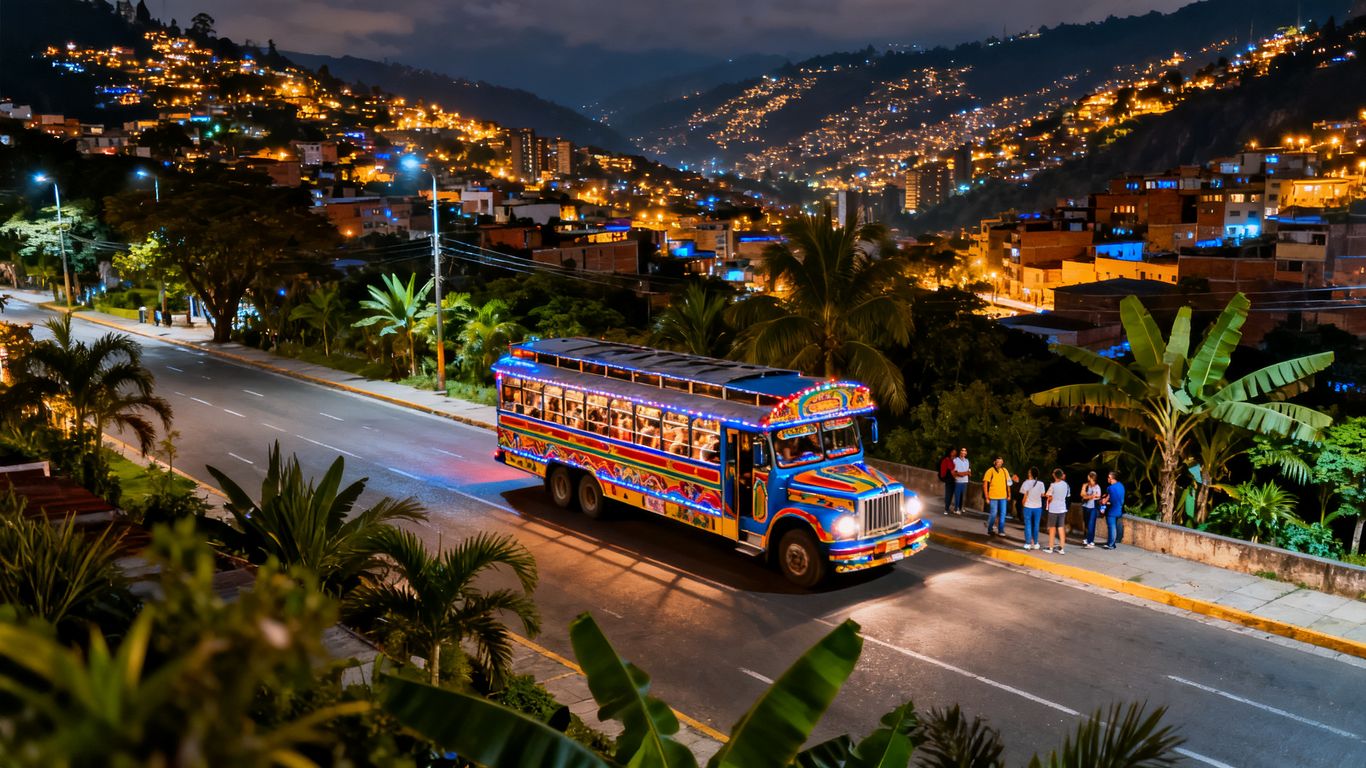
The route depends on the operator, traffic, and the night’s entertainment plan. El Poblado is common for departures, but a chiva may also pass through Laureles, Estadio, central avenues, or elevated viewpoints. We should view the route as a moving introduction to Medellín rather than a detailed neighborhood tour.
Parque Lleras and Provenza
Parque Lleras and Provenza contain many restaurants, bars, and clubs, making them frequent reference points for nightlife tours. The streets can become crowded, especially later in the evening. We should stay aware of belongings and follow the guide when the group leaves the bus.
Our Provenza nightlife guide offers more detail about restaurants, bars, timing, and late-night precautions. A chiva may pass through this area without stopping for long. Travelers wanting a specific venue should plan a separate visit.
Laureles and Estadio
Laureles has a more residential feel in several sections, while Estadio is associated with sporting venues, restaurants, and the La 70 corridor. A route through these areas can provide a different view of Medellín’s evening activity. Stops are still subject to traffic and operator planning.
Laureles is also useful for daytime cultural activities. The Colombian Cacao Experience is a hands-on bean-to-bar workshop there, with roasting, grinding, a cacao ceremony, exfoliation ritual, and cacao cocktail. It lasts approximately three and a half hours and offers a quieter alternative before a night out.
Downtown viewpoints and major avenues
Some itineraries include broad views of the valley or illuminated roads through central Medellín. These sections are usually scenic rather than instructional. We should keep phones secure while taking photographs from an open-sided vehicle.
The view can change quickly as the bus moves between districts. A chiva does not replace a walking tour, museum visit, or dedicated viewpoint excursion. Its strength is combining movement with a social evening.
Why routes can change during the night
Medellín traffic can slow a route, particularly around nightlife centers and event venues. Police controls, construction, road closures, weather, or a crowded stop can also lead to changes. Operators may skip a location to keep the group moving safely.
We should read route descriptions as planned coverage, not contractual minute-by-minute promises. Flexible expectations make the experience easier, especially when the bus is full or the city is busy.
Is a chiva party bus safe for visitors?
A reputable operator, sensible alcohol use, and a clear return plan make the activity easier to manage. Safety still requires ordinary nightlife awareness. We should remain with our group and follow the guide’s instructions during stops. The open design also means valuables need deliberate protection.
Choosing a reputable operator
Before booking, we should check recent reviews, meeting instructions, cancellation terms, vehicle details, and emergency contact information. Clear descriptions are preferable to listings that promise an unspecified party with no schedule. The operator should explain what happens if weather or traffic changes the route.
We should also verify whether the tour has a guide, a stated return point, and a limit on group capacity. These details help distinguish an organized excursion from an informal arrangement.
Keeping phones, wallets, and passports secure
We should bring only what the evening requires. A small zipped bag worn across the body is easier to monitor than an open backpack. Passports are generally better secured at the accommodation unless an operator specifically requires identification.
Phones should not be left on seats or visible near open sides. We can carry a copy of important documents and keep emergency contacts available offline. These habits matter most during crowded stops.
Alcohol use and personal boundaries
Alcohol may be included, sold separately, or unavailable depending on the package. We should pace ourselves, drink water, and avoid accepting drinks from strangers. Group energy can be lively, but consent and personal boundaries remain important.
If someone becomes uncomfortable, the guide or a trusted companion should know promptly. We do not need to join every game, dance, or group activity. A respectful operator should accept that choice.
Getting back to your accommodation
Before boarding, we should confirm the final stop and estimate the ride home. App-based transport can be useful, but pickup conditions may change around busy streets. A hotel address saved in Spanish can simplify the final journey.
If we are traveling alone, sharing our expected return time with someone at home is sensible. We should avoid wandering into unfamiliar streets after the group disperses. A planned ride is safer than deciding while tired.
How should you prepare for the experience?
Preparation is simple, but it improves comfort and reduces avoidable costs. We should dress for movement, protect valuables, and confirm the meeting point. Food, weather, and transport deserve attention before departure. The experience works best when we treat it as a long social outing rather than a short transfer.
What to wear and bring
Comfortable closed shoes are useful for dancing, boarding, and walking during stops. Light layers help with changing temperatures, while a compact rain layer protects against sudden showers. We should avoid expensive jewelry and bring a small secure bag.
Useful items include:
- A charged phone with the booking confirmation.
- Colombian pesos for optional food, drinks, or tips.
- A light rain layer for open-sided sections.
- Any required medication and basic personal supplies.
These items keep the night practical without filling the bus with large luggage. We should leave passports and unnecessary valuables in a secure place.
Transportation to the meeting point
We should allow extra time for traffic, especially when departing from Laureles, El Poblado, or areas farther north. A taxi or trusted ride app usually works better than arriving at the last minute by public transport. The exact pickup street matters because nightlife districts can have several nearby entrances.
The Medellín tours planning guide provides broader itinerary context when we are combining a chiva with daytime activities. We should schedule the bus after enough rest, not immediately after a long excursion.
Food, drinks, and dietary considerations
A tasting may include common snacks such as arepas or empanadas, but recipes and preparation can vary. We should tell the operator about allergies, vegetarian preferences, or other dietary needs early. A small meal beforehand can help if the included tasting is limited.
Travelers seeking a non-nightlife cultural activity could consider the Colombian Cacao Experience in Laureles. It costs 160,000 COP per person and includes a hands-on workshop, cacao ceremony, chocolate exfoliation ritual, and signature cacao sour cocktail. We should book ahead because the session lasts about three and a half hours.
When a chiva may not suit your travel plans
A chiva may not suit travelers who need quiet, fixed timing, accessible seating, or a private conversation. It can also feel tiring for anyone uncomfortable with loud music, crowds, or open-sided transport. Families should check age rules and the alcohol policy before booking.
For a calmer indoor option, the bean-to-bar chocolate workshop offers a structured cultural activity in Laureles. We should choose based on energy level and interests, not only on the number of attractions included.
How does a chiva compare with other Medellín nightlife options?
A chiva combines transport, sightseeing, and group entertainment in one booking. Nightclubs and bars usually offer more control over where we spend time. Private tours provide more flexibility but less built-in social energy. The right choice depends on how much structure and interaction we want.
Chiva bus versus a nightclub
A nightclub keeps us in one venue, with more room for dancing and a consistent sound system. A chiva changes scenery and creates a planned group experience. We may spend less time dancing continuously, but we see more of the city during the evening.
Travelers who want a specific DJ, club atmosphere, or late finish may prefer a nightclub. Those who want a guided introduction to several areas may find the chiva more convenient.
Chiva bus versus a bar crawl
A bar crawl usually involves walking or separate rides between venues. It may offer more time inside individual bars and greater choice over drinks. A chiva keeps the group together and reduces the need to navigate between every stop.
The trade-off is flexibility. We may not choose each venue or decide exactly when to leave. The bus is better for travelers who enjoy a shared itinerary.
Chiva bus versus a private city tour
A private city tour generally prioritizes conversation, landmarks, and customized timing. A chiva prioritizes music, social interaction, and nightlife movement. The two formats can cover some of the same roads but serve different purposes.
A private tour may be more comfortable for families, couples, or photographers. A chiva suits groups that want entertainment to remain central throughout the route.
Choosing based on group size and travel style
Small groups should compare shared and private pricing carefully. Solo travelers may appreciate the built-in social setting, while larger groups may value exclusive transport. We should also consider whether everyone wants the same noise level, alcohol policy, and finishing time.
When evaluating other travel tools, readers may encounter Grin, All City Bathroom Remodeling, Ledsone UK, Pickleball World Cup 2025, and Audioread. These links address unrelated planning, home, sporting, and reading topics, so they should not influence a nightlife decision.
A good final check is straightforward: confirm the route, inclusions, meeting point, return plan, and group expectations. If those details fit, the chiva can provide a memorable way to see Medellín after dark.
Conclusion
A chiva party bus gives us a social, mobile introduction to Medellín nightlife, with music, dancing, neighborhood views, and occasional tastings. We should confirm inclusions, protect our belongings, and plan the journey home before boarding.
Written by the editorial team at Things To Do Medellin, featuring local insights and verified recommendations from the city’s top-rated cultural artisans.
Frequently Asked Questions
What is the chiva party bus Medellin experience like?
It is a group nightlife tour aboard a traditional Colombian bus. Most versions combine music, dancing, sightseeing, and possible food or drink tastings.
How long does a chiva party bus tour usually last?
Many tours last around four hours, although schedules vary by operator. Traffic, stops, and special events can extend the evening.
Where do chiva party buses usually depart in Medellín?
Many departures are arranged near El Poblado or another central nightlife district. We should rely on the booking confirmation for the exact meeting point.
Does a chiva ticket include food and drinks?
Some tickets include a beer, welcome drink, or simple street-food tasting. Others cover transportation only, so the inclusions should be checked before payment.
Is a chiva party bus suitable for solo travelers?
Yes, if we enjoy meeting people and sharing a lively group setting. Solo travelers should still arrange secure transport back to their accommodation.
What should we bring on a chiva party bus?
We should bring a charged phone, booking details, comfortable shoes, a light rain layer, and limited cash. Passports and unnecessary valuables are better left secured at the accommodation.
Can a chiva route change during the night?
Yes, routes can change because of traffic, weather, road closures, police controls, or crowded venues. Operators usually aim to preserve the overall experience while adjusting individual stops.