
Key Takeaways
Medellín’s strongest photo locations range from hillside panoramas to busy public spaces. We can plan a varied route by pairing viewpoints with street-level scenes.
- Cerro Nutibara gives us a broad view across the valley.
- Comuna 13 pairs public art with hillside movement and layered views.
- Plaza Botero and downtown offer sculpture, architecture, and street scenes.
- Metrocable viewpoints, Parque Arví, and Las Palmas add elevated or natural frames.
- Provenza, Laureles, and the Botanical Garden offer distinct neighborhood and garden compositions.
1. Pueblito Paisa on Cerro Nutibara
The top photography spots in medellin valley include Pueblito Paisa on Cerro Nutibara, where we can frame the city against its surrounding slopes. The hill gives us a wide view across central Medellín and the Aburrá Valley. We get both rooftops and distant ridgelines in one composition.
For clearer details, we can visit earlier in the day, when haze and backlighting may be less pronounced. Weekday mornings are also a practical choice when we want room to set up without crowding the square. The panorama changes with cloud cover, so patience can be more useful than carrying another lens.
Pueblito Paisa adds a compact town-square scene to the overlook, with its church, fountain, and small buildings. We can alternate between wide valley frames and closer architectural details. For local planning context, see this Cerro Nutibara viewpoint guide.
2. Comuna 13’s murals and outdoor escalators
Comuna 13 gives us color, public art, and steep hillside perspectives within a compact area. We can photograph murals alongside stairs, walkways, and the outdoor escalators. The strongest images often come from observing how the artwork sits within everyday neighborhood life.
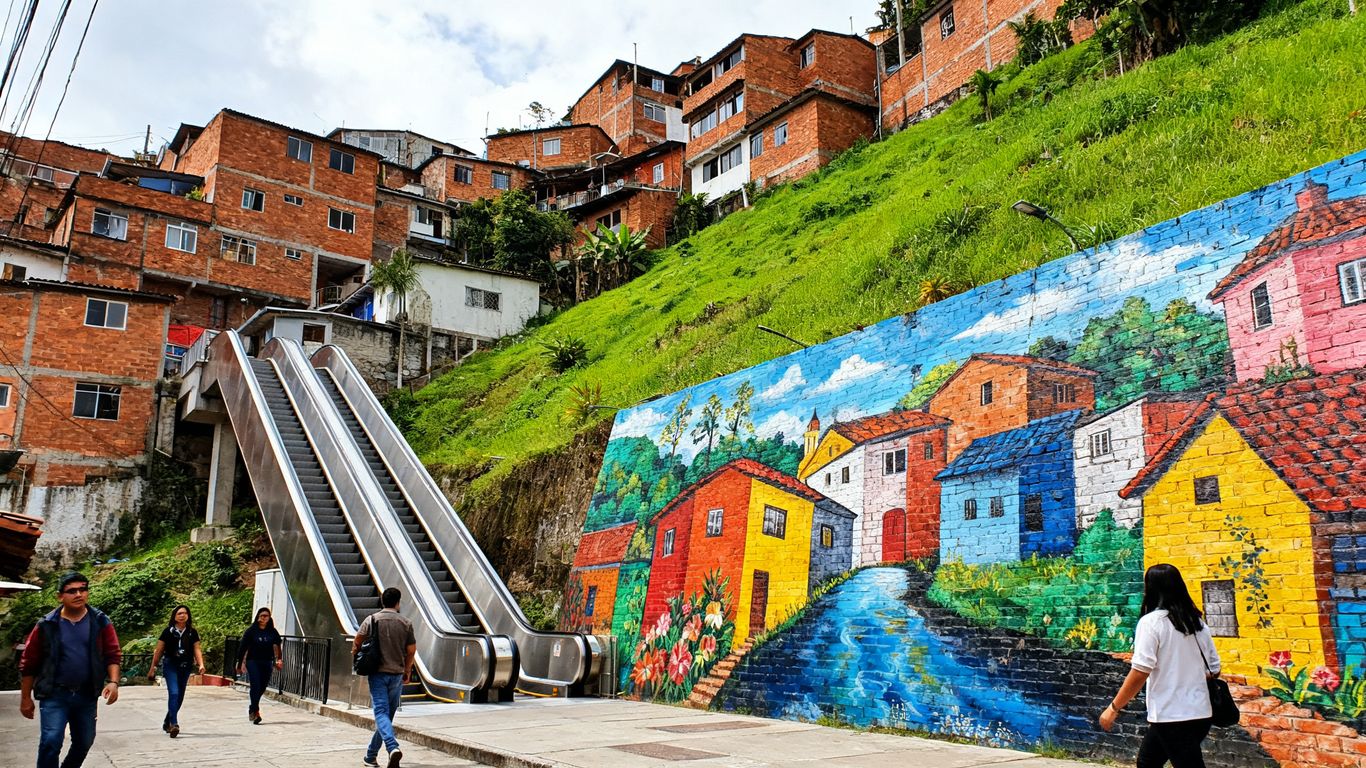
As we move through the area, we can build a small sequence rather than relying on one mural portrait. These details help keep the neighborhood’s scale and movement in view:
- Frame a mural with a nearby stairway or balcony.
- Look for repeating lines along the escalators.
- Include enough surrounding context to show the hillside setting.
- Pause for changing light instead of photographing from the busiest point.
We should be considerate when photographing residents and ask before making someone the focus of a frame. A guide to street photography in Medellín offers more context for photographing city scenes respectfully. We can also leave space in the schedule for looking, not only shooting.
3. Plaza Botero and the Museo de Antioquia
Plaza Botero places monumental sculptures in an open public setting in downtown Medellín. We can use the sculptures as foreground subjects, then let the surrounding buildings establish place. The changing distance between the figures and passersby gives the square a different feel throughout the day.
A wider lens can capture the relationship between the sculptures and the plaza, while a tighter frame isolates shapes and surface details. We should keep an eye on the background, where architecture and street movement can either add context or compete for attention. A short pause before each frame helps us simplify the composition.
The Museo de Antioquia is beside the plaza, making it easy to combine outdoor photographs with an indoor visit. Photography policies can vary by room or exhibition, so we should check posted guidance before taking pictures inside. The contrast between public sculpture and gallery spaces gives us two distinct ways to document the area.
4. Santo Domingo and the Metrocable viewpoints
The Metrocable ride toward Santo Domingo gives us changing views across hillside neighborhoods and the valley. From the station area, we can photograph the dense pattern of buildings against the distant mountains. The elevated perspective also makes the city’s scale easier to read.
For clear frames through a cable-car window, we can move close to the glass and watch for reflections. It helps to keep camera movements steady and avoid changing lenses during the ride. We should follow transit rules and avoid blocking other passengers while taking photographs.
At the viewpoint, we can choose between broad panoramas and tighter compositions of rooftops, streets, and ridgelines. The cable-car journey itself can provide a useful transition from enclosed city scenes to open hillside views. For a clearer panorama, we can time the visit around the weather rather than assume every ride will offer the same visibility.
5. Parque Arví’s forest trails
Parque Arví shifts the focus from city buildings to forest paths, foliage, and filtered daylight. We can photograph trail curves, tree trunks, and small openings that reveal the landscape beyond. A slower pace helps us notice details that disappear when we treat the park as a quick viewpoint stop.
The light can change sharply beneath the canopy, so we can look for stable exposures before moving between bright clearings and shade. We should stay on marked paths and avoid disturbing plants or wildlife for a photograph. The park’s quieter frames work well as a counterpoint to Medellín’s busy public spaces.
A forest walk also rewards close-up images of leaves, textures, and damp ground after rain. We can keep compositions simple and use the path as a natural guide through the frame. This setting is less about a single landmark than about gathering a sequence of small observations.
6. Las Palmas road overlooks
The Las Palmas route offers elevated views toward Medellín, with the valley and mountain edges visible from selected overlooks. We can use the setting for wide city frames, especially when the light separates the buildings from the slopes. Since conditions change, it is useful to treat each stop as an opportunity rather than expect one fixed viewpoint.
Different moments call for different compositions, and a simple field note can help us decide what to prioritize. The table below summarizes a few practical approaches without assuming that every overlook has the same access or conditions.
| Photo goal | A useful approach | What to watch |
|---|---|---|
| Broad valley view | Include the ridge and city together | Haze can soften distant detail |
| City lights | Arrive before dusk to settle in | Check access and transport plans |
| Layered mountains | Use a tighter composition | Clouds may hide the far ridges |
We can choose a composition based on the actual light at the stop, not a fixed preset. Overlooks beside a road require care, so we should use safe, designated stopping places and keep clear of traffic. For more elevated options, compare notes in this guide to Medellín viewpoints without strenuous hikes.
7. Provenza’s streets and cafés
Provenza offers a street-level mix of cafés, leafy corners, and pedestrian activity. We can photograph storefronts and outdoor seating as part of the neighborhood scene, rather than treating each business as an isolated subject. Morning or quieter periods can make it easier to compose without obstructing people.
The street details change from block to block, so we can walk slowly and look for patterns in balconies, plants, and painted surfaces. When people appear prominently, we should be thoughtful and ask permission when appropriate. This makes the images more considerate and usually gives us a clearer sense of what belongs in the frame.
Provenza also works well as a transition between architecture and everyday movement. We can use reflections in windows or the edges of café awnings to add depth without making the image busy. For practical planning, we should check opening hours locally and avoid blocking entrances while photographing.
8. Laureles’ tree-lined avenues
Laureles gives us a different urban rhythm, with broad avenues, mature trees, and cafés set along neighborhood streets. We can use the canopy to frame buildings or create repeating patterns down a block. The shade also offers softer light than an exposed hillside overlook.
For visitors looking beyond photographs, Laureles is home to the Colombian Cacao Experience, a hands-on bean-to-bar workshop. The workshop includes roasting raw cacao over fire and grinding beans on a traditional molino. It is a separate activity from a photo walk, but it fits naturally into time spent in the neighborhood.
The Colombian Cacao Experience also includes a cacao ceremony, a chocolate exfoliation ritual, and a signature cacao sour cocktail. We can keep the camera route and workshop visit as separate plans, giving each enough time. Nearby, specialty coffee shops in Laureles offer another neighborhood stop for travelers building a café-focused walk.
9. Jardín Botánico Joaquín Antonio Uribe
Jardín Botánico Joaquín Antonio Uribe gives us a set of garden paths and plant collections within the city. We can photograph the Orquideorama’s distinctive structure, then shift to close studies of leaves and flowers. The change in scale helps create variety without leaving the grounds.
We should check current visitor guidance before photographing exhibitions or people. In the garden, a longer lens can help isolate plants while leaving them undisturbed. Soft light beneath trees is useful for capturing delicate textures and reducing harsh highlights.
This stop balances Medellín’s urban views with quieter natural forms. We can take time to observe how the garden’s structures frame its planting, rather than shooting each feature in isolation. The Jardín Botánico visitor guide can help us plan a visit around the garden’s facilities and access.
10. Downtown Medellín’s street scenes
Downtown Medellín gives us dense street activity, varied architecture, and changing layers of movement. We can work with storefronts, public spaces, and the flow of pedestrians, while staying aware of our surroundings. A small camera setup can make it easier to move through busy blocks.
For context beyond a single block, we can browse things to do in Medellín and plan nearby cultural stops. Some online references cover unrelated subjects, including demand-generation strategies, beauty supplements in Morocco, home wellness solutions, stress-relief methods, and colloidal silver products. Those topics do not inform photography choices, so we can keep this walk focused on the street itself.
We should keep valuables discreet, avoid stopping in a way that blocks sidewalks, and remain attentive when checking camera settings. Downtown images benefit from a little patience: wait for a cleaner background or a more balanced flow of people. For a broader overview of attractions and city planning, this Medellín travel guide can help us connect the photo stops.
Conclusion
Medellín’s photo locations move from broad valley panoramas to gardens, murals, sculptures, and neighborhood streets. We can choose a few contrasting settings, check conditions before traveling, and leave time to observe each place carefully. Respectful photography and practical planning make the route more rewarding than trying to fit every stop into one day.
Frequently Asked Questions
What is the best time of day for photography in Medellín?
Morning often offers softer light and clearer conditions, though the best time depends on the location. We can check the forecast and revisit a viewpoint if clouds or haze obscure the valley.
Where can we photograph Medellín from above?
Cerro Nutibara, selected Las Palmas overlooks, and Metrocable viewpoints offer elevated perspectives. Access and visibility vary, so we should plan transport and check conditions before setting out.
Is Comuna 13 a good place for street photography?
Yes, its murals, stairs, and outdoor escalators provide varied visual layers. We should photograph residents considerately and ask permission when someone is the main subject.
Can we take photographs inside the Museo de Antioquia?
Rules may differ by room or exhibition. We should check posted visitor guidance or ask staff before taking photographs indoors.
What should we bring for a photo walk?
A camera or phone, spare battery, and a light rain layer are practical basics. Comfortable shoes help on steep streets and garden trails.
Is Parque Arví suitable for nature photography?
Yes, its trails and forest vegetation provide opportunities for landscape and close-up images. We should stay on marked paths and follow current park guidance.
How can we photograph Medellín respectfully?
We can avoid intrusive close-ups, ask before making people the focus, and keep entrances and sidewalks clear. Staying aware of belongings and surroundings is also sensible in busy areas.