
Key Takeaways
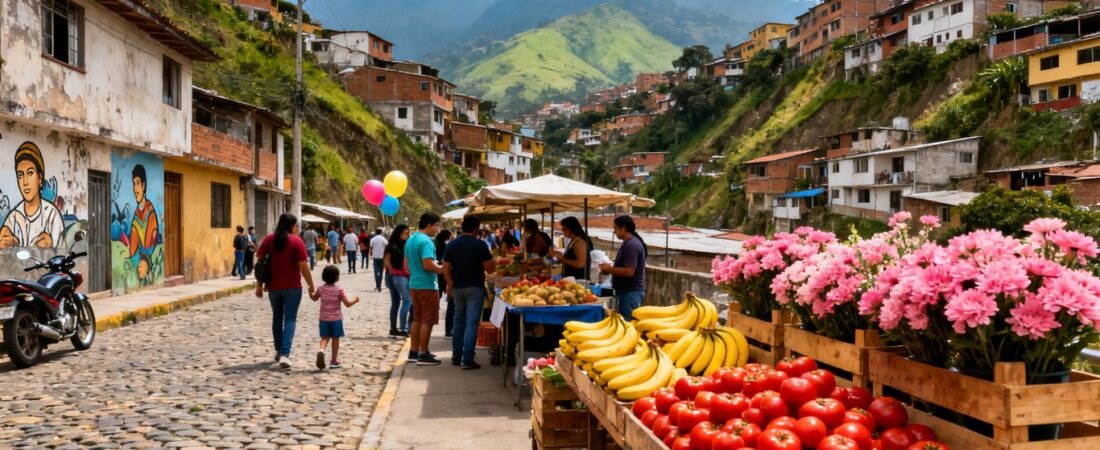
Paisa culture in Medellín is rooted in Antioquia, but it is not a single fixed set of habits. We can learn more by noticing local food, family life, music, and regional history.
- Paisa is a regional identity, especially associated with Antioquia and nearby areas.
- Family traditions and everyday customs vary between households and generations.
- Bandeja paisa and arepas are familiar parts of local food culture, with variations.
- Music, tango history, and public celebrations offer different ways to encounter Medellín’s heritage.
- Museums, markets, neighborhood events, and local guides provide context beyond staged displays.
What are authentic Paisa culture and traditions in Medellín?
Authentic paisa culture and traditions in Medellín are regional practices shaped by Antioquia’s history, food, and community life. We can understand them best as diverse, changing customs, not as a checklist that every resident follows. The word “Paisa” refers to a regional identity, though its meaning and use depend on the person and context. Knowing that distinction helps us approach Medellín with curiosity instead of assumptions.
What “Paisa” means in Colombia and who uses the term
“Paisa” is a common name for people associated with Antioquia and neighboring parts of Colombia. Many people use it for themselves or others as a regional label, while others may prefer to identify with their city, family, or another community. In Medellín, we will hear the term in everyday conversation, but it does not describe one uniform background. A regional overview of Paisa identity offers useful context for the term and its roots.
How Antioquia’s history shaped regional identity
Antioquia’s mountainous geography and histories of farming, trade, and settlement helped shape a strong sense of regional connection. Foodways, town life, and commerce developed across both urban and rural communities, rather than in Medellín alone. We should also keep national boundaries clear: a Peru Travel Guide covers a different country and cannot stand in for Antioquia’s history. The regional story is best understood on its own terms, with attention to local voices and places.
Why Paisa identity varies across families and generations
No family carries every tradition in the same way. Some households keep recipes and expressions from earlier generations, while others adapt them to city life, migration, or personal preference. Younger residents may relate to Paisa identity differently from older relatives, and people moving to Medellín bring their own customs too. A Ron Clark Academy page, for example, describes a school community system, not a template for how Paisa families work.
What visitors should know about cultural stereotypes
Visitors may encounter broad claims that Paisas are all especially outgoing, hardworking, or traditional. Those labels can flatten a large and varied region into a personality type. We can ask people how they describe their own background, listen without treating one person as a spokesperson, and avoid assuming that an accent signals the same experience for everyone. A Medical Assistant Guide addresses a profession, just as a local identity describes only one part of a person.
How do Paisa customs shape everyday life?
Everyday customs in Medellín are shaped by family ties, friendships, work, and the setting in which people meet. We may notice warm greetings and close social connections, but there is no single rulebook for every household. The details often become clearer through ordinary interactions, such as sharing a meal or joining a neighborhood gathering. We can follow local cues and ask politely when we are unsure.
The role of family, hospitality, and social connections
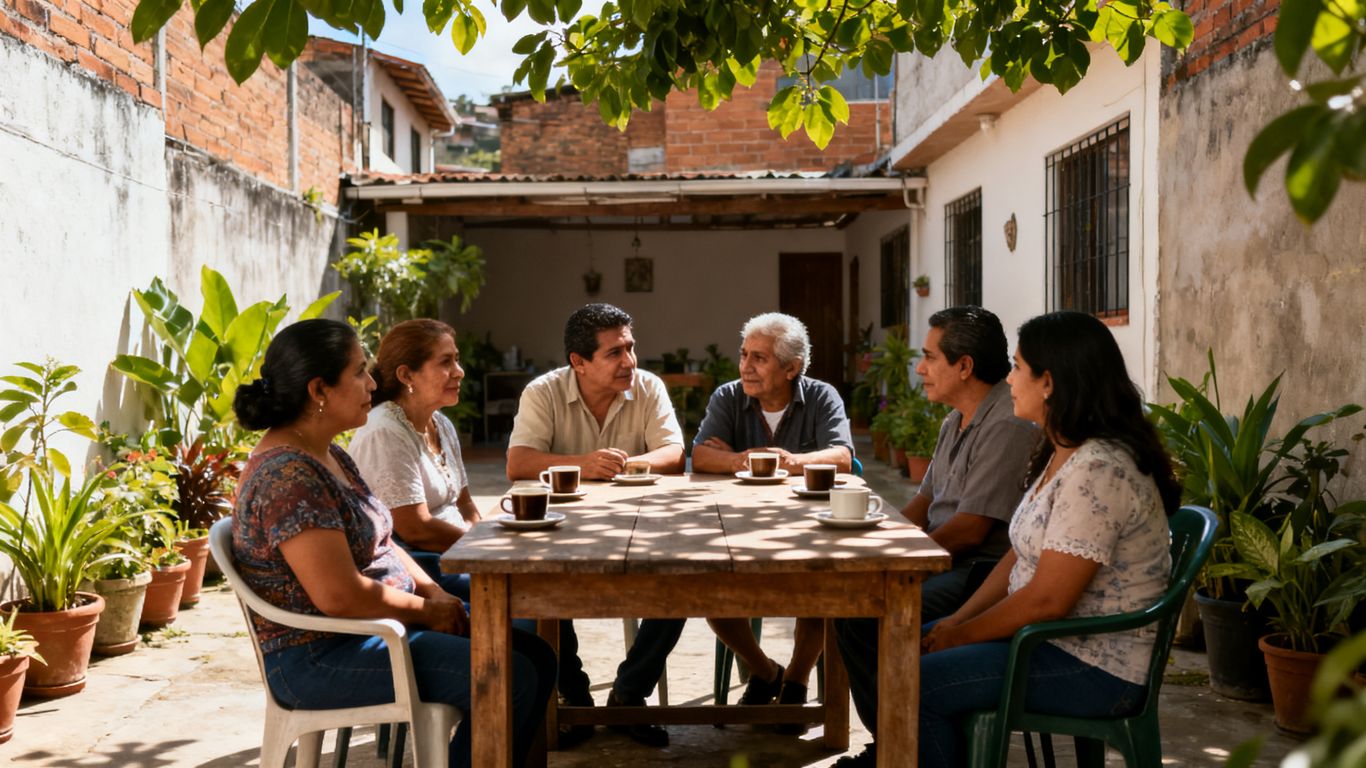
Family and longtime social ties can be central to daily routines, from shared meals to celebrations. Hospitality may mean offering food or making time for conversation, though each host has a different style. We should accept an invitation graciously without assuming that every friendly exchange carries the same meaning. A little attention to the people around us usually tells us more than a cultural generalization.
Greetings, conversation, and common expressions
A friendly “buenos días” or “buenas” is a useful opening when we enter a shop or meet someone. In casual conversation, we may hear “parce” used as an informal term for a friend, but it is best to listen before using slang ourselves. Tone and familiarity matter. A simple greeting, eye contact, and a patient pace help us communicate even when our Spanish is limited.
Punctuality, invitations, and expectations when socializing
Plans can be flexible, but expectations differ by person, event, and relationship. For a scheduled tour or reservation, we should arrive on time; for a casual gathering, it is sensible to confirm the expected arrival time with the host. If invited into someone’s home, we can ask whether to bring anything and follow the host’s lead. These small courtesies are more reliable than guessing from stereotypes.
How customs can differ between home and public settings
A home visit may involve more personal conversation and an offer of food, while a quick exchange in a café stays brief. Public spaces also have their own rhythms, from busy market counters to quiet museum rooms. We can adjust our volume, give people room, and ask before taking close-up photographs. When in doubt, considerate behavior travels well across settings.
Which foods are part of Paisa food traditions?
Paisa food traditions include filling meals, corn-based staples, beans, and locally familiar sides. We can find variation from one household and restaurant to another, so a dish’s name does not guarantee an identical plate. Food is also a practical way to learn how regional ingredients fit into daily life. For another local reference, see this guide to traditional bandeja paisa.
What typically appears in a bandeja paisa
Bandeja paisa is a substantial platter commonly associated with Antioquia. It often combines rice, beans, ground meat, chicharrón, egg, plantain, chorizo, arepa, and avocado, though restaurants may vary the components. The table gives a broad guide, not a strict recipe. Portions can be large, so we may want to share or ask about serving size before ordering.
| Common component | What it adds to the plate |
|---|---|
| Rice and beans | A filling base |
| Ground meat and chicharrón | Savory, hearty portions |
| Plantain and arepa | Corn and plantain staples |
| Egg, chorizo, or avocado | Common accompaniments |
The meal’s abundance is part of its familiar character, but local versions do not all match. We can ask which components are included and whether substitutions are possible. A Bandeja Paisa background guide gives additional context on the dish and its variations.
Arepa varieties and how they fit into daily meals
Arepas appear in many Colombian regional styles, and the versions served in Medellín can be simple or dressed with other ingredients. They may accompany a meal or work as a quick bite, depending on the household and occasion. We should not assume that every arepa tastes or looks the same. This street-food guide to arepas and other staples is useful for exploring familiar snacks across the city.
Traditional ingredients, sides, and regional variations
Corn, beans, rice, plantain, and avocado appear in many local meals, alongside meats and soups. Sides and preparations shift with family recipes, restaurant menus, and what is available. If we are trying a dish for the first time, it helps to ask what comes with it rather than ordering from a name alone. That small question can turn a meal into a more useful introduction to local food.
Where to try local food while supporting neighborhood businesses
Neighborhood restaurants, bakeries, and market stalls give us different ways to eat locally. We can choose busy, well-kept places, check posted prices, and carry some cash for smaller purchases. A Local Business Guide covers ways businesses connect with nearby customers; supporting neighborhood eateries is one practical way to participate in local commerce. The Colombian Cacao Experience is a hands-on bean-to-bar workshop, offering a different way to explore cacao and food culture.
What music and dance are associated with Paisa culture?
Medellín’s musical life draws on regional and national styles, alongside influences from beyond Antioquia. We may encounter music in venues, social gatherings, and public events, with the setting shaping how people participate. Tango has a particular place in the city’s cultural history, but it is only one part of a broader soundscape. We can enjoy music more thoughtfully by following the room’s cues and asking before photographing performers.
The place of tango in Medellín’s cultural history
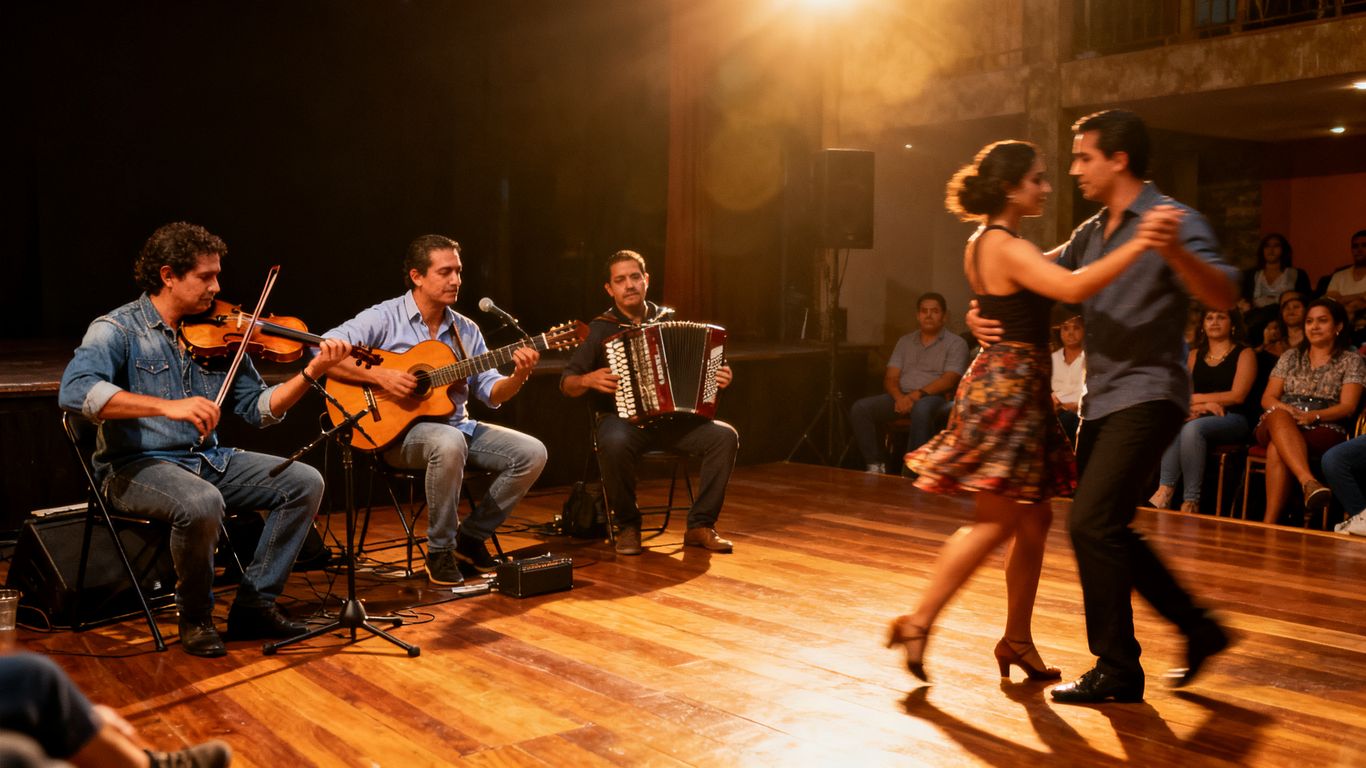
Tango became part of Medellín’s cultural story through its local listening and performance traditions. The city is often associated with tango, but the style’s presence should not be mistaken for the entirety of Paisa music. We can learn about this history through music venues and cultural programming, where the specific context is usually clearer than a quick street impression. Listening first gives us a better sense of how each space treats the music.
Popular Colombian music heard at local gatherings
At gatherings, we may hear a mix of Colombian genres and popular music from across Latin America. What plays depends on the hosts, venue, and occasion. Rather than treating one style as the definitive sound of Medellín, we can ask what people enjoy and let the playlist speak for itself. Local recommendations can point us toward music that fits our interests.
How social dancing works and what visitors can expect
Social dancing can be informal, and people participate at different levels of confidence. We can watch a song or two before joining, leave room for others, and accept a declined invitation without pressing. If a venue offers a class or guided introduction, that is a comfortable way to learn basic steps. No one needs to perform for visitors; respectful participation matters more than getting every move right.
Where to encounter music respectfully around the city
Music may be part of a scheduled performance, a neighborhood event, or an everyday gathering. We should check venue rules, keep walkways clear, and avoid treating private social moments as a show. The placeholder below can support a video about Medellín music and dance; it does not replace the context of a live event.
When we attend a performance, listening attentively and supporting the venue are simple ways to show respect. If we are unsure whether photography is welcome, asking first is better than assuming.
Which celebrations and traditions can visitors experience?
Medellín’s calendar includes public festivities, seasonal customs, and events organized at neighborhood scale. The experience changes by date and location, so we should confirm current schedules before building plans around a celebration. Public events can offer a glimpse of local traditions, but they are also part of residents’ lives. Joining with patience and consideration makes the visit more rewarding for everyone.
Feria de las Flores and its silletero heritage
Feria de las Flores is one of Medellín’s best-known celebrations, with silletero heritage at its center. Silleteros carry elaborate flower arrangements on their backs, continuing a tradition connected to the region’s flower-growing communities. The festival includes more than one event, and schedules can change by year. We can check official city information for current dates and the specific activities open to visitors.
Christmas lights and seasonal customs in Medellín
Medellín’s Christmas season is known for public lighting displays and family-oriented activities. Installations and access arrangements vary, so we should confirm where displays are located and when they are open. Crowds are part of popular viewing times; keeping belongings close and agreeing on a meeting point can help a group stay together. Residents may also have home and neighborhood traditions beyond the public attractions.
Local festivals, neighborhood events, and public celebrations
Smaller events can be just as revealing as major city festivals. Community programs, music events, and local fairs bring people together in ways that depend on the neighborhood and organizers. We can find current options through local cultural calendars and venue announcements. A guide to things to do in Medellín can help us identify event types and other cultural stops to explore.
How to check dates and participate considerately
Before attending, we can verify dates, access details, and any ticket or registration requirements. A few useful habits make a difference:
- Check official event information close to the planned date.
- Arrive early when the event is popular or has limited access.
- Ask before photographing people, especially children and performers.
- Follow instructions from event staff and keep public paths clear.
These steps let us participate without assuming that a public celebration exists solely for visitors. We can also plan a quieter alternative in case schedules or crowd levels change.
Where can travelers learn about Paisa history and heritage?
We can learn about Paisa heritage through a mix of historic sites, museums, markets, and conversations with local people. No single attraction represents all of Medellín or Antioquia. Each place gives us a different view, from curated exhibits to the ordinary business of a market. Combining those perspectives helps keep our understanding grounded and specific.
What Pueblito Paisa represents and what it does not
Pueblito Paisa offers a visitor-facing interpretation of a traditional Antioquian town setting. It can provide a convenient introduction to regional architectural motifs and a city viewpoint, but it is not a complete portrait of historical daily life. We should treat it as one interpretive site rather than a preserved town or a stand-in for the whole region. This Pueblito Paisa overview provides additional background on the landmark.
Museums and cultural sites for understanding Antioquia
Museums can add historical detail that a scenic stop cannot. Exhibitions at places such as Museo de Antioquia and the Museum of Modern Art Medellín address different parts of the city’s artistic and social story. We can check current exhibitions and opening information before going, since programming changes. A focused visit, with time to read and reflect, is more useful than trying to see everything quickly.
Markets and neighborhood spaces for observing daily life
Markets show how people shop, sell, and move through an ordinary day. We can visit with an open mind, avoid blocking stalls, and ask vendors before taking photographs. A local market guide can help us prepare for a visit to La Minorista, while a Placita de Flórez visitor guide offers another market perspective. Neither market is a staged cultural display, and vendors are working while visitors look around.
Ways to engage with local guides and artisans respectfully
Local guides and artisans can explain context that we might otherwise miss. We should agree on the scope and price of a tour or purchase beforehand, listen to individual perspectives, and avoid asking anyone to represent an entire region. The Colombian Cacao Experience is a hands-on bean-to-bar workshop; it offers a practical setting to learn about cacao through making. For other neighborhood commerce topics, an eigenKOR local-search resource concerns business visibility, not cultural interpretation. A guide’s knowledge and an artisan’s work should be valued on their own terms.
Conclusion
Paisa culture in Medellín is best approached as a living regional identity, shaped by history and expressed differently across families, neighborhoods, and generations. We can learn through meals, music, celebrations, museums, and respectful everyday encounters, while remembering that no single person or landmark tells the whole story.
Frequently Asked Questions
What does “Paisa” mean in Medellín?
“Paisa” is a regional identity commonly associated with Antioquia and nearby areas. People may use it differently or choose another description of their background.
Is Paisa culture the same throughout Antioquia?
No. Customs vary between towns, families, and generations, and urban life differs from rural experience.
What food should visitors try in Medellín?
Bandeja paisa and arepas are familiar starting points. Ingredients and preparations can vary, so asking what a dish includes is helpful.
What is the silletero tradition?
Silleteros carry flower arrangements on their backs, a heritage connected to Antioquia’s flower-growing communities. Their tradition is especially visible during Feria de las Flores.
Is tango part of Medellín’s culture?
Yes, tango has a place in Medellín’s cultural history. It is one musical influence among many, not a complete representation of local music.
Can visitors attend neighborhood celebrations?
Often, public neighborhood events welcome visitors, but access and expectations depend on the organizers. We should check current details and follow local guidance.
Where can visitors learn about Antioquia’s history?
Museums, historic sites, markets, and local guides each offer different context. Visiting more than one kind of place gives a fuller perspective than relying on a single attraction.