

Key Takeaways
Medellín stays mild throughout the year, but rainfall changes how we plan each day.
- Temperatures remain warm in the afternoon and mild after sunset.
- March, April, and May are generally wetter than the driest months.
- Elevation creates cooler conditions in hillside neighborhoods.
- Short showers are common, so flexible plans work best.
- Lightweight layers, sun protection, and rain gear are practical year-round.
What is the typical weather in Medellin during spring-like months?
The typical weather in medellin spring like climate is mild, warm, and occasionally rainy. We usually find daytime temperatures near 27–29°C, with cooler nights around 17–19°C. Medellín does not experience a traditional spring, but its equatorial valley climate produces modest temperature changes throughout the year.
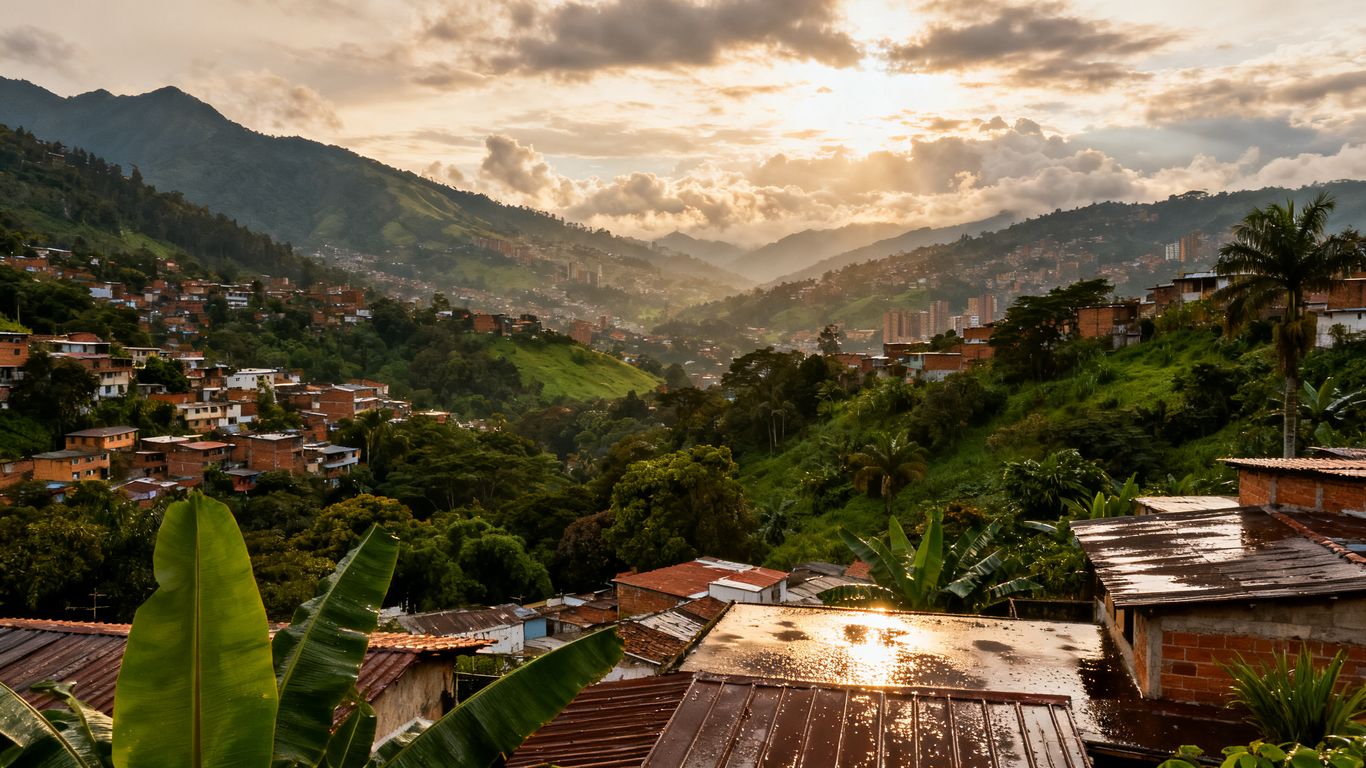
Why Medellín has a spring-like climate year-round
Medellín sits close to the equator, where daylight and solar conditions change little by month. Its valley setting and elevation moderate the heat found in lower tropical regions. As a result, we can experience warm afternoons without the severe seasonal swings familiar in temperate countries.
The phrase “city of eternal spring” describes this steady pattern, not consistently dry weather. Clouds and showers remain part of ordinary life, especially during wetter periods.
Average daytime and nighttime temperatures
Average daytime highs usually sit between 27°C and 29°C from March through May. Nighttime temperatures commonly fall to about 17°C or 18°C, particularly in open or elevated neighborhoods. Indoor spaces may feel cooler during rainy evenings.
We should plan for comfortable warmth rather than extreme heat. Cotton shirts, breathable trousers, and one light outer layer suit most daytime outings.
How the city’s elevation shapes local weather
Medellín lies roughly 1,500 meters above sea level in the Aburrá Valley. Higher elevation generally lowers temperatures, while surrounding mountains influence cloud formation and rainfall. Moving uphill can make the same day feel noticeably cooler.
The change is practical for travelers. A sunny valley afternoon may become cloudy near a hillside viewpoint, so carrying a light layer avoids relying on a perfect forecast.
Why Colombia does not have four traditional seasons
Colombia’s equatorial position means it does not follow the spring, summer, autumn, and winter cycle used in many northern countries. Instead, local weather depends more on altitude, geography, and alternating rainy or drier periods. Medellín therefore has seasonal rainfall patterns rather than four sharply different seasons.
We can still compare months, but the differences usually involve rain frequency, cloud cover, and humidity more than temperature.
How do March, April, and May compare in Medellín?
March, April, and May are all mild months in Medellín, with small temperature differences. Rainfall is the more useful comparison because April and May often bring wetter conditions than March. We should expect warm afternoons, changing skies, and occasional disruptions to outdoor plans.
Temperature patterns across the three months
March is often among the warmer months, with average highs near 28°C. April and May remain similar, usually reaching about 27–28°C during the day. Night temperatures stay close to 18°C, so the overall shift feels subtle.
The April weather guide offers another month-specific reference, but we should treat monthly averages as planning aids rather than guarantees. A particular week can still be sunnier or wetter than expected.
Rainfall differences between early and late spring
March can bring rain, although April and May commonly have more frequent or heavier showers. Rain does not necessarily last all day. A wet morning can give way to a usable afternoon, while a clear start can change quickly.
For outdoor sightseeing, we should leave room between major activities. This is especially useful when routes involve steep streets, viewpoints, or uncovered transfers.
Sunshine, cloud cover, and humidity
Cloud cover often changes several times in one day. Humidity can rise before rain, while breezes may make warm conditions feel more comfortable afterward. Direct sun can still be strong when clouds break.
Cloud breaks can be deceptive, especially during long walks. We should keep water and sun protection available even when the morning begins gray.
What weather changes travelers should expect
Travelers should expect variation rather than a fixed daily pattern. The following simple sequence helps us adapt without overplanning:
- Check the forecast before leaving accommodation.
- Schedule exposed viewpoints earlier when possible.
- Carry a compact rain layer during longer outings.
- Keep one indoor alternative near the day’s main neighborhood.
These habits make March through May manageable. They also prevent one shower from turning into a completely wasted day.
What is the difference between Medellín’s wet and dry seasons?
Medellín has relatively drier and wetter periods, but neither category guarantees uninterrupted sunshine or rain. The drier months usually make outdoor scheduling easier, while rainy months bring greener scenery and more frequent showers. We should think in probabilities, not strict seasonal boundaries.
The main drier periods during the year
The most commonly recognized drier period runs from December through February. June through August is another relatively drier period, although rain can still occur. January is often among the less rainy months in climate averages.
These periods can simplify plans for viewpoints, day trips, and long walking routes. They do not remove the need for a light rain layer.
The two rainy seasons and their timing
Rainfall often increases around April and May, then again around October and November. This bimodal pattern reflects two wetter periods rather than one continuous rainy season. March and September can act as transition months.
The Medellín climate overview is useful for comparing monthly averages and broader seasonal timing. We should still check current forecasts before committing to rural or exposed activities.
Short showers compared with prolonged rain
Many Medellín showers arrive quickly and pass within part of an afternoon. Other systems can produce several hours of steady rain, particularly when clouds settle over the valley. Local conditions and elevation influence the experience from one neighborhood to another.
A short shower is easy to manage with shelter or a café stop. Prolonged rain requires slower travel, safer footwear, and more patience on steep or slick streets.
Why yearly weather patterns can vary
Rainfall can shift from year to year because regional climate patterns influence cloud formation and precipitation. Monthly averages describe long-term tendencies, not a promise for a specific visit. Forecast reliability also decreases when we look farther ahead.
The Colombia climate guide explains why altitude and geography matter across the country. For Medellín, those factors make neighborhood conditions more useful than a simple national seasonal label.
What should you pack for Medellín’s spring-like climate?
We should pack for warmth, changing rain, and cooler moments rather than for one fixed season. Heavy winter clothing is rarely necessary in the valley. A small amount of versatile gear usually covers most daily conditions.

Lightweight clothing for warm afternoons
Breathable shirts, lightweight trousers, and comfortable walking clothes work well during warm afternoons. Natural fabrics can feel more comfortable when humidity rises. We should also bring sunglasses and sunscreen because cloud cover does not eliminate ultraviolet exposure.
A small daypack keeps these items together without adding much weight. Neutral layers are practical for markets, museums, cafés, and neighborhood walks.
A rain jacket and compact umbrella
A thin waterproof jacket is more useful than a heavy coat. A compact umbrella can help during slower city walks, although it may be awkward in crowded streets or strong wind. We should keep rain protection accessible rather than buried in luggage.
Packing both is reasonable for longer stays. The jacket protects while moving, and the umbrella helps during short stops or unexpected downpours.
Footwear for wet streets and hillier areas
Closed shoes with reliable grip are the safest everyday choice. Wet pavement, polished stone, and sloped sidewalks can become slippery after rain. We should avoid bringing only delicate footwear if the itinerary includes hills or long walking routes.
Quick-drying materials are convenient, but comfort matters more than technical features. Blisters become a bigger problem than rain when we underestimate walking distances.
Layers for cooler mornings and evenings
Mornings can feel mild or cool, especially in hillside districts and during cloudy weather. A light overshirt, cardigan, or thin fleece gives us flexibility without taking much space. Evenings may feel cooler after rainfall.
Layering also helps inside air-conditioned transport and restaurants. We can remove one piece during sunny afternoons and add it again after sunset.
How does weather vary across Medellín’s neighborhoods?
Medellín’s valley and steep surrounding slopes create noticeable local differences. Lower districts may feel warmer, while elevated neighborhoods often have cooler air and more cloud exposure. Rain can also vary across short distances.
Warmer conditions in lower-lying areas
Neighborhoods closer to the valley floor generally feel warmer during the afternoon. Dense buildings can reduce breezes, while paved streets hold heat after sunny periods. We may notice this difference when moving between central districts and higher residential areas.
Short walks can therefore feel more comfortable earlier or later in the day. Hydration and sun protection remain useful even when the temperature seems moderate.
Cooler temperatures in the hills and outskirts
Hillside areas usually receive more wind and cooler temperatures. Elevation can also bring faster changes in cloud cover, particularly near viewpoints and cable-car routes. We should carry a layer when visiting areas above the main valley floor.
The difference is not usually dramatic, but it affects comfort. A shirt suitable for a lower neighborhood may feel insufficient during a cloudy evening uphill.
Rain differences between eastern and western districts
Mountains can steer clouds and produce different rainfall across the eastern and western sides of the valley. Conditions may be wet in one district while another remains relatively bright. Citywide forecasts often smooth over these local contrasts.
We should use forecasts as a general guide, then observe the sky and ask local staff about immediate conditions. That combination is often more practical than chasing an exact prediction.
How local geography affects daily planning
Geography affects walking time, transport, views, and weather exposure at once. A short distance on the map may involve a steep climb or a more exposed route. Rain makes those details more significant.
Plan the day by neighborhood rather than crossing the city repeatedly. Grouping nearby stops reduces travel time and gives us more opportunities to pause when weather changes.
How should travelers plan activities around Medellín weather?
Flexible scheduling works better than trying to predict every hour. We can place outdoor activities during brighter parts of the day and keep indoor options nearby. This approach preserves the itinerary when a shower arrives.
The best times of day for outdoor sightseeing
Early mornings often offer cooler conditions and useful visibility before clouds build. Late afternoons can also work, depending on the forecast and season. Midday remains manageable, but direct sun may feel stronger than expected.
Viewpoints, gardens, and long walking routes deserve the clearest forecast window. Museums, cafés, and food stops can fill less predictable periods.
Managing afternoon showers and changing forecasts
Afternoon showers are common enough that we should treat them as a planning factor. Keep transport time realistic, and avoid scheduling two exposed activities back-to-back. Forecast apps should be checked again before leaving, not only the night before.
A café or museum within a short walk creates a useful fallback. We can wait out a brief shower instead of traveling across town in poor visibility.
Indoor options for rainy periods
Rainy weather is a good reason to choose museums, cafés, markets, or hands-on cultural activities. The Colombian Cacao Experience is an indoor bean-to-bar workshop in Laureles that lasts approximately 3.5 hours and costs 160,000 COP per person. Guests roast raw cacao over fire, peel and grind beans on a traditional molino, join a cacao ceremony, take part in a chocolate exfoliation ritual, and finish with a cacao sour cocktail.
We can also browse broader Medellín activity ideas when building a weather-proof day. An indoor plan feels less like a compromise when it offers culture, food, and participation rather than simply shelter.
Checking neighborhood-level weather before departure
Before leaving, we should check the forecast for the actual district rather than only “Medellín.” Then we can confirm travel time, elevation, and whether the main attraction has covered areas. Local hotel staff, guides, and venue teams can also provide useful immediate context.
For a rainy-day plan in Laureles, the Colombian Cacao Experience gives us a fixed indoor activity while the weather changes outside. Pairing it with nearby cafés keeps transfers short and practical.
What weather-related mistakes should visitors avoid?
Most weather problems in Medellín come from assumptions rather than extreme conditions. We may expect “spring” to mean dry skies, or trust a citywide forecast too literally. Small adjustments make the trip more comfortable and safer.
Assuming spring means consistently dry weather
The spring comparison describes mild temperatures, not a dry season. March, April, and May can all bring rain, with April and May often wetter. We should pack rain protection even when the forecast looks favorable.
That preparation is simple and prevents unnecessary purchases during a sudden shower. It also keeps outdoor plans flexible instead of canceling them immediately.
Underestimating strong sun at high elevation
Moderate air temperatures can disguise strong sun at elevation. We should use sunscreen, sunglasses, and a hat during exposed walks. Cloudy conditions can still include substantial ultraviolet exposure.
Shade and hydration matter on viewpoints and open plazas. A cool breeze does not always mean the sun is weak.
Relying only on citywide weather forecasts
A single forecast for Medellín cannot capture every hillside or valley-floor difference. Clouds may gather over one district while another remains dry. Checking the neighborhood and the timing gives us a more useful picture.
We should also allow for forecast changes during the day. Local observation remains valuable when conditions shift quickly.
Planning every outdoor activity without flexibility
A rigid itinerary makes ordinary rain feel like a major failure. We should leave open blocks for museums, cafés, markets, or a second attempt at a viewpoint. That flexibility is especially useful during wetter months.
The weather rarely requires abandoning the whole day. It usually asks us to change the order, shorten a route, or move indoors temporarily.
Conclusion
Medellín’s spring-like climate means mild temperatures throughout the year, with rainfall providing the main seasonal variation. We can travel comfortably by packing light layers, protecting against sun and rain, checking local forecasts, and keeping outdoor plans flexible.
Frequently Asked Questions
Is Medellín warm in March, April, and May?
Yes. Daytime temperatures commonly remain around 27–29°C, while nights are usually cooler at approximately 17–19°C. The main difference between these months is rainfall rather than temperature.
Does Medellín have a true spring season?
No. Colombia lies near the equator and does not follow four traditional temperate seasons. Medellín’s “spring-like” description refers to stable temperatures and moderate conditions throughout the year.
Which months are rainiest in Medellín?
April, May, October, and November are commonly among the wetter months. Rainfall varies annually, so current forecasts remain useful for specific travel dates.
Is Medellín rainy all day during the wet season?
Not usually. Many showers are brief, although longer periods of steady rain can occur. We should plan indoor alternatives rather than assume every rainy day will be lost.
What should we wear in Medellín during spring-like months?
Lightweight clothing, comfortable closed shoes, and one light layer work well. We should also carry rain protection and use sunscreen, even when skies are cloudy.
Are Medellín’s hills cooler than the valley floor?
Generally, yes. Higher neighborhoods and viewpoints can feel cooler and windier than lower districts. Cloud cover and rain may also change more quickly at elevation.
What is the best way to plan activities around Medellín weather?
Schedule exposed outdoor activities during the clearest forecast windows and group stops by neighborhood. Keep museums, cafés, and other indoor options available for showers or prolonged rain.