

Key Takeaways
We can move around Medellín efficiently by matching the transport choice to distance, traffic, weather, and time of day.
- Use ride-sharing apps for flexible door-to-door trips.
- Use the Metro for predictable journeys along the valley.
- Confirm pickup details before entering any vehicle.
- Expect fares and waiting times to change with demand.
- Plan airport and day-trip transport separately from city rides.
Which transportation options work best in Medellín?
For how to get around medellin ride sharing, we usually recommend apps for flexible trips and the Metro for direct routes. Traditional taxis, walking, and cycling also work in the right neighborhoods. The practical choice depends on distance, slope, traffic, weather, and departure time.
Ride-sharing apps versus traditional taxis
Ride-sharing apps help us request a car, see trip details, and avoid negotiating at the curb. Traditional yellow taxis remain useful when we need a quick local journey or find an official vehicle at a designated stand. We should use licensed taxis and check the fare process before leaving.
For broader local context, this Medellín transportation overview explains how taxis, buses, and app-based rides fit together. We should treat app availability as variable rather than guaranteed in every street or hour.
Using the Metro and integrated public transport
The Metro connects major parts of the Aburrá Valley, while Metrocable lines reach hillside areas. Tram and bus connections extend the network beyond the main rail lines. We can compare routes and transfers using this Metro safety and neighborhood guide before leaving the hotel.
The Metro usually works best when our origin and destination sit near stations. It avoids much of the road congestion, but it may involve walking, transfers, or crowded platforms during busy periods.
When walking or cycling makes sense
Walking is practical in compact parts of Laureles, Provenza, El Poblado, and central commercial areas during daylight. We should keep phones and valuables secure, especially around busy corridors and transit entrances. Cycling suits confident riders who understand hills, traffic, and dedicated-lane limitations.
We should avoid treating a short map distance as automatically walkable. Medellín’s slopes, heat, rain, and road crossings can make a seemingly simple route tiring or uncomfortable.
Choosing transport by neighborhood and distance
A short trip within one neighborhood may be quicker on foot than by car. Longer cross-valley journeys often work better by Metro, while steep or poorly connected routes favor a ride-sharing app. We can also combine both options instead of insisting on one mode for the entire day.
A simple decision rule helps: walk locally, ride short uphill distances, and check the Metro for longer journeys along its corridor. For additional route planning, this Medellín travel guide provides broader information about trains, cable cars, buses, and fares.
Which ride-sharing apps are available in Medellín?
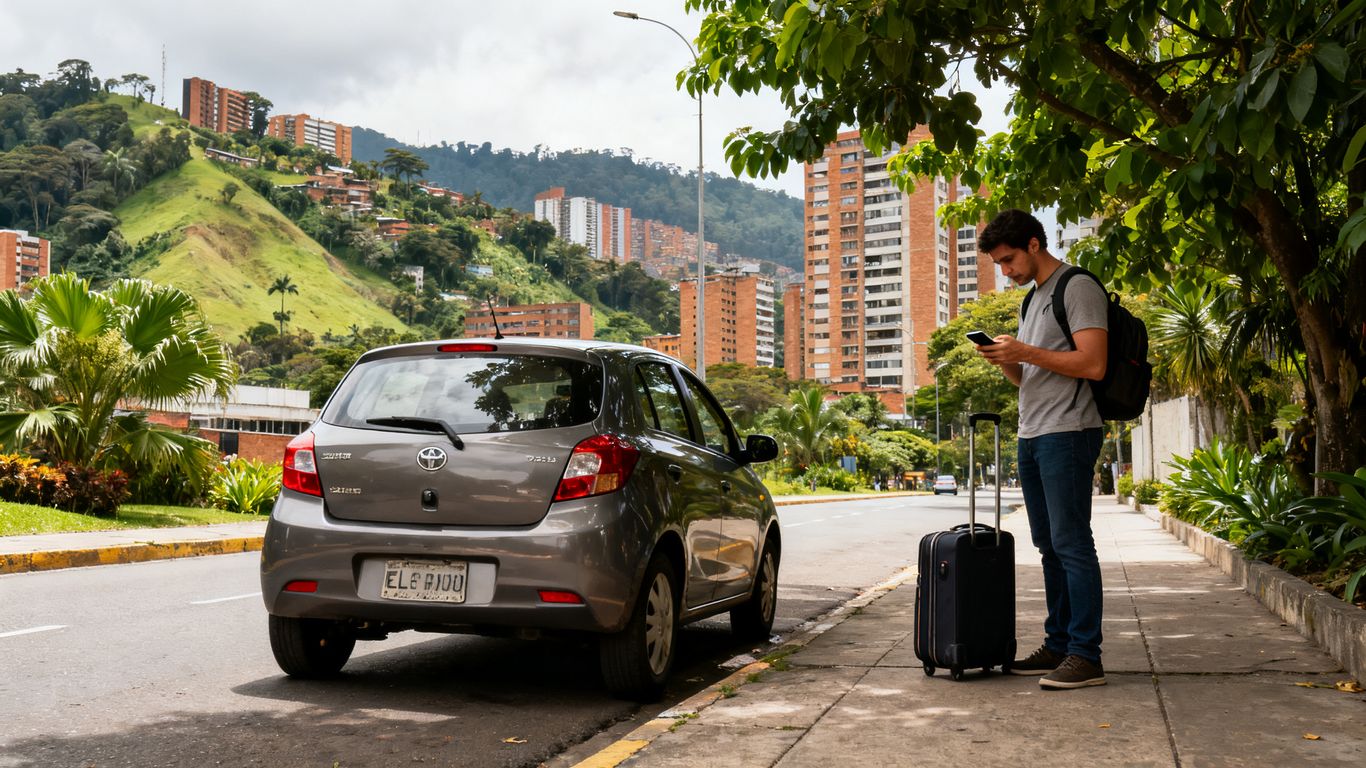
Uber, DiDi, and inDrive are commonly discussed options for getting around Medellín, though coverage changes by location and time. We should install more than one app before arriving and compare the active offers. That small preparation gives us a fallback when a request is delayed.
Uber availability and typical use cases
Uber can be useful for familiar app-based booking, airport planning, and trips where we want a clearly displayed destination. Availability may vary, so we should not assume a nearby driver will accept immediately. We should follow the app’s current pickup and payment instructions.
DiDi and inDrive differences
DiDi provides another app-based option for city journeys. inDrive is known for allowing riders to propose a fare and receive driver responses, so the process can feel different from a fixed upfront quote. We should review the final agreement carefully before entering the car.
This Colombia ride-hailing comparison offers useful background on Uber, inDrive, and taxis. We should still check each app directly because prices, rules, and local availability can change.
Comparing app coverage, prices, and wait times
We can compare the same origin and destination across two or three apps before confirming. The cheapest displayed fare may involve a longer wait or fewer available drivers. During normal conditions, a slightly higher fare may be worthwhile when timing matters.
The useful comparison points are straightforward:
- Estimated fare and payment method.
- Driver count and expected waiting time.
- Pickup accuracy at the selected location.
- Cancellation terms shown in the app.
After comparing these details, we should select the option that balances price and reliability. We should avoid repeatedly cancelling because availability can change while we wait.
What to do when no driver accepts the trip
We should first move the pickup pin to a visible, accessible road and try again. If the request still fails, we can switch apps, use an official taxi stand, or take the Metro partway. Busy streets, steep roads, rain, and late hours often reduce acceptance.
We should never accept a ride from someone who approaches us outside the app. A short delay is safer than entering an unverified vehicle.
How do you book and collect a ride safely?
We should book rides from inside the official app and collect them at a clear, public point. The safest process is simple: confirm the pin, match the car, and keep the trip visible to someone we trust. These habits matter more than choosing one particular app.
Setting the correct pickup point
Large buildings often have several entrances, and map pins may land on the wrong side of a block. We should select the entrance name or add a short Spanish note explaining the exact meeting point. If possible, we should wait where drivers can stop without blocking traffic.
At malls, hotels, and apartment towers, the main entrance is usually easier than a private garage. We should call only through the app when a driver needs clarification.
Checking the vehicle and driver details
Before opening the door, we should match the license plate, vehicle model, and driver photograph with the booking. We should also confirm the passenger name if the driver asks. If any detail differs, we should not enter and should cancel or report the mismatch.
We should keep the app open until the trip starts. Taking a quick screenshot of the booking can help when mobile service becomes unreliable.
Communicating with drivers in Spanish
Basic Spanish makes collection smoother, especially when the pin is imperfect. We can say “Estoy en la entrada principal” for “I am at the main entrance” or “¿Puede esperar un momento?” when we need a minute. Short messages usually work better than long explanations.
We should share landmarks rather than sensitive personal information. If communication fails, we can ask the app to translate or move to a better-lit public point.
Handling apartment buildings, malls, and busy streets
Security desks may require us to meet outside, while malls may restrict where cars stop. We should follow building instructions and avoid standing in moving traffic. At a crowded curb, we can identify the car from a safe distance and let the driver pull forward.
For longer road journeys, comfort can affect the experience. Some travelers separately research sheepskin car seat covers, although that is not necessary for ordinary city rides.
How much does ride sharing cost in Medellín?
Ride-sharing fares in Medellín vary with route length, traffic, demand, and weather. We should use the live quote in the app rather than rely on a fixed tourist budget. Comparing two services often gives a more realistic estimate.
Factors that change the fare
Distance is only one part of the price. Congestion, tolls, pickup complexity, vehicle type, and demand can also affect the quote. A short cross-neighborhood trip may cost more than expected if traffic is unusually slow.
We should check whether the fare is estimated or final. The app’s payment screen should explain any adjustment before or after the ride.
Surge pricing during rain and peak hours
Rain can reduce driver supply while increasing demand. Morning commuting hours, evening departures, concerts, and weekend nightlife can create similar pressure. We can wait safely, walk to a better pickup road, or compare the Metro when the price rises sharply.
Surge pricing does not always last long. If timing is flexible, checking again after several minutes may produce a different quote.
Payment methods and cash considerations
We should confirm whether the selected app accepts our card, local cash, or another supported method. Keeping small Colombian peso notes is useful for official taxis and unexpected changes. We should not hand over payment before the trip unless the app specifically requires it.
We should also review the receipt after arrival. If the charge looks wrong, reporting it through the booking creates a clear record.
Estimating costs between popular neighborhoods
Instead of memorizing prices, we can compare typical routes at the time we expect to travel. The following framework helps us estimate without pretending that fares stay fixed.
| Trip pattern | Main variable | Practical expectation |
|---|---|---|
| Within El Poblado | Traffic and demand | Short route, variable timing |
| El Poblado to Laureles | Cross-city congestion | More sensitive to peak hours |
| Laureles to Belén | Pickup and road access | Often manageable by app or bus |
| Valley-wide journey | Distance and transfers | Compare Metro and car options |
These categories are more useful than a single advertised fare. We should quote the route immediately before departure and allow extra time during rain.
Is ride sharing safe for visitors?
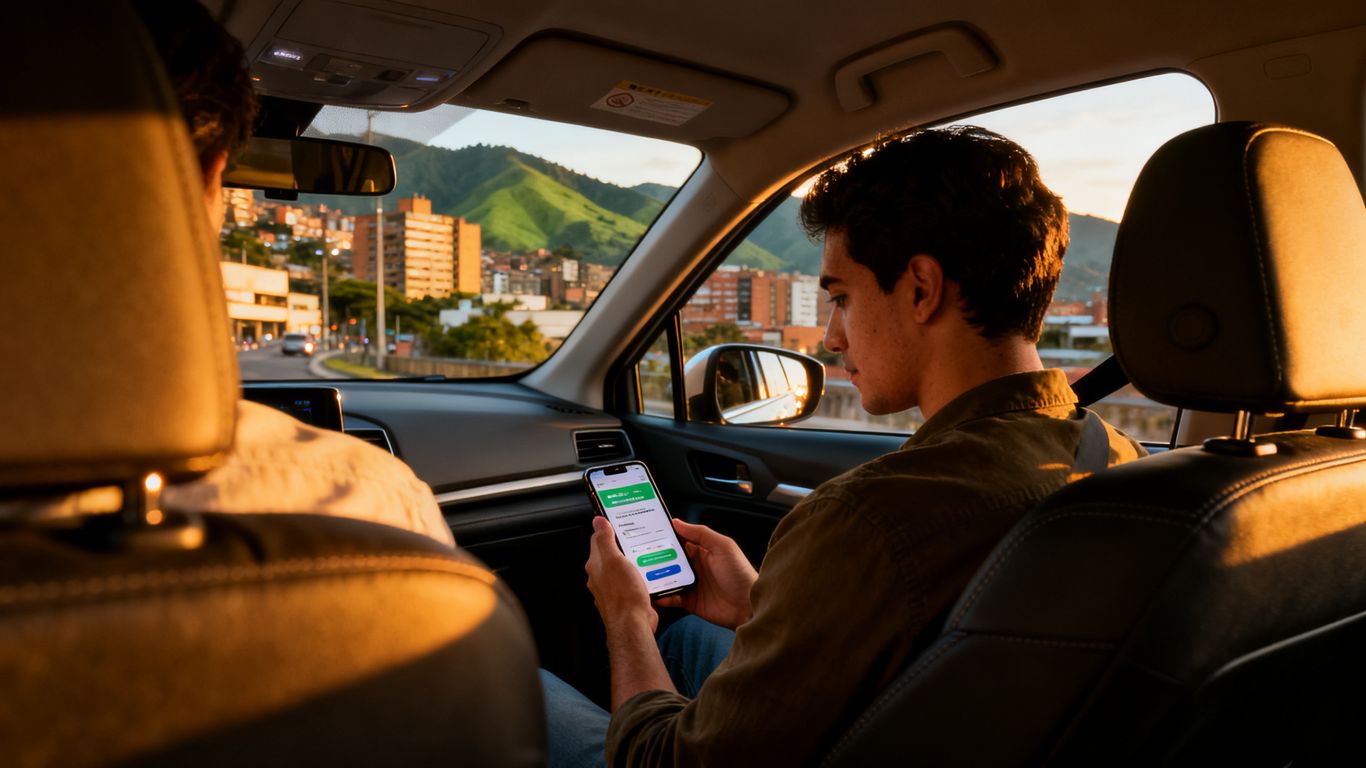
Ride sharing can be practical for visitors when we use verified bookings and public pickup points. We should remain alert, especially after dark, while carrying phones and passports discreetly. No app removes the need for ordinary street awareness.
Practical precautions for solo travelers
We should tell a friend where we are going and keep the trip status visible. Waiting inside a hotel, restaurant, or staffed venue is preferable to standing alone on a quiet road. We should also keep enough battery and mobile data for the full journey.
Why back-seat seating and trip sharing matter
Sitting in the back can provide more personal space and makes exiting easier in many ordinary situations. We should share the route through the app when that feature is available. If local instructions or the driver’s behavior feel inconsistent, we can end the trip in a public place.
Avoiding unofficial drivers and street solicitations
We should decline anyone offering a ride outside the booking process, including people approaching airports, nightlife districts, or tourist attractions. A person who knows our destination is not necessarily an authorized driver. We should request an official taxi or book through an app instead.
This matters particularly around busy nightlife areas. Our Parque Lleras safety advice covers low-profile behavior and reliable transport practices for that district.
What to do if a trip or payment goes wrong
We should move to a staffed public location if the journey becomes uncomfortable. Then we can end the trip, contact the app, preserve screenshots, and report the issue. For a payment dispute, the digital receipt and booking record usually provide the clearest evidence.
If we feel in immediate danger, we should prioritize reaching other people and contacting local emergency services. We should not argue over a fare on an isolated street.
How should you travel around Medellín’s main neighborhoods?
Neighborhood choice changes the practical answer to how to get around medellin ride sharing. El Poblado has steep streets and nightlife traffic, while Laureles is flatter and easier for walking. We should plan each ride around the specific entrance, slope, and road conditions.
Getting between El Poblado, Provenza, and Parque Lleras
These areas are close geographically but can feel slow by car during nightlife hours. Walking may work between nearby venues during daylight, while a short app ride helps with hills, luggage, or rain. We should choose a visible pickup road rather than a crowded bar entrance.
Provenza and Parque Lleras are distinct areas with overlapping visitor traffic. We should name the exact venue and neighborhood when booking.
Traveling to Laureles and Estadio
Laureles generally suits walking between restaurants, cafés, and local streets. Ride sharing helps when carrying luggage or crossing larger roads toward Estadio. Metro stations can also serve the area, depending on our final destination.
For travelers planning an indoor cultural activity in Laureles, the Colombian Cacao Experience is described as an urban workshop in the walkable neighborhood. Transport planning should still allow time for rain and traffic.
Reaching Comuna 13 and its entrances
We should confirm which Comuna 13 entrance or tour meeting point we need before booking. The neighborhood has steep access routes, and the wrong pin can create a difficult uphill walk. Daylight arrival and a clearly identified meeting point make the visit simpler.
We can use a ride to the lower access area, then continue on foot or follow the tour’s instructions. We should avoid accepting unsolicited guiding or transport offers.
Connecting with Envigado, Sabaneta, and Belén
Trips south toward Envigado and Sabaneta can take longer than the map suggests during commuting hours. The Metro may provide a steadier option along its corridor, while an app ride is useful for final-mile destinations. Belén requires a route-specific check because neighborhoods and slopes vary.
We should compare the full door-to-door journey, including station access and walking time. That approach prevents a seemingly cheap ride from becoming a slow transfer chain.
When should you use the Metro instead of ride sharing?
We should use the Metro when our route follows its corridor and traffic is moving slowly. Ride sharing remains useful for first-mile and last-mile connections, luggage, or locations away from stations. Checking both options before leaving usually saves time.
Understanding Metro, Metrocable, and tram connections
The Metro forms the main rail network, while Metrocable lines connect several hillside areas. The tram and integrated buses extend access through other corridors. We should check operating details, station transfers, and payment requirements before entering the system.
A route may look direct on a map but still require a transfer. We should allow extra time when visiting an unfamiliar station or cable-car line.
Combining public transport with an app ride
A common strategy is to ride to a station, take the Metro, then request another car near the destination. This works when road congestion affects only part of the journey. We should choose stations with clear exits and confirm the second pickup pin after emerging.
The combination also reduces the need for a long car trip. We should keep our belongings close during transfers and crowded periods.
Avoiding traffic on major routes
Traffic can slow journeys between El Poblado, Laureles, downtown, and southern municipalities. A rail segment may offer more predictable timing, even when it requires walking. We should compare total travel time rather than only the number of transfers.
The Metro is not always faster, especially when the destination sits far from a station. A mixed route often provides the most balanced result.
Choosing transport after dark or during heavy rain
After dark, we should favor well-used stations, official pickups, and routes with straightforward exits. Heavy rain may make walking and cycling uncomfortable, while demand can raise app fares. We should wait inside a staffed venue and reassess conditions before continuing.
We should not rush into an unfamiliar vehicle simply because the weather is poor. A delayed, verified booking is preferable to an unsolicited ride.
How do airport transfers and day trips work?
Airport transfers and day trips require more planning than ordinary neighborhood rides. José María Córdova International Airport sits outside Medellín, and the mountain route can take longer than visitors expect. We should confirm pickup instructions, luggage space, and return timing before booking.
Booking a ride from José María Córdova International Airport
We should wait for clear app instructions after collecting luggage and use the designated pickup process. Airport road layouts can change, so we should follow current signs and avoid anyone offering an unofficial ride inside the terminal. Sharing our flight and hotel details with a trusted person adds useful backup.
If the app cannot locate us, we should move only to an official, well-marked meeting area. We should not leave with a driver whose vehicle details do not match.
Comparing airport taxis, app rides, and private transfers
Official airport taxis offer a straightforward collection process, while app rides may require following specific pickup rules. A private transfer can be useful for families, late arrivals, or travelers carrying substantial luggage. We should compare the complete price, waiting policy, and destination instructions.
The cheapest quote is not always the easiest option. We should prioritize a clearly verified vehicle and a meeting process we understand.
Planning travel to Guatapé and other nearby destinations
Guatapé is a longer excursion, so we should decide whether to use a bus, private vehicle, or organized day trip. A city ride-sharing request may not provide the same reliability or return coverage as a planned transfer. We should confirm whether the driver will wait, return, or charge separately.
We should also allow time for road delays and the return journey. This Guatapé and El Peñol planning guide can help us organize the destination before choosing transport.
Returning to Medellín after a long-distance excursion
Before leaving Guatapé or another day-trip destination, we should secure the return plan while mobile service and transport options remain clear. We should save the hotel address, carry backup payment, and avoid depending on a single driver without confirmation. Returning earlier usually provides more flexibility.
For a long road segment, we should verify the vehicle, driver, route, and total cost again. Tools unrelated to transport, such as Zone, do not replace these basic travel checks, while a clear booking record does.
We should also keep digital links and receipts organized. Website owners can read about RedirHub, but travelers should focus on the live route, driver details, and emergency contact information.
A separate demand generation agency or a wellness product such as colloidal silver has no bearing on choosing a Medellín ride. We mention them only as examples of unrelated search results that should not distract from transport planning.
Conclusion
We can travel around Medellín smoothly by comparing ride-sharing apps, the Metro, walking, and official taxis for each journey. Confirm pickup details, watch the live fare, plan airport routes early, and use extra caution after dark or during heavy rain.
Frequently Asked Questions
Is ride sharing available throughout Medellín?
Coverage is broad but not uniform across every neighborhood or time. We should keep more than one app available and use official taxis or the Metro when no driver accepts.
Is the Metro cheaper than ride sharing?
The Metro is generally more predictable for longer corridor journeys and avoids road congestion. A ride may still make sense when several people travel together or the destination is far from a station.
Can visitors use ride-sharing apps from the airport?
Visitors can request app-based transport, but airport pickup procedures may require a specific meeting point. We should follow current terminal instructions and verify the vehicle before entering.
Should we carry cash for transportation in Medellín?
Yes, small Colombian peso notes provide a useful backup for official taxis and payment issues. We should still confirm the accepted method before starting each ride.
Is it safe to walk between Provenza and Parque Lleras?
Walking may work during daylight when we stay on active streets and protect our belongings. At night, we should use a verified ride or remain within busy, well-managed areas.
What should we do when a driver cannot find us?
We should move to a visible entrance, update the map pin, and send a short landmark-based message. If the location remains confusing, cancelling and booking again is safer than entering an unverified car.
How early should we arrange a Guatapé return?
We should decide the return method before leaving Medellín and confirm it again at the destination. Extra time is sensible because mountain roads, traffic, and limited late-day options can affect the journey.